Wine #19: Domaine Séguinot & Filles Chablis (and the final final wine from the Kermit Lynch book that started this whole thing in the first place for real this time!)

(Posted September 17, 2025)

“When it comes to wine, I tell people to throw away the vintage charts and invest in a corkscrew. The best way to learn about wine is the drinking.” –  Alexis Lichine
Aha – you just thought I was done with reviewing wines found in Kermit Lynch’s great book Adventures on the Wine Route. A little more than two years ago, I reviewed what I thought was the last of the wines mentioned in his book that I could find (though since then, I’ve reviewed a number of “celebrity wines” to keep the blog going). But I was wrong. I stumbled on one more – a Chablis – that merits inclusion in this august blog. Yes, to my knowledge, this is the last of the wines mentioned in the book to be reviewed. But never say never. I have plans for something else in the next few months. A book perhaps? Still pondering my options.

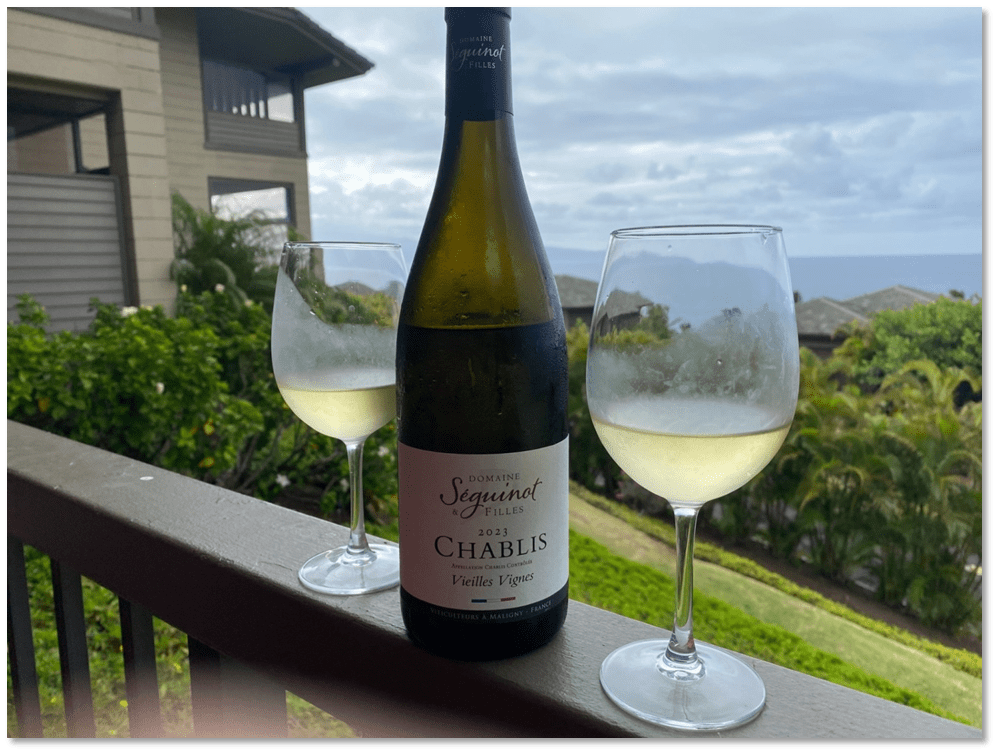
Regardless, we can review what I believe to be the final wine on my Kermit Lynch list now that I am permanently ensconsed in the place where I got the inspiration for this blog in the first place – Maui. The nineteenth and final (at least for now) wine on the list is a 2023 Chablis (Chardonnay) from the Burgundy region of France from the Domaine Séguinot & Filles.
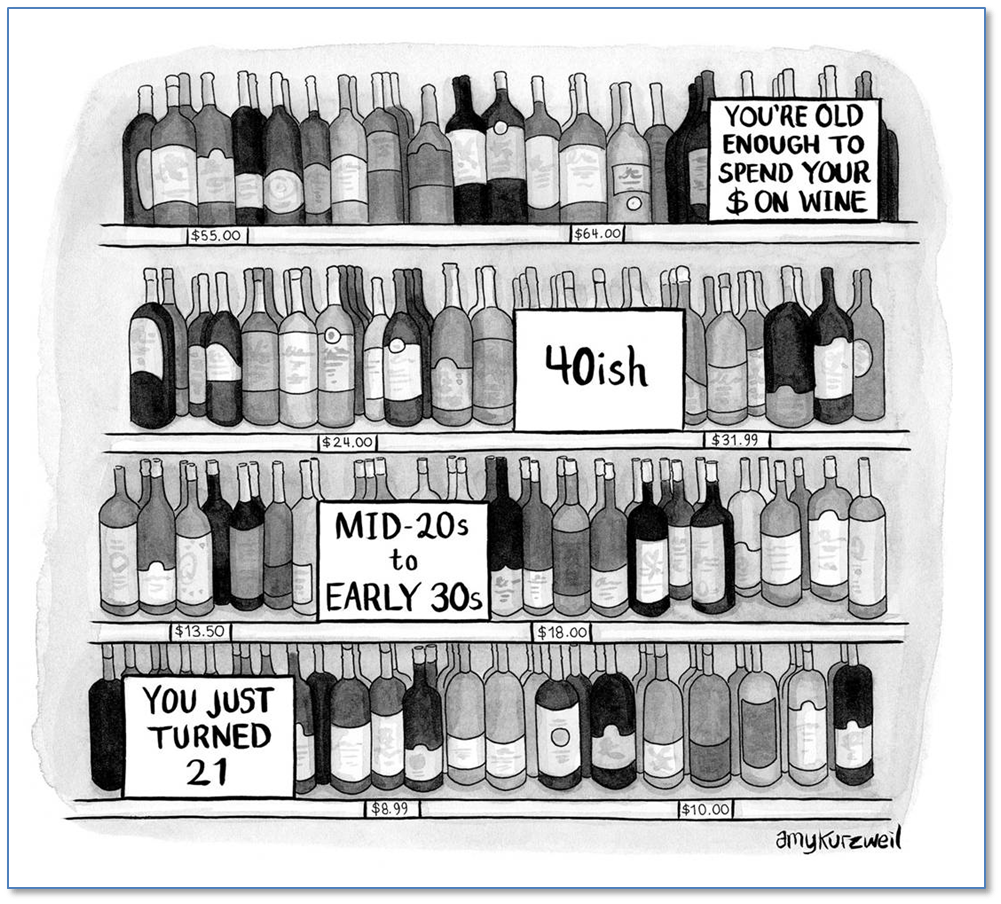
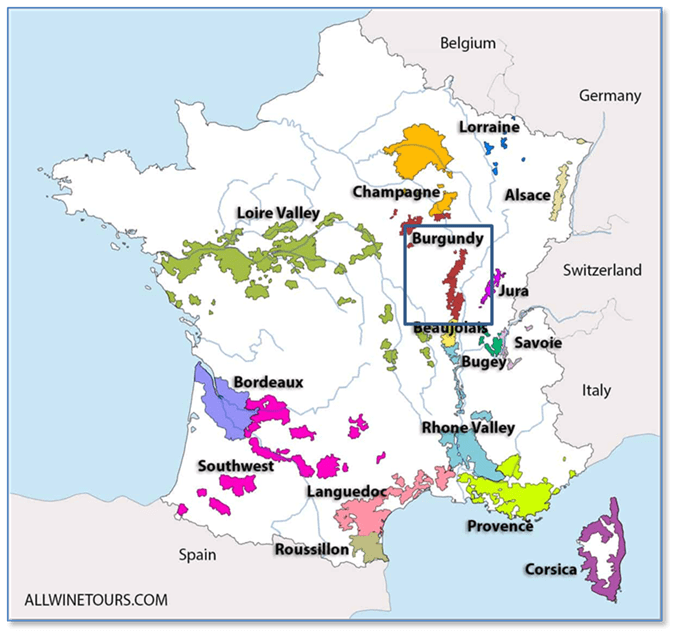
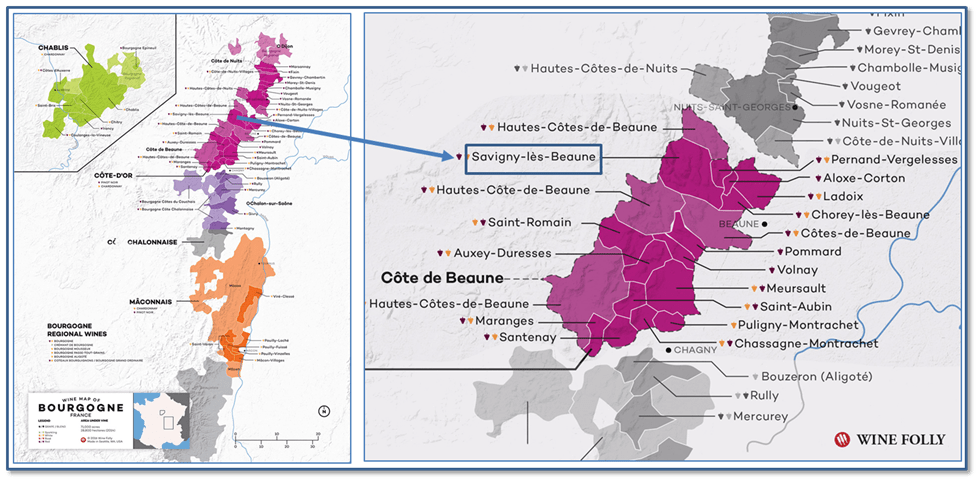
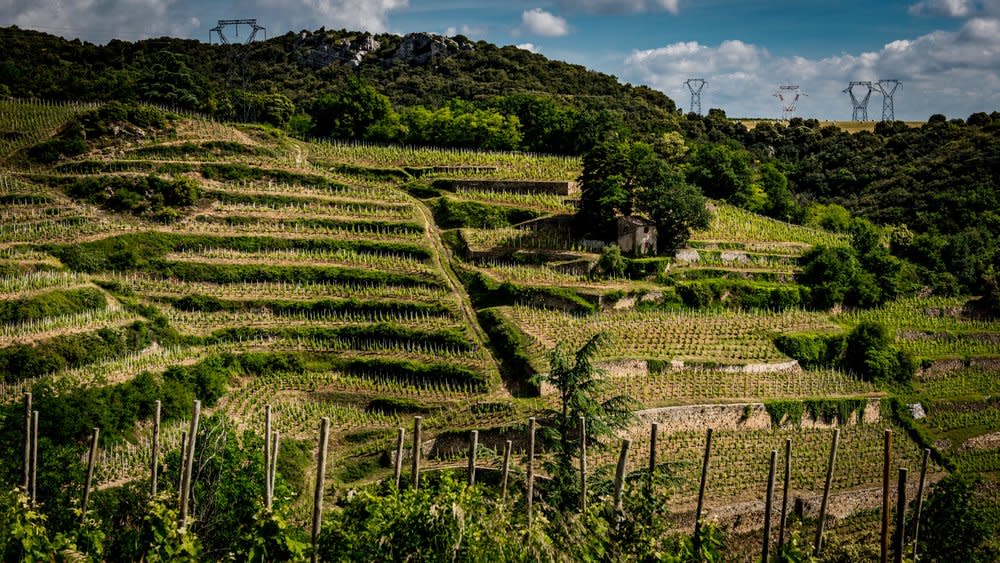
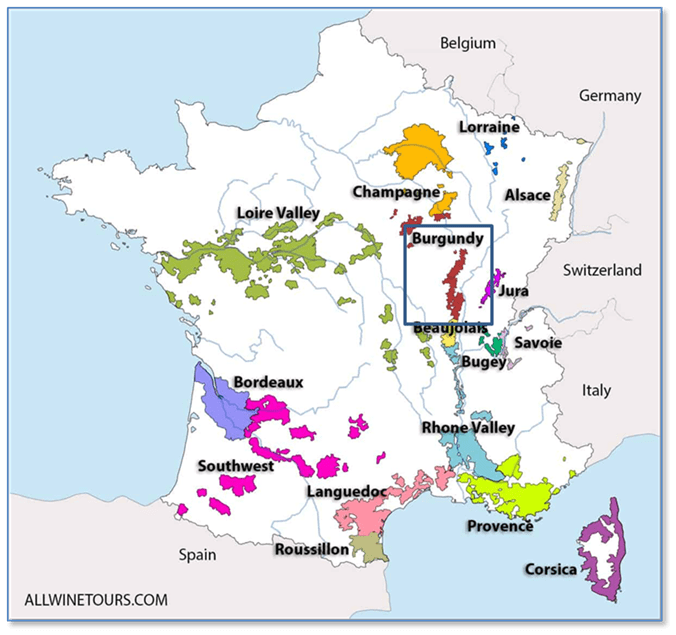
First of all, where is Chablis? It is part of the Burgundy region in east-central France, but it is what you might call an appendage.
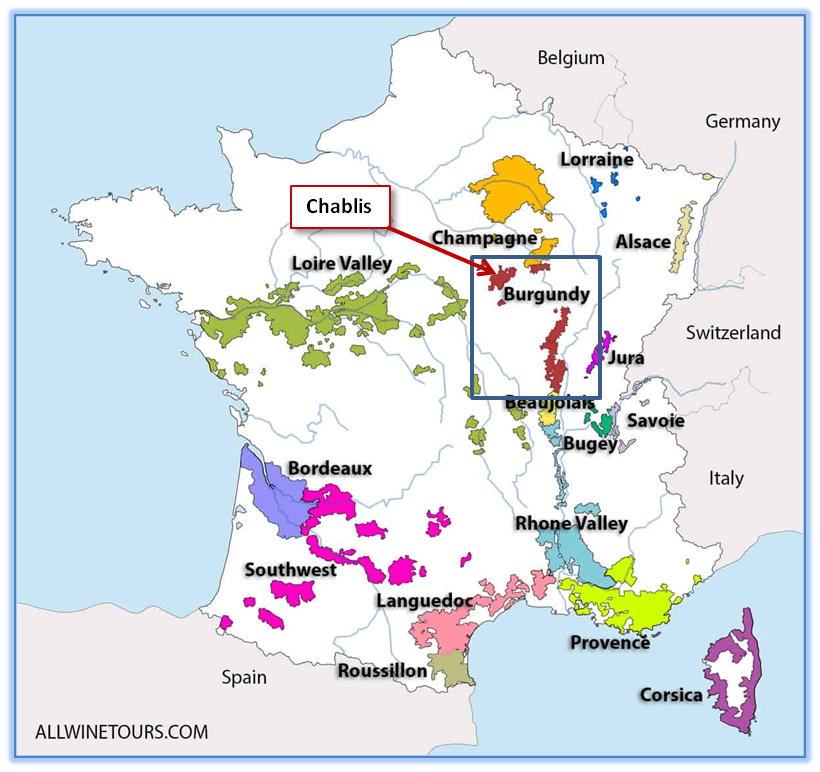
To repeat some of the geographical information I shared in previous reviews, Burgundy is, of course, a famous wine-growing region in east central France. Called Bourgogne in French, it is famous for well-regarded red and white wines, with whites coming almost entirely from chardonnay grapes. According to The Oxford Companion to Wine, vineyards dating to the first century have been found in the area. A tribe of Burgundians from Scandinavia settled the area in the fifth century, giving the area its name. As noted in The World Atlas of Wine, “Burgundy is not one big vineyard, but the name of a province that contains several distinct and eminent wine regions.”

As for our specific area’s history, Chablis has quite a lot of it, according to Chablis-wines.com:

  • “The name Chablis is thought to come from two Celtic words: ‘cab’ meaning house and ‘laya’ meaning ‘near the wood.’
  • The settlements in the area started in Neolithic times, followed by the Gauls and Romans.
  • In the 9th century, Benedictine monks from the Loire fleeing the Vikings settled in the area, establishing the first major vineyards.
  • Cistercian monks settled in the area in the 12th and 13th centuries, establishing more vineyards.
  • In the 16th century, Chablis was attacked and largely destroyed by the Huguenots (darn those Huguenots!), and it took two centuries or more for the region to return to prosperity.

What did Kermit Lynch write about Chablis?

Kermit Lynch had mixed feelings about the Chablis region; at least he did when he wrote his book in 1988. The chapter on Chablis is the shortest one in the book. Let’s just say it’s probably not Chablis Chamber of Commerce material:

[T]he white Burgundy that raises the hair on my back, that arouses passions ranging from teeth-gnashing outrage to utmost euphoria…. It is Chablis, northernmost Chablis, the yellow to golden-green wine from the gray, forgettable village of the same name…. I worked to turn up a wine worthy of the fabled name Chablis, worked my palate to the quick in that bleak, drizzly, stone cold village. Perhaps because its wine was too sour to the German taste, their bombers practically destroyed Chablis in June 1940, and I think its citizens still have not forgiven the rest of the world for that misfortune….. Aside from bombing runs and the local little cheese biscuits called gougėres, wine is the only reason to go to Chablis. Otherwise, watch out for cold sheets, questionable quenelles, and frostbite. [For the uninitiated, a quenelle is, according to Wikipedia, “a mixture of creamed fish or meat, sometimes combined with breadcrumbs, with a light egg binding.”]

Kermit, why all this unhappiness? Must be the weather….

Bitter? Yes, I am bitter. Loving Chablis is like falling in love with a frigid floozy. You begin to wonder if the rewards are worth the heartbreak and deception. And the vignerons there are bitter. They are bitter because of the frost and hailstorms that terrorize their grapevines. Imagine watching the fruits of your year’s labor destroyed in an evening. In his late-sixties book about Burgundy, Pierre Brejoux wrote that the harvest from the steepest Chablis slopes is destroyed two out of three years….

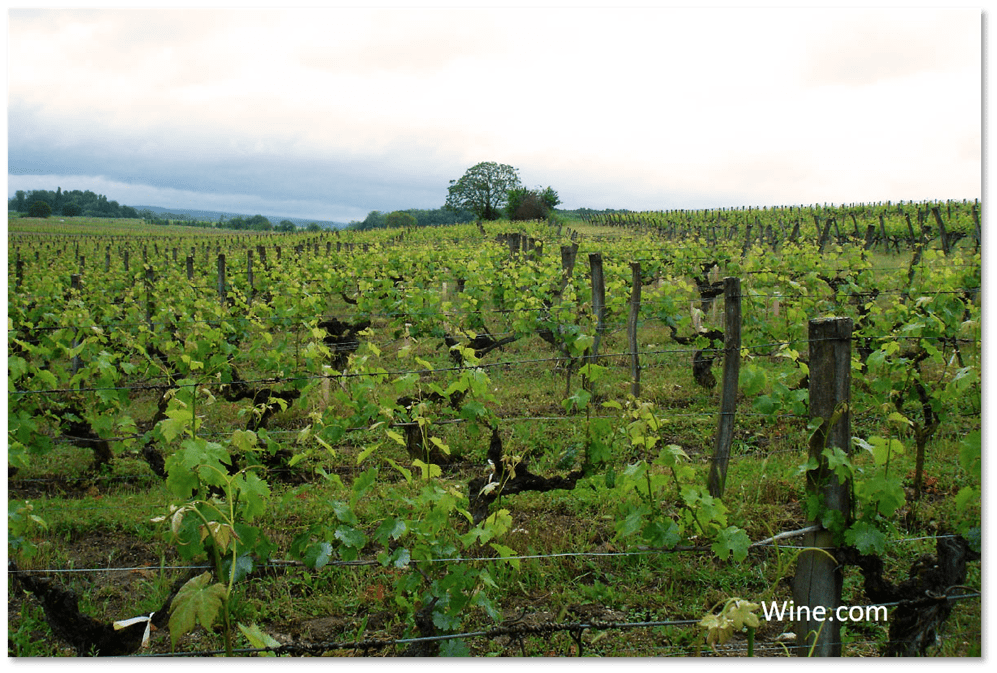
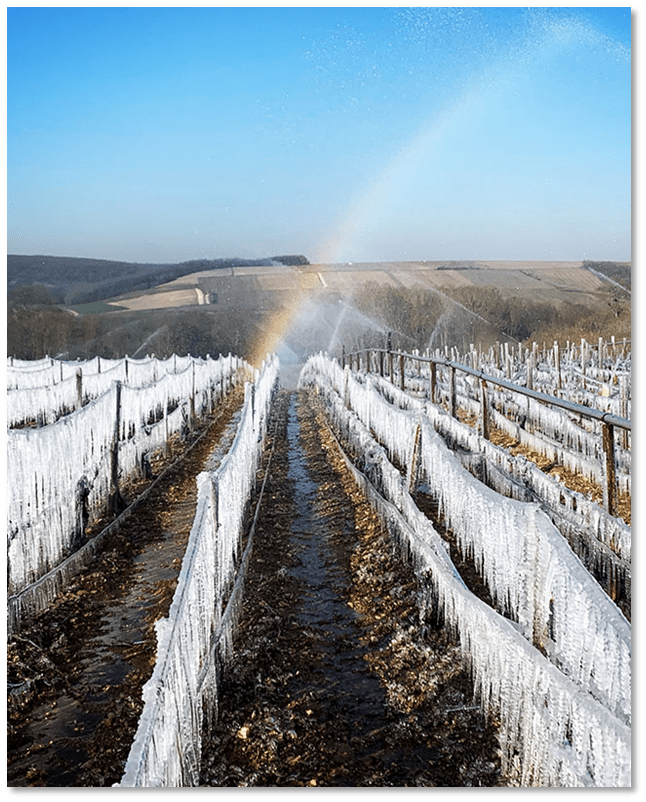
Along those lines, the Chablis region is often described as having a “semi-continental climate.” The Oxford Companion to Wine says that means a climate “with no maritime influence, so that its winters are long and hard and the summers often, but not always, fairly hot. There is all the climate uncertainty, and therefore vintage variation, both in quality and quantity, of a vineyard far from the equator….” with the most uncertain aspect being the potential for spring frosts, “which can cause enormous damage to the young vine shoots.” The Domaine Seguinot & Filles website has a photo showing how its vineyards are sometimes sprayed with water to protect the young shoots from frost.
So let’s explore our wine from Domaine Séguinot & Filles. First of all, the lone Chablis mentioned in Kermit Lynch’s book was from Domaine François Raveneau, which is still in business today. However, the Raveneau was … um … prohibitively expensive (anywhere from $200 to $500 depending on the exact vintage). In addition, the wine selection in my new home (on Maui) is limited to say the least – more on that later. So I thought the Séguinot would make an acceptable substitute.
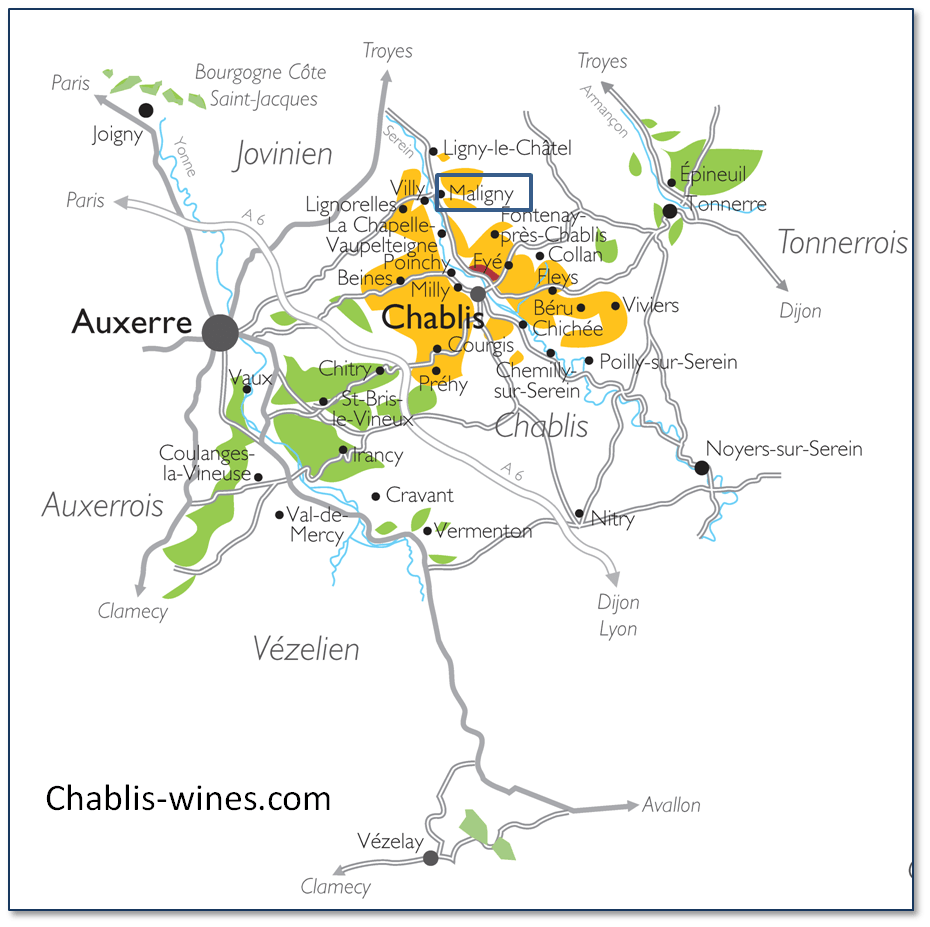
The British wine distributor Boutinot (apparently the main distributor of Séguinot & Filles wines) provides some background on the winery:

In Maligny – as far north in Chablis as you can get – on the right bank of the river Serein, Domaine Daniel Séguinot is a small, 27 hectare [67 acres] estate founded in 1971. It is now run by Daniel’s charming and very switched-on daughters, Emilie and Laurence. Since they took over the running of the business from their father they have been instrumental in the move to domaine-bottled wines, produced without oak in a very pure, linear style.
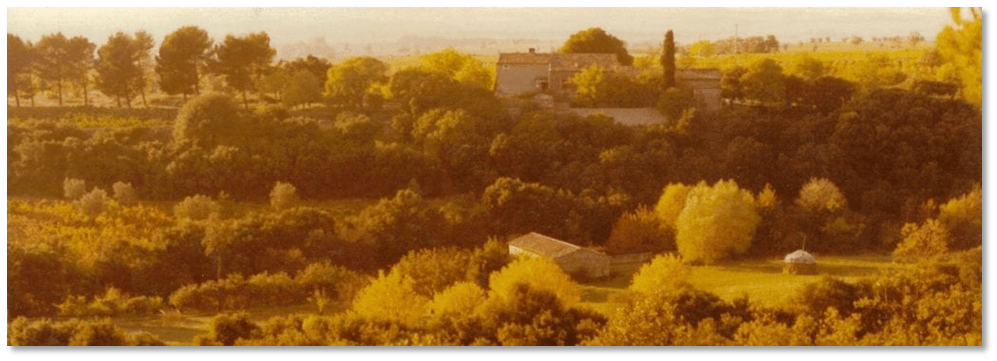
I’m not quite sure what “switched-on daughters” means in this context (they look pretty normal to me in the photo below); maybe it’s a French thing that got lost in translation? But anyway, let’s move on.

What is different about Chablis wine?

Chablis-wines.com tells us, “Chablis wines are dry white wines which are characterized by their purity, crispness, sophistication and minerality. The Chardonnay varietal gives results in Chablis unlike anywhere else. It draws its personality and character from a subsoil that is 150 million years old, and ripens in ideal conditions, in a semi-continental climate [see earlier description], which allow[s] it to attain a good balance between sugar levels and acidity.” Wine Searcher says that “Chablis is arguably the home of unadorned, cool-climate Chardonnay, producing white wines of great freshness, longevity and beguiling minerality.”

The Oxford Companion to Wine tells us, “Chablis is the uniquely steely, dry, age-worthy white wine of the most northern vineyards of Burgundy in north east France…. The vineyards of Chablis are much closer to Champagne and its southernmost vineyards … than to the rest of Burgundy, and until early in this century it was not unusual for wine from Chablis to find its way into the champagne makers’ cellars…”

The Oxford Companion goes on to say: “Chablis remains one of the great white wines of the world. It is sometimes overshadowed by the greater opulence of a fine Meursault [which I wrote about earlier, #13 in the series] … but it has an individuality of its own that sets it apart from the great white burgundies of the Côte d’Or.” Chablis has a “unique streak of steely acidity, a firm flintiness, and a mineral quality that is not found elsewhere in Burgundy.”

What were we to expect from this Chablis?
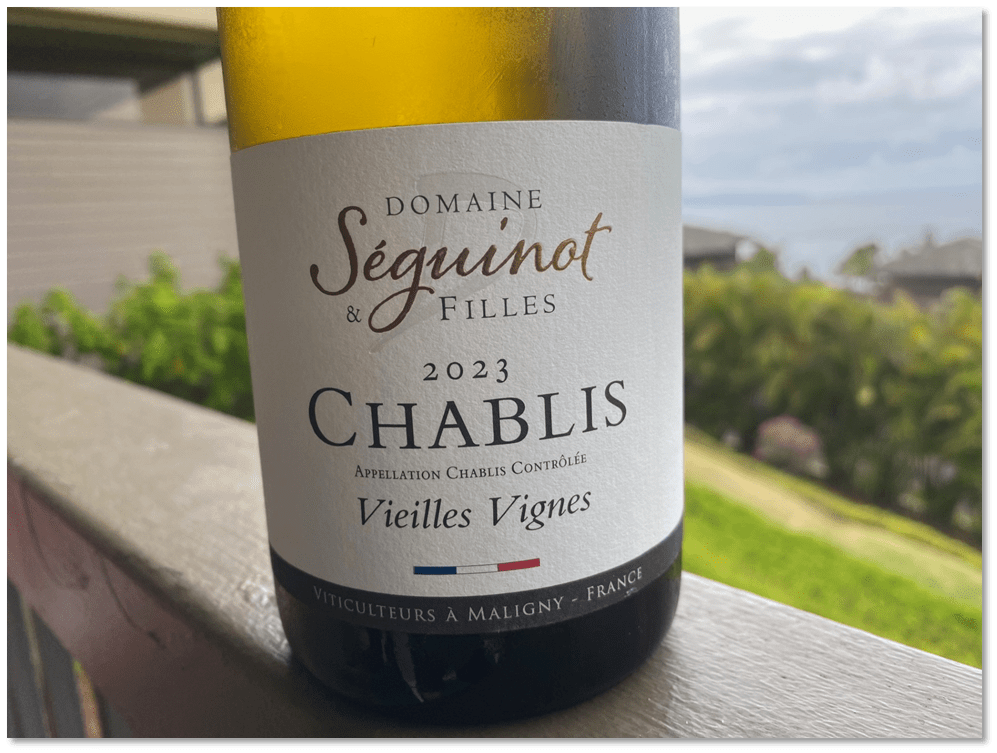
Our specific wine was a 2023 Vielles Vignes (which means “old vines”). The Domaine Séguinot & Filles website tells us that this is “a powerful, mineral Chablis…. A special cuvée made from a single harvest of a fifty-year-old vine, the first vine planted by Daniel. The Domaine produces this wine in 1.50 ha [approximately 4 acres]. The light clay-limestone soils and this old vine give this cuvée fruity, rich aromas.” Total says it is “An elegant and complex display of lemon, melon and pear flavors, with notes of almond cookies and sea shells. Medium-bodied with a balanced finish.” Now that’s a combination you don’t see every day: almond cookies and sea shells!

What were our observations?

First, an explanation. We (Lisa and I) now live on Maui. We moved here permanently from Denver a year ago. That’s the good news. The bad news is that our wine selections here are … somewhat limited. Wine is available in every grocery store, but given the long-distance shipping issues, every store has just about the same (limited) selections. And trying to have wine shipped from wineries or distributors on the mainland is often not available at all or prohibitively expensive. Sooooo… we found this Chablis at a Total in Denver and brought it back in a suitcase after our most recent trip to the mainland, not knowing anything of its provenance, and decided to give it a try.

Our verdict: it was excellent. Its color was a pleasant greenish-straw color, and it was dry and citrusy with notes of pear and green apple (yes I know those aren’t citrus but we did the best we could!). Great minerality and very refreshing, especially if it is super chilled. After a few minutes, it opened up very nicely, a little tingly on the tongue but a wonderful wine to drink cold on our Maui lanai. Its alcohol content was 13%, and you can find it for about $30.

Where do we go from here?

Not sure. As mentioned earlier, I’m pondering incorporating my wine blog posts into book form of some kind, sort of a joint tour of France with Kermit Lynch (or his book at any rate). Stand by – more to come I hope!

Book recommendation: One of the best resources out there is Kevin Zraly’s Windows on the World Complete Wine Course. It’s a hefty reference book that provides great information on all the major wine regions of the world and their wines (with wonderful maps and lists of the best wines from each region), along with recommendations on food and wine pairings, best values, wine quizzes, and other fun stuff.

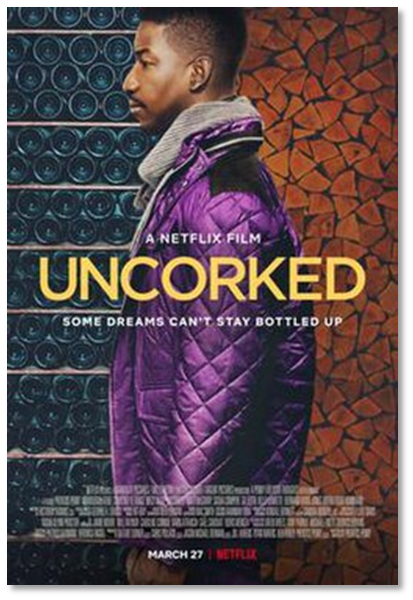
Wine-related movie recommendation: One of my favorite relatively unknown wine-related movies is Uncorked, a Netflix film from 2020, about a young man in Memphis with unlikely wine dreams. Here is its description from Netflix: “Elijah must balance his dream of becoming a master sommelier with his father’s expectations that he carry on the family’s Memphis BBQ joint.” It stars Mamoudou Athie, Courtney B. Vance, and Niecy Nash. Highly recommended!
Wine Playlist: As mentioned in earlier posts, I like to create fun and funky playlists based on some of my interests, so I’ve created a wine playlist – songs with titles or lyrics that include wine. You can find it on Spotify at https://open.spotify.com/playlist/5rAwgh9Thiary4zUplUsaN

Here’s this post’s entry: “Yesterday’s Wine,” by Willie Nelson, a lament on growing older.

“Yesterday’s wine/We’re yesterday’s wine/Aging with time/Like yesterday’s wine…”

Santé! Until next time and our next great adventure!
Celebrity Wine Vinterlude #4: Two Wolves Wine by Pink (P!nk?)

(Posted May 21, 2025)

“Wine is sunlight, held together by water.” – Galileo Galilei

This is the fourth in a series of wine blog posts highlighting some of my favorite wines from celebrities of note and whom I admire. Previous posts reviewed Gaslighter Wines by The Chicks, Pursued by Bear Wines from Kyle MacLachlan, and XOBC Cellars wines by Brandi Carlile and friends.

Faithful followers of this blog may have noticed a rather lengthy … um … pause in blog posts over the past year. In fact, the review of XOBC Cellars wines was published more than a year ago (on March 26, 2024, to be exact). I have had a few life changes since then that have interfered with my ability to review more wines. To be precise, I have sold and donated most of my belongings and all my furniture, sold my house in Denver, and bought a home and moved to Maui along with my partner, Lisa. It has been exciting and challenging but well worth it. I have long thought about living permanently in Hawaii and it seemed that the sun and moon and stars (and waves) aligned perfectly to allow us to do so. So you can imagine that reviewing interesting wines has taken a back seat to getting settled in Kapalua. But now that things have calmed down (somewhat), I thought I would take a crack at this again.

One note about wines in Hawaii: it is not always easy to procure interesting and often obscure wines here. There are numerous wine outlets (grocery stores, Costco, Target) but those traditional outlets usually have limited selections. Out-of-the-ordinary wines are decidedly pricey to ship here, if winemakers even ship here at all. Nevertheless, I am going to try to keep seeking out new and interesting wines and to keep writing about them. Maybe in this crazy world, this can be a little bit of a diversion for you. I know it has been for me!
So let’s get the party started! (See what I did there?)
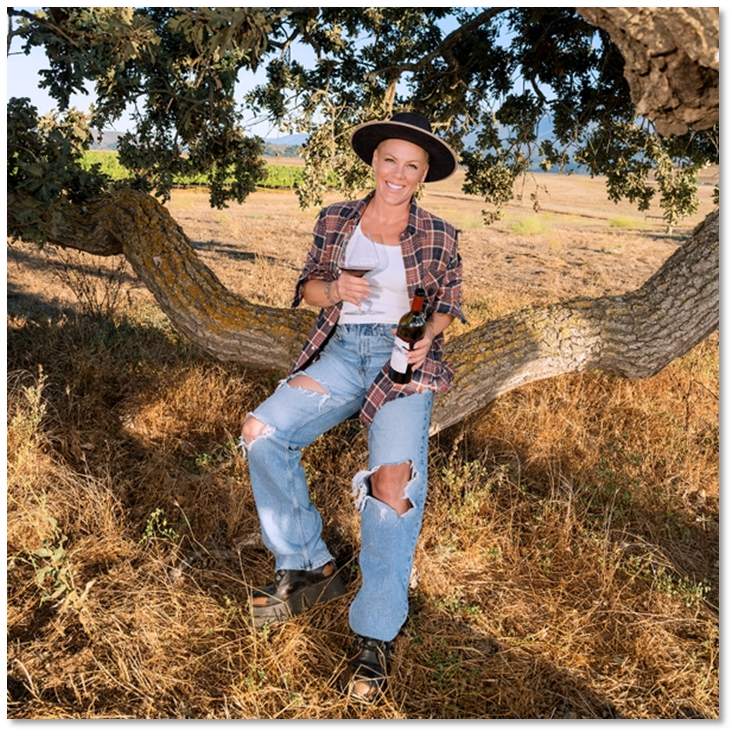
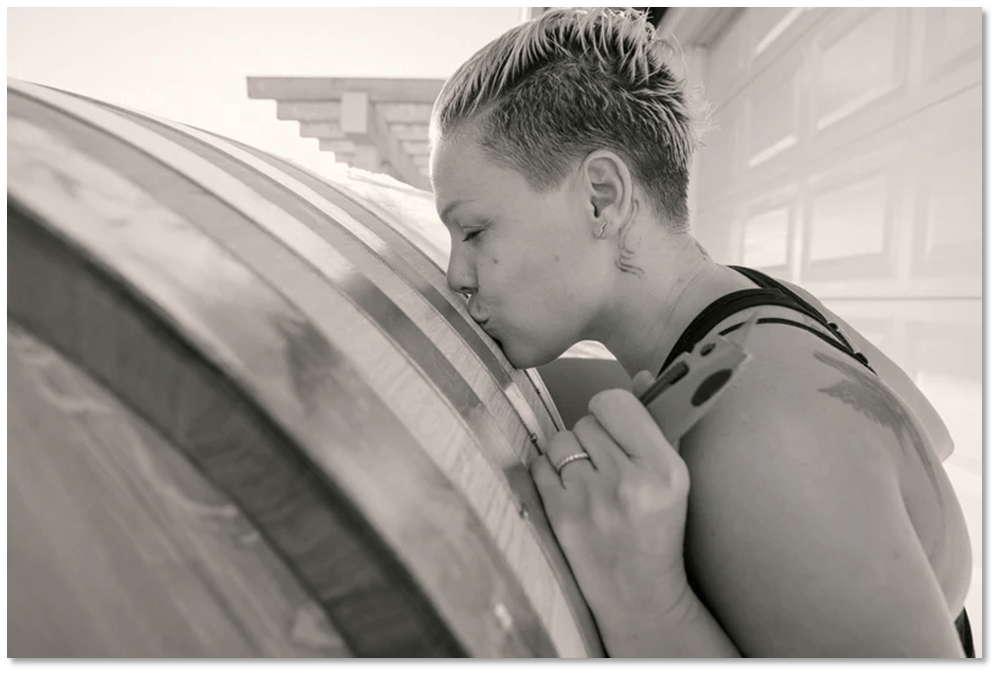
Alecia Moore is better known as Pink (sometimes stylized as P!nk), and as Wikipedia tells us in an understament, “is known for her acrobatic stage presence and activism.” Since the turn of this century, she has taken the pop music world by storm, beginning with her first solo album “Can’t Take Me Home” in 2000 (which went double platinum). She rocketed to further fame in 2001 with her with an electrifying collaboration with Christina Aguilera, Mya, and L’il Kim of “Lady Marmalade” from the movie Moulin Rouge.

After that came a string of hit albums and singles, including the infectious “Get the Party Started”…

… and one of my personal favorites, “Just Give Me as Reason,” a powerful collaboration with Nate Reuss of Fun.

After that came a mind-boggling series of hit singles, albums, and videos. She is known for her aerial acrobatic routines, with probably one of the most memorable at the 2009 MTV Music Video Awards show, where she performed a spectacular version of “Sober.”

Pink has won three Grammies and seven MTV Video Music Awards. She has sold more than 60 million albums and 75 million singles worldwide. Billboard included her at number two in its list of “Greatest of All Times Pop Songs Artists.” Her powerful voice has made her one of the most acclaimed pop stars of the past generation.

But it is her activism that sets her apart from most artists. The list of charities and activism campaigns with which she has been and is involved is mind-boggling: the Human Rights Campaign, the ONE Campaign, The Prince’s Trust, the Run for the Cure Foundation, Save the Children, UNICEF, LGBTQ+ causes, Black Lives Matter, and one that is close to my heart (because I know its founder), No Kid Hungry. And there are many, many more.

So how and why did she get into wine? According to an article in Food & Wine in 2018, “An encounter with a Châteauneuf-du-Pape in her twenties led to a continuing passion, culminating in her purchase of an 18-acre organic vineyard in Santa Barbara County in 2013.” She tells the story that when she was touring in Paris, she had some Château de Beaucastel and was determined to visit its home. “So I just took the train to Avignon with my bass player. I didn’t even realize Châteauneuf was a region, not a winery! We actually ran out of money, and I ended up singing for cheese sandwiches on the street in Avignon—I think I sang Édith Piaf. Finally, the record company sent a driver to pick us up and take us home.” She then took some winemaking classes (“surreptitiously,” she says) and became a winemaker herself.

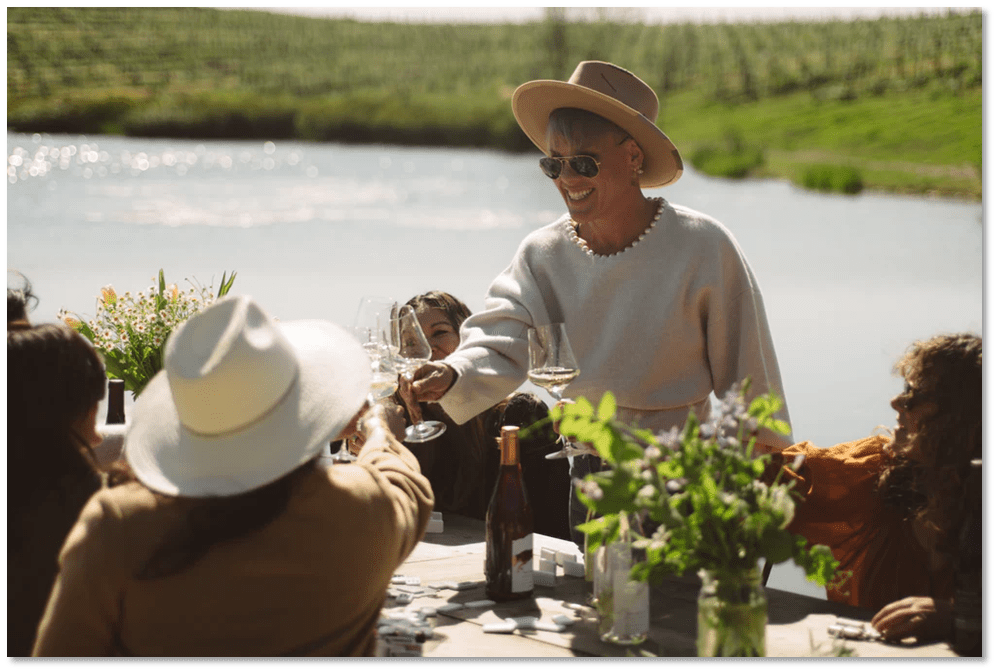
Photo credit: Outside Magazine

She tells the story on her website: “In my travels throughout my twenties and thirties I learned that a great bottle of wine can be found anywhere, at any price. That sharing it with a stranger can turn them quickly to a friend and that this can be the catalyst to some of the best memories you will ever have to look back on. That’s about when I stumbled down the rabbit hole. That’s when, even though I didn’t know it yet, I had found my second dream. That’s when Two Wolves was born.”

A profile in Outside Magazine tells us that “she is a serious organic winemaker who started from scratch in her early thirties, with a baby on her hip, dirt under her fingernails, and a few barrels in the garage…. While touring, she took online wine courses, starting with the WSET – the London-based Wine and Spirit Education Trust, a tiered program for professionals. Later, she studied oenology and viticulture through UCLA and UC Davis, the latter widely regarded as one of the best wine schools in the world.”

She goes on to tell the story on her website: “After years and years of making terrible carboys of wine in my closets, we took our baby girl and left the city, and plunked ourselves down on an organic vineyard in Santa Barbara County.”

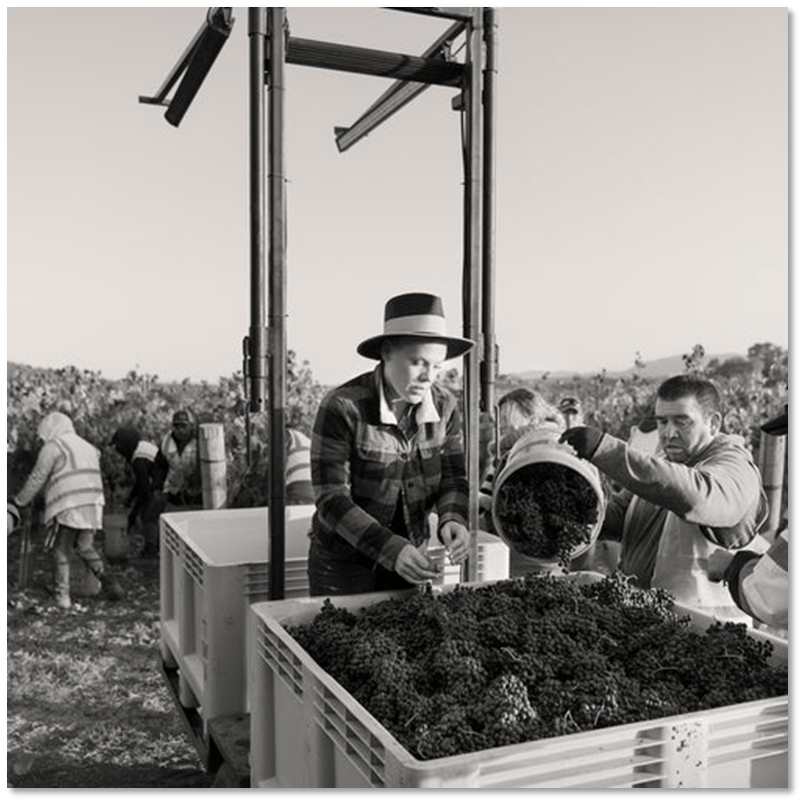
Outside again: “She’s kept most of the 17 acres of certified organic grapes – including cabernet saugivnon, grenache, graciano, syrah, petit verdot, grenache blanc, and cabernet franc – that were planted her before she arrived. She’s since added eight acres and introduced sémillon and merlot to the mix; in all, her crew will harvest over 55 tons of grapes, yielding about 2,500 cases of red wine and 500 cases of white.”

Her website tells us about the name: “An old Cherokee is teaching his grandson about life. ‘A fight is going on inside me,’ he said to the boy. ‘It is a terrible fight and it is between two wolves. One is evil – he is anger, envy, sorrow, regret, greed, arrogance, self-pity, guilt, resentment, inferiority, lies, false price, superiority, and ego.’ He continued, ‘The other is good – he is joy, peace, love, hope, serenity, humility, kindness, benevolence, empathy, generosity, truth, compassion, and faith. The same fight is going on inside you – and inside every other person, too.’ The grandson thought about it for a minute and then asked his grandfather, ‘Which wolf will win?’ The old Cherokee simply replied, ‘The one you feed.’”

More from Outside: “Two Wolves makes ‘estate’ wine, a legal distinction, monitored by the federal government, which tells you that the wine sold is made solely from grapes grown by the winery. Moore also employs low- or no-intervention practices, like not inoculating the grapes with commercial yeast and allowing only local, wild yeast to start fermentation. The result: wines that are not overly hot with alcohol, a characteristic that has become common among California wines as the climate warms and grapes yield higher sugar content. ‘We’ve developed a style of really balanced, elegant, reserved but complex, food-friendly, daytime, you-don’t-need-a-nap-after-you-drink-them wines,’ Moore says.”

Photo credit: Outside Magazine

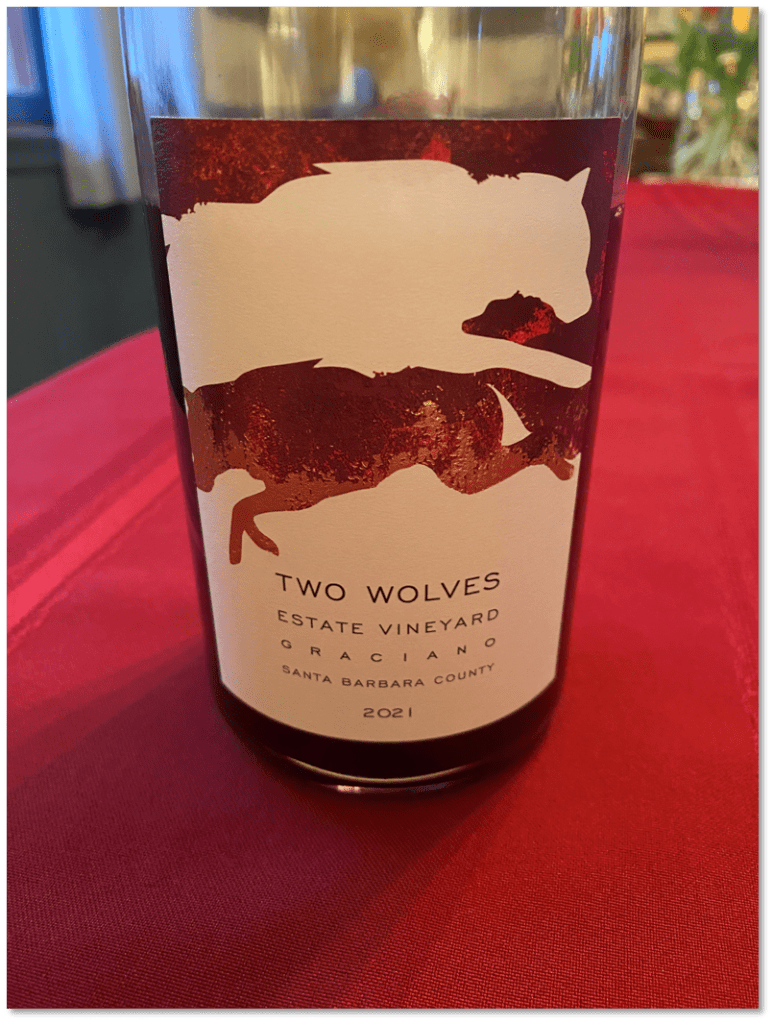
But what about the wine? We tried a 2021 Graciano which is … um… 100% Graciano grapes. Wine Searcher tells us: “Graciano is a black-skinned wine grape from northern Spain, grown principally in Navarra and Rioja. Although rarely seen outside Spain, the variety is found in small quantities in Australia and California. Under the name Morrastel, it is also grown in small quantities in the Languedoc.” The Oxford Companion to Wine calls Graciano a “richly perfumed black grape variety.”

We found this Two Wolves vintage to have a deep fruity aroma, full of raspberry, chocolate, and cranberry, with a deep purple/cranberry color. Its taste was at first less intense than its aroma, but after breathing a while its fruitiness came through, with an additional hint of plums. I’d recommend it for a casual lunch wine. The Two Wolves website seconds some of this: “First off, you must drink this wine chilled. It’s the only way to experience the full crunchy-berry effect along with notes of Elderberry syrup, tart cherry, white pepper, hay, and clove. Lively and fresh with flavors of plum skin, bay leaf, and wild raspberry leading to a snappy finish. Start your evening by pairing this with a charcuterie board… total perfection. Maybe you won’t even need a main course. But, if you do, anything from the grill would be delish.” Love that!

Graciano grapes from Wine Searcher

Where can you find it? Two Wolves wine is sold almost entirely to its “Tribe,” with online releases in the spring, fall and winter. There is a waiting list to become a member, primarily because of the winery’s relatively small annual output. However, you can find it (rarely) at online distributors (secondary market, I guess, like concert tickets?). The Graciano we bought (on the secondary market!) was about $60.

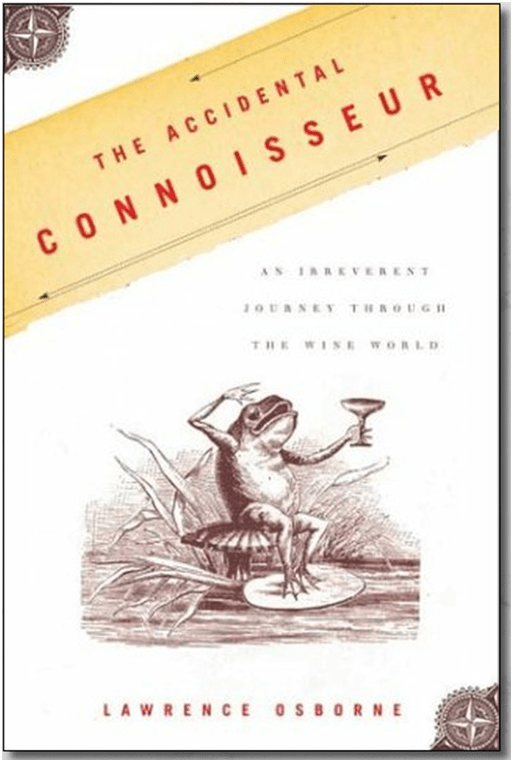
Book recommendation: I really enjoyed The Accidental Connoisseur: An Irreverent Journey Through the Wine World by Lawrence Osborn. He takes us through wine and wineries all over the world to explore what, exactly, we mean by “taste.” As he writes, “What, then, is taste? We secretly pride ourselves on our taste. Yet nothing is more terrifying to contemplate. And no taste is more awkward to contemplate than taste in wine. Wine is the ultimate exercise in this mysterious skill, this nuanced zone of pleasure. Nothing requires more taste than wine. For the greatest wines will provoke the most complex physiological reactions of any foodstuff.”

From its dustcover description:

In his search for wine that is a true expression of the place that produced it, Osborne takes the reader from a lavish lunch with wine czar Robert Mondavi to the cellars of Marchese Pioro Antinori in Florence, from the tasting rooms of Chateau Lafite to the humble vineyards of northern Lazio. Osborne winds his way through Renaissance palaces, multimillion dollar wineries, garages and tin shacks, opulent restaurants, renowned villages, and obscure landscapes, as well as the great cities that are the temples of wine consumption: New York, San Francisco, Paris, Florence, and Rome. On his way, we are shown the vast tapestry of this much-desired, little understood drink.

Wine-focused TV/movie recommendation: One of the first movies that got me really thinking about wine was Bottle Shock. This 2008 film dramatizes the 1976 “Judgment of Paris” when US wines beat French wines for the first time in that international competition. It features the late great Alan Rickman as Steve Spurrier, owner of a wine store in France who wants to introduce American wine to the French market. Bill Pullman stars as Jim Barrett of Chateau Montelena winery in Napa Valley (with Chris Pine as his very long-haired son), whose white wine won the competition. Highly recommended!

Wine Playlist: As mentioned in earlier posts, I like to create fun and funky playlists based on some of my interests, so I’ve created a wine playlist – songs with titles or lyrics that include wine. You can find it on Spotify at https://open.spotify.com/playlist/5rAwgh9Thiary4zUplUsaN

The entry this time is “Sweet Cherry Wine” by Tommy James and the Shondells. A blast from my high school days! Love the soft entry with the bells, the weird wa-wa voices, and the gradual fadeout with a flute. Sort of psychedelic like their other big hit, “Crimson and Clover” – cool, man!

Until next time!
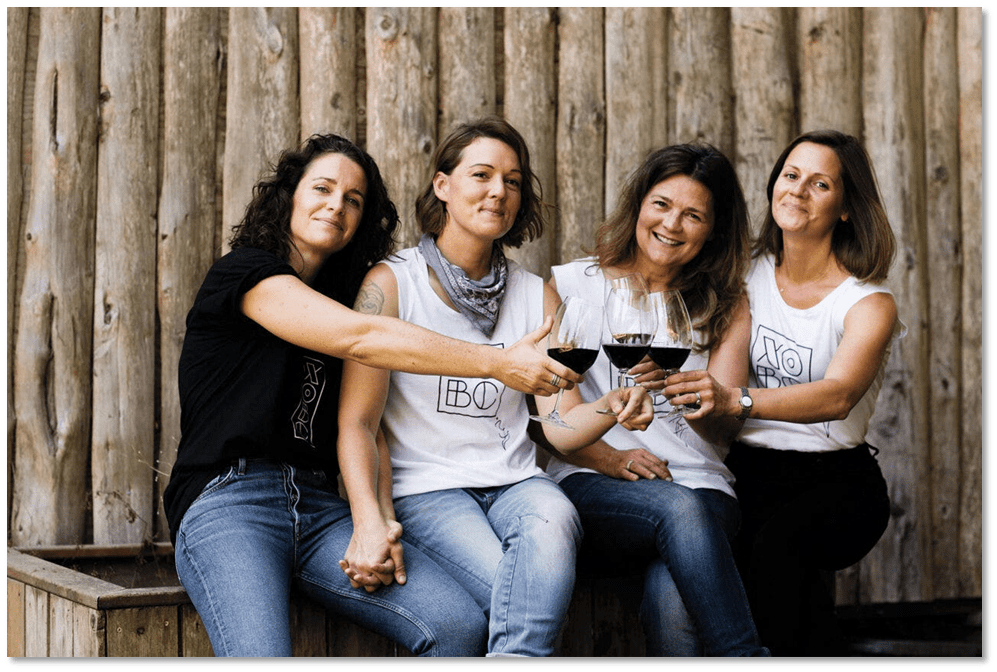
Celebrity Wine Vinterlude #3: XOBC Cellars Wines by Brandi Carlile and Friends

(Posted March 26, 2024)

“A bottle of wine begs to be shared; I have never met a miserly wine lover” ― Clifton Fadiman

This is the third in a series of wine blog posts highlighting some of my favorite wines from celebrities of note and whom I admire. Previous posts reviewed “Gaslighter Wines” by The Chicks and “Pursued by Bear” Wines from Kyle MacLachlan.

There have been very few times in my life when I was in my car listening to the radio and a song came on that was so powerful that it made me want to pull over – in admiration, enjoyment, emotion, whatever the reason. Now this is not especially recommended if you’re on a freeway, but regardless, there have been a few times in my life when a song moved me so much that I could barely catch my breath. One of those times happened in 2007 when I heard a song so powerful that I was almost frozen in admiration. At first, I thought it was a richer, more powerful incarnation of KD Lang, but when it was over the DJ said it was a new artist named Brandi Carlile. I was hooked on Brandi and her music from that day on.

From Washington State, Brandi quickly made a name for herself in several music genres, including rock, Americana, roots, and country, and released several wonderful albums in the 2000s and 2010s. She has won 10 Grammy awards (with 27 nominations) and was the first female artist to be nominated twice in the same year for Song of the Year (for “Right on Time” from her 2021 album “In These Silent Days” and for her collaboration with Alicia Keys for “A Beautiful Noise” to get out the vote prior to the 2020 election).

In 2019, she teamed up with Amanda Shires, Maren Morris, and Natalie Hemby to form The Highwomen, and they recorded and released a wonderful album together. The group name and the title song were a re-imagining of the supergroup The Highwaymen in the 1980s with Johnny Cash, Kris Kristofferson, Waylon Jennings, and Willie Nelson.

There are too many other wonderful albums and songs to rave about, but I definitely want to include one more in particular. In early 2020, in the midst of the pandemic, one of my other favorite artists – John Prine – died of Covid. Several artists recorded John Prine songs in his honor, but one in particular stood out for me – Brandi’s version of the poignant “Hello in There,” about the ravages and uncertainties of growing old. She performed it (remotely of course) on “The Late Show with Stephen Colbert,” and it absolutely rips your heart out.

OK, enough with rip-your-heart-out music. What does any of this have to do with wine? Well, in 2019, Brandi branched out to making wine – for a good cause.

From Wine Spectator in November 2022:

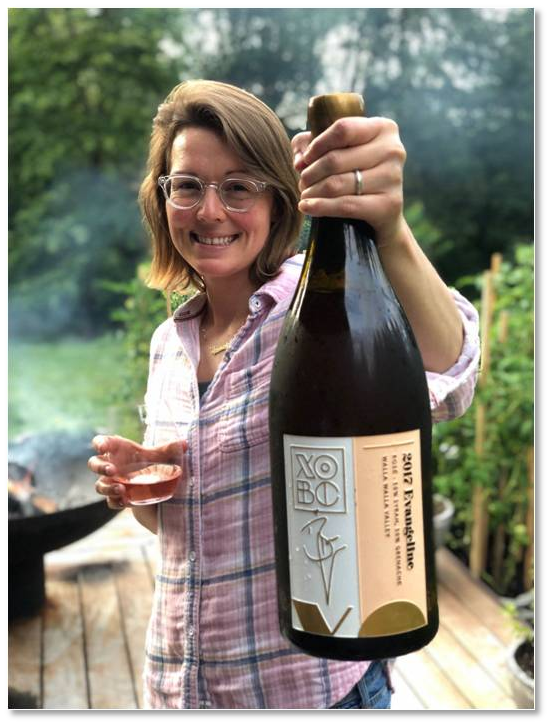
Her Washington-based winery XOBC produces predominantly Rhône-inspired wines. Grapes are sourced from multiple Washington appellations, including Horse Heaven Hills and Walla Walla Valley. The wines are made by Sean Boyd, owner and winemaker at Rotie Cellars [in Milton-Freewater, Oregon, just over the border from Walla Walla, Washington].

The brand’s primary purposes are to raise money for Carlile’s nonprofit Looking Out Foundation and to bring previously ostracized or ignored communities into the world of wine. Managed by Carlile’s wife, Catherine, Looking Out has organized grassroots campaigns and raised money for numerous causes, including COVID-19 relief, racial justice organizations, and Doctors Without Borders.

From the XOBC website: “At XOBC Cellars, we set out to create exceptional wine that is not only notable, but notably generous. In partnership with Brandi’s wife, Catherine Carlile, the Executive Director of The Looking Out Foundation, and friends, Jeri and Amy Andrews, Brandi personally created these wines to be a catalyst for change.” 

In an interview with Wine Enthusiast in March 2021, Brandi was asked if there was a connection between creating a memorable song and creating a memorable wine. She replied, “Absolutely. Both require time, contemplation and imagination. A song can never be heard the same way by two people just as great wine is never described consistently.”

But what about the wine? The good news is that it is universally described as excellent. A sampling:

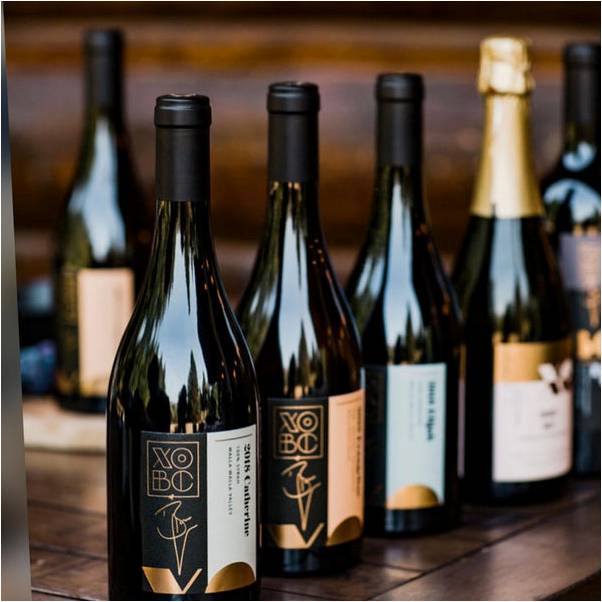
  • Sean Sullivan of Wine Enthusiast gave the 2018 “Catherine” Syrah a 92 rating, saying it has “aromas of wet rock, funk, blue fruit, dried orange rind, black olive and sea breeze. Soft, plentiful savory flavors follow. It’s rich but still brings plenty of sophistication.” Owen Bargreen, in his eponymous wine blog, gave it a 93, saying it is “inky in the glass, takes on Hoison sauce, Umami, black cherry cordial and shades of green olive tapenade aromatics. The palate has a soft mouthfeel and wonderful sense of texture. Ripe dark fruits collide with wet stone, seaweed, and salted smoked meats on the palate.” Wow!
  • Another Sean Sullivan/Wine Enthusiast review gave the 2018 BC Cabernet (from Horse Heaven Hills in Washington’s Columbia Valley) a 91 rating, saying: “The aromas are brooding, with notes of Satsuma orange, cherry, fresh herbs after a rain and a whiff of wet penny. There are plenty of good things happening on the palate, with its Satsuma and cherry notes.” A couple of Satsumas in there – I had to look it up. It’s a Japanese citrus fruit.
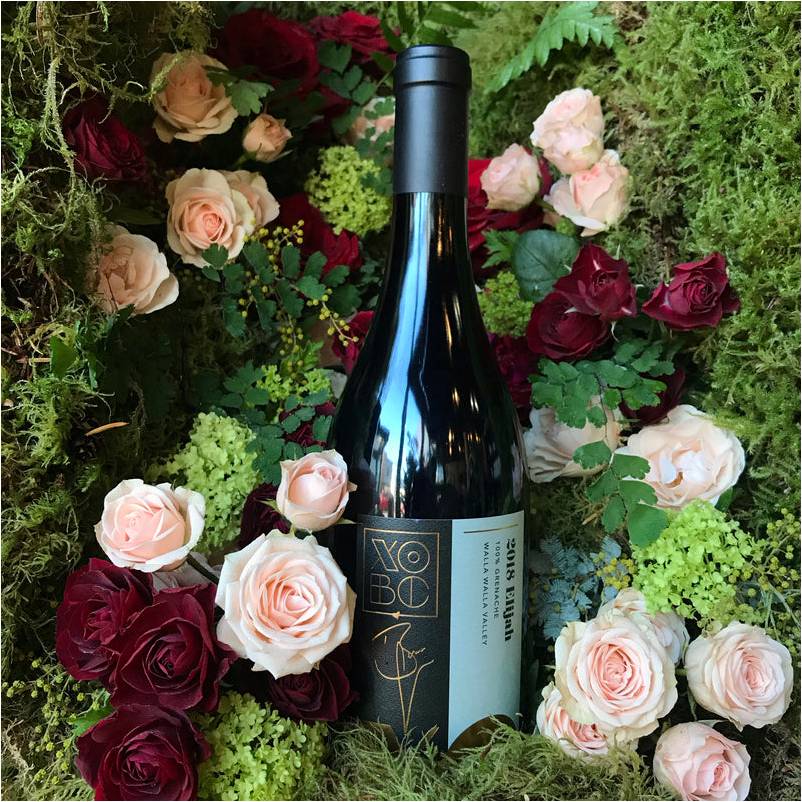
  • Another Owen Bargreen review, of the 2018 “Elijah” Grenache: “Right away pretty red rose petals and blood orange zest aromatics provide plenty of enjoyment, as the core of red fruits with stony undertones all take shape in the glass. The palate is fresh and vibrant with a seamless texture. Very pretty guava, Yakima cherry and red raspberry cordial tones mingle with stony minerals and charcuterie tones on the palate.” This one got a 93 rating.

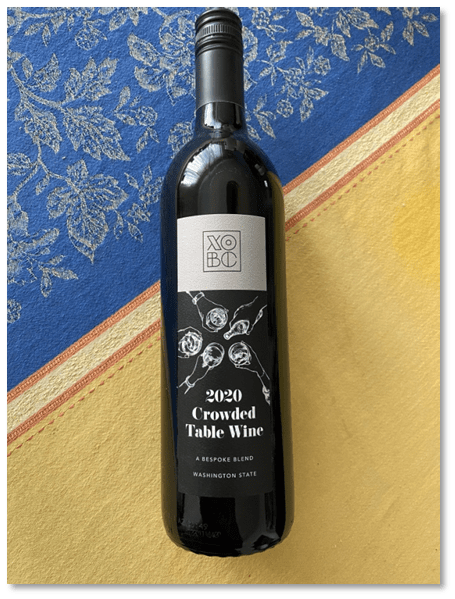
The wine we tried was the 2020 “Crowded Table” wine. This one was 65% Merlot, 25% Cabernet Sauvignon, and 10% Syrah, or as the XOBC website calls it, a “Bordeaux-style, bespoke blend that shows off a pleasing approachability…. Merlot-dominant, the nose blossoms with plump blackberry, jammy purple fruits, and delicate violet. The palate is unctuous and brings forth essences of plum, currants, and pencil shavings. A harmony of dark fruit characteristics flow seamlessly into well integrated, fine-grained tannins from 30% new French oak barrels. Light notes of vanilla, wet stone, and cedar carry through the finish, leaving lasting impressions of a walk through wooded groves.”

A reviewer from Terra Bella Flowers, a very interesting shop in Seattle that sells… um… flowers along with wine, chocolate, and other gifts, noted that the Crowded Table “showcases a rich garnet hue and demonstrates clear essences of blackberry compote, inky bramble fruit, kirsch and smoked cedar wafting out of the glass…. Abundant harmonies of rhubarb, black licorice, and red peppercorn intermingle with chalky tannins that impart a pleasant structural component. The finish is long-lasting with a toasted pecan note. An incredibly pleasurable every day drinking wine, this medium bodied Bordeaux-style blend is best shared around a crowded table [ha!] with a family style farmhouse meal.”

A couple of things. First, the review from Terra Bella Flowers referred to “kirsch.” I had to look that up too. According to Britannica, kirsch is a “dry, colourless brandy distilled from the fermented juice of the black morello cherry. Kirsch is made in the Black Forest of Germany, across the Rhine River in Alsace (France), and in the German-speaking cantons of Switzerland.” You learn something new every day.

Second, the reference to “Bordeaux-style blend:” As a good reminder, Wine Enthusiast tells us that “The phrase ‘Bordeaux-style red blend’ may be used informally to describe red wines produced from a combination of Cabernet Sauvignon, Merlot, Cabernet Franc, Petit Verdot, and to a lesser extent Carmenère and Malbec.” Bordeaux wines are different from, say, Burgundy, whose winemakers generally do not blend wine (every bottle is usually 100% of something, primarily Pinot Noir or Chardonnay).

I found it to be very pleasing, very smooth. To me, it had aromas of ripe berries and licorice, and flavors of dark cherries. It initially had some heavy tannins (I guess that was the Merlot talking) and a strong finish. After it had breathed a while, it smoothed out considerably. Very enjoyable! It runs about $40.

XOBC wines are fairly limited in supply, but generally bought through the winery’s “Collector’s Club” (though it appears as if there is currently a waitlist to join). However, some are available at a few retail outlets, primarily in Washington State and Oregon but also in California, Georgia, Texas, Tennessee, and New Hampshire. You can also find some vintages at a few online wine stores.

One final note: Where does the name XOBC come from? Rumor has it that that’s the way Brandi signs all her emails and letters. Sounds good to me!

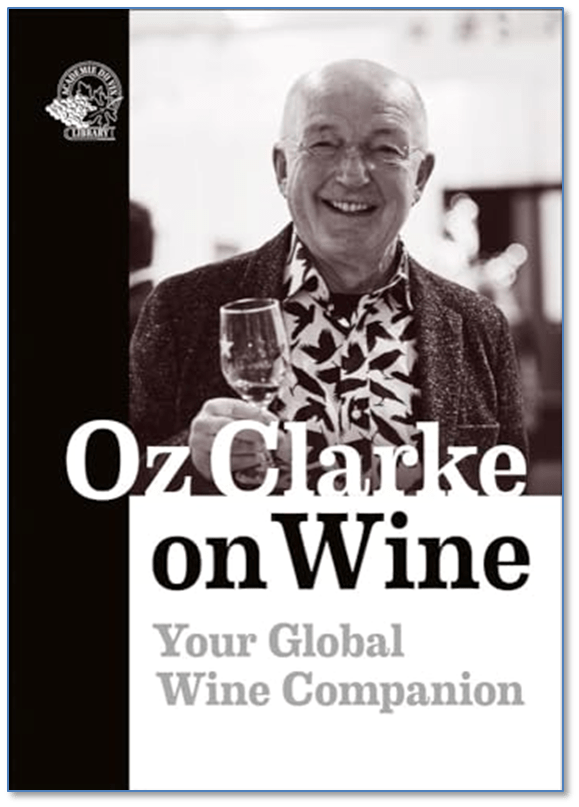
Book recommendation: One of my recent acquisitions is a hefty tome called Oz Clarke on Wine: Your Global Wine Companion. I had heard of Oz before I read this book (see below) but didn’t really know much about him. But there is so much to know! According to his website, “Oz Clarke is one of the world’s leading wine experts, known for his phenomenal palate, irreverent style, accurate predictions, and enthusiasm for life in general (and wine in particular). He is the author of many award-winning books on wine. Before wine took over his life in 1984, Oz was a full-time actor and singer, appearing in West End hit shows and touring with the Royal Shakespeare Company. Alongside his entertaining television and radio broadcasts, including ‘Food and Drink’, ‘Oz and James’ with James May and James Martin’s Saturday Morning, he presents a series of concerts, Drink to Music! with the acclaimed Armonico Consort. Oz is also sports mad. He was awarded an OBE in 2020.” Now that’s a Renaissance man! (Sharp-eyed readers will remember that we recommended his book The History of Wine in 100 Bottles: From Bacchus to Bordeaux and Beyond in an earlier post.)

I think the most interesting part of his writing – apart from his absolutely encyclopedic knowledge of wine – is his gift for describing of the wines he tries. Apparently, his shift from acting to wine tasting and writing was due to his later-in-life discovery of his ability to amazingly and voluminously detect and describe wine aromas and tastes. One of his chapters is titled, “A Wine Taster’s Life,” and it describes his daily tasting and writing routines in … um… enviable detail (I want that life!).

But the tasting notes! In a chapter on Chardonnay, he writes of tasting Meursault wine in Burgundy:

Looking back at my tasting notes [he does that a lot!], I find that, straight from the grower’s barrel in the cool, bright winter sunlight, the young Meursault may still be pale, raw and roughly rubbed with fresh-hewn oak, but its smooth-sided succulence is already clinging to my tongue and cheeks. Tasting it two years later, this same Meursault is straw-gold cut with green, honey and hazelnuts languidly wrapped in oatmeal, with a lingering smell of breakfast buttered toast and fresh-brewed coffee. And now the wine is 10 years old, more evening gold than straw, and all those suggestions of sweetness have dissolved into something much more savoury, wonderfully rich, but it’s the richness of roasted almonds drizzled with cream; the curling brown smoke of toast is still there, and the melted butter still sticks to its crust.

Now those are tasting notes!

Wine-focused TV/movie recommendation: My friend Joe in Cape Cod turned me on to a sweet little movie called From the Vine, a 2019 film featuring Joe Pantoliano. You may remember Pantoliano primarily as a bad guy from The Matrix, Memento, and other action movies. But in this film, he goes in an entirely different direction. As IMDB tells us, “A downtrodden man experiences an ethical crisis and travels back to his hometown in rural Italy to recalibrate his moral compass.” What is missing from that description – his moral compass is recalibrated by taking over a vineyard and starting wine-making. Very enjoyable!

Wine Playlist: As mentioned in earlier posts, I like to create fun and funky playlists based on some of my interests, so I’ve created a wine playlist – songs with titles or lyrics that include wine. You can find it on Spotify at https://open.spotify.com/playlist/5rAwgh9Thiary4zUplUsaN

This post’s entry is “Hey, Brother, Pour the Wine,” by the king of cool, Dean Martin. It reminds me of my month-long trip to Italy in 2022, where we tried … um… a lot of wine.

“Here we sit enjoying the shade (hey, brother, pour the wine)
Drink the drink that I have made (hey, brother, pour the wine)
Tell you why the day is sunny, I’m in love with lips of honey
Wait ’til you see the way she walks, hey, brother, pour the wine”


See ya next time!

Celebrity Wine Vinterlude #2: Pursued by Bear Wines by Kyle Maclachlan

(Posted January 17, 2024)

“Wine cheers the sad, revives the old, inspires the young, makes weariness forget his toil.” – Lord Byron

OK this was another gratuitous photo to get your attention, but not entirely out of context. Now that we are through reviewing many of the wines mentioned in Adventures on the Wine Route by Kermit Lynch, we’re going to keep moving forward by reviewing some “celebrity” wines that have come to our attention lately. This post will cover wines created by one of my favorite actors, Kyle MacLachlan, with his Pursued by Bear wines. (Sorry for the long lag between posts, kids. A lot going on the past few months – leaving Maui early because of the fires, finishing a book on urban planning, making wine at home, holidays, sinus infections, blah blah blah. But the wine still calls….)

You may know Kyle MacLachlan from his movie and TV roles. He first rose to prominence in the mid-80s as the star of David Lynch’s version of Dune, but hit it big a couple of years later in Lynch’s Blue Velvet. But my favorite role of his was his turn as FBI Agent Dale Cooper in TV’s Twin Peaks, also directed by Lynch, absolutely a ground-breaker in the early 90s for its weirdness, dark humor, and sinister story lines. For a few weeks, the question “Who killed Laura Palmer?” was as pervasive as the earlier “Who Killed J.R.?” from the TV series Dallas. We grew to love coffee and pie as much as he did…

But perhaps nothing exemplifies its weirdness more than this scene with the dancing guy, the tall guy,  and the red curtains….

Kyle had roles in the 2000s in Sex and the City and Desperate Housewives, and he had a goofy turn on Portlandia as Portland’s earnest but clueless mayor….

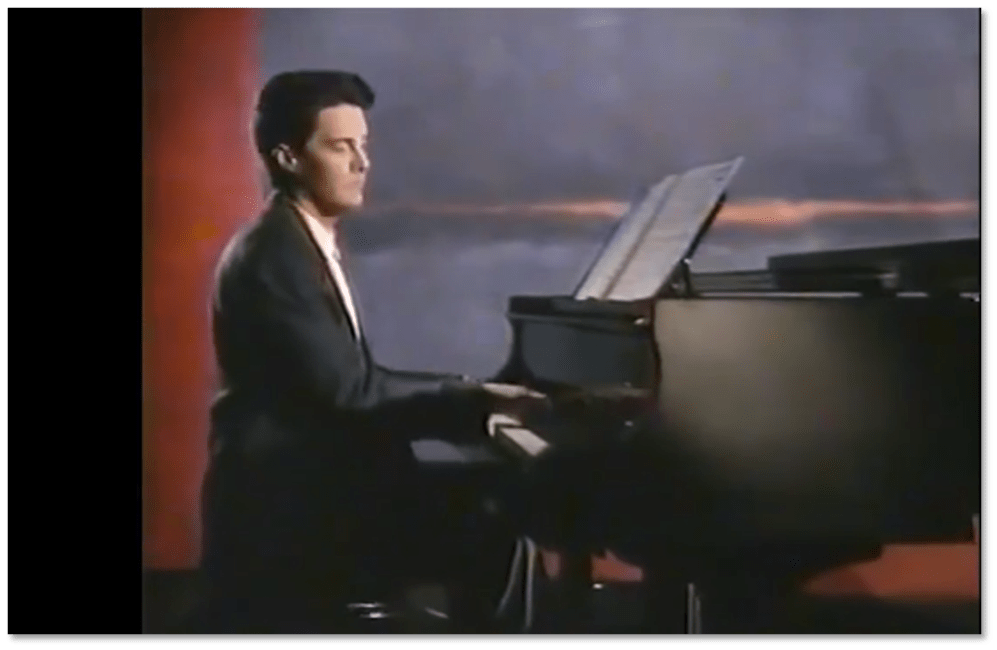
And he is an accomplished musician. I discovered that when I watched a late-Saturday-night special on ABC in the early 90s during the height of the Twin Peaks craze that featured videos of pop covers of Cole Porter songs, recorded on the album “Red Hot + Blue,” a fundraiser for AIDS victims. (If you’ve never heard of this album, I would strongly encourage you to get it – absolutely wonderful versions of classic Porter songs.)

A native of Yakima, Washington, Kyle returned to his home state in the early 2000s to begin a winemaking career and started making Pursued by Bear wines. (The name apparently comes from a stage direction in Shakespeare’s The Winter’s Tale: “Exit, pursued by a bear.” As noted in Food & Wine, “The character Antigonus, it is later revealed, is eaten by said bear. It’s unclear whether the bear has any wine with the meal.”)

From his website (which, by the way, is beautifully and entertainingly done in an old English sort of way):

“The more Kyle traveled to perform, the more he missed his family and the natural beauty of the Pacific Northwest. So he began making trips home to visit his dad, Kent. The two got in the habit of touring Eastern Washington’s back roads together, visiting farmsteads, antique stores, and winery tasting rooms. A fateful father-and-son visit to Dunham Cellars in Walla Walla led to the debut, in 2005, of Kyle’s secondary creative pursuit, a very fine wine called Pursued by Bear.” Dunham was his primary winemaker until Eric Dunham died in 2014, after which time a Dunham winemaker, Daniel Wampfler, became his primary collaborator. Both moved to a partnership with Abeja Winery in 2016.

A story in Oregon Live in April 2023 noted that “Kyle Maclachlan is not just another celebrity with a vanity wine project. He takes his Pursued by Bear wines as seriously as any character as he’s portrayed, which is why after 18 years, his brand is still around.”

In 2023, Pursued by Bear opened a tasting room in downtown Walla Walla. As written in Food & Wine:

“There’s only so much I can do online,” MacLachlan explains. “We have a really nice following and presence, but you really need a space where people can come to get a sense of what the wines are about, and what the story’s about.” Keeping the tasting room in downtown Walla Walla was especially significant for the actor, who calls it “the mecca of Washington wine.” Growing up in Yakima, Washington, MacLachlan cites farming as “in his blood,” and wine as an important pastime through which to spend time with his father…. Ultimately, a former Walla Walla hair salon –– which also had a previous life as a bicycle shop –– would become the perfect space for Pursued By Bear’s inaugural tasting room. At the request of the landlord, the exterior of the 100-year old building remains bright pink, which MacLachlan feels will be especially tempting to visitors come rosé season. Located nearly four and a half hours from Seattle, the tasting room bears (no pun intended!) unmistakably MacLachlan-esque touches, like a mural featuring a misty, lush landscape in the vein of Twin Peaks (commissioned from local artist Brad Rude), as well as a six-foot tall standing bronze sculpture of a bear. “He’s there to greet customers,” MacLachlan says, matter-of-factly. 

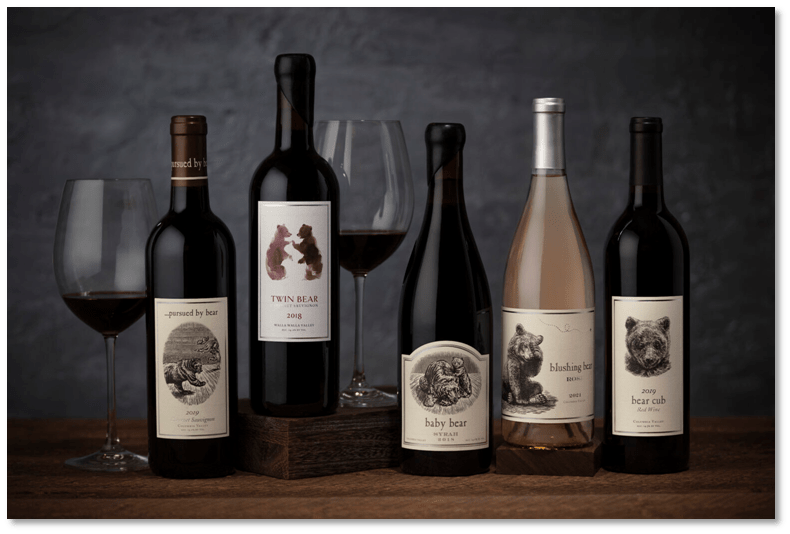
OK what about the wines? Pursued by Bear currently sells five vintages, each with distinctive and entertaining label art:

  • The 2022 Twin Bear Chardonnay – the reviewer from Wine Enthusiast, Michael Alberty, says, perhaps a little too enthusiastically, “This new Chardonnay is my favorite bear pair since Yogi and Boo-Boo. The tangy wine offers pear and apple aromas that are flanked by bits of spearmint and mango. A silky mouthfeel is joined by bright acidity and flavors like peach melba, pistachios and a trace of grapefruit. Stick a bottle in your next ‘pick-a-nick’ basket and head to Jellystone Park.” (Kids if you don’t know 60s era Hanna-Barbera cartoons, you won’t get it!) It runs about $40.
  • The 2020 Pursued by Bear CabernetThe Thief Fine Wine & Beer notes that it has “layers of complex, deep red fruits with exceptional concentration [that] combine with flavors of dark chocolate and hints of mint and vanilla. A luscious mouthfeel enhanced by supple, integrated tannins… harmonize elegantly with the exceptional fruit sourced from the best vineyards in Washington’s Columbia Valley.” It costs about $70.
  • The 2019 Twin Bear Cabernet Sauvigonon – Wine Folly says that its nose has “bramble berries, vanilla, and a hint of black pepper,” while the palate notes “flavorful black cherry, fresh plum, current, and a hint of crushed stone. Showing polished tannins that are at once restrained and balanced, this is a wine of refined elegance and grace, immensely enjoyable now but with the structure to grow even more lovely in the years to come.” It runs about $80.

And two wines that we tried:

  • The 2020 Bear Cub Red Blend – This one is 57% Cabernet and 43% Merlot and is aged 20 months in 100% French oak. DePanneur Wines wrote that it is “Bold, full bodied, impeccable balance, rich and deep with dark fruit, boysenberry, toasty spice, cocoa nibs [!], espresso grounds, finely knit tannins, nice acidity to provide lift.” [Note: the red blend we tried was the 2018 vintage, and I firmly agree with the comments.] It’s available in 3-packs from the website at $105, or $35 a bottle (and you can find single bottles on wine distributor websites). Highly recommended.
  •  The 2022 Blushing Bear RoséWine.com notes that this one is “Inspired by the classic Bandol rosés of southern France” and “is a beautiful salmon pink color, offering fragrant aromas of honeysuckle, wild strawberries, and grapefruit. Refreshing and flavorful with a soft, lush entry and bright notes of Bartlett pear, guava, and crisp apple.” We found it to have similar characteristics (more amber, less pink), with hints of pear and apple and a light, floral finish. Similarly (before reading this review, I swear!), we thought it was very comparable to the best Provence rosés. It is a blend of 73% Grenache and 27% Mourvèdre. It’s available in a 3-pack on the website for $84 (or $28 a bottle), and you can also find it in individual bottles on wine distributor websites. Excellent!

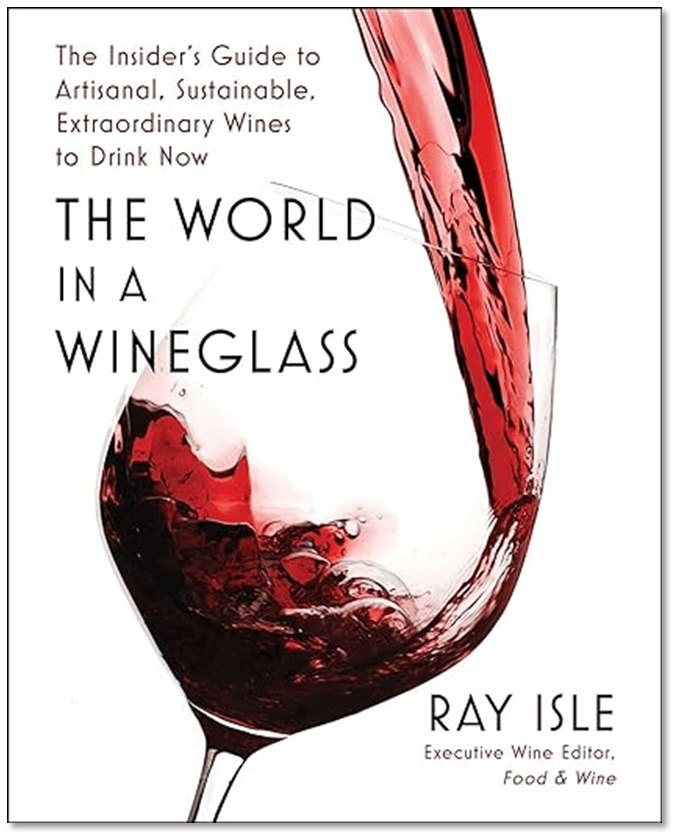
Book recommendation: This year’s Christmas gift was The World in a Wineglass by the executive wine editor for Food & Wine, Ray Isle. It’s … um… a little bulky, but very entertaining and educational. Isle focuses on artisanal, sustainable wines from all the major wine regions of the world. He tells us that “Our experience of wine… is inescapably contextual. Who we’re with, where we are, what sort of mood we’re in, whether the sun is shining, whether a nitwit just backed into our car in the parking lot, whether we’re in love, out of love, hungry, tired, graced with optimism or feeling like life is perfect crap, all of that plays into how a wine tastes to us.” And since we spent quite a bit of time in the reviews above highlighting aromas and flavors, Isle says, “It’s pretty clear to me that wine writing of what could be called the American pseudoscientific taxonomy school – or the fruit-salad school – just doesn’t do all that much for anyone who’s actually drinking a glass of wine.” In other words, we like wine because … well, we just like it. The impressions – aromas and flavors – are secondary. Food (or wine) for thought.

Wine-focused TV/movie recommendation: This may be a no-brainer, but since Paul Giamatti is in the public consciousness these days because of his excellent work in Billions and The Holdovers, I’m going to ask you to check out (or revisit if you’ve already seen it) the movie Sideways. It’s a buddy movie, it’s a wine movie, it’s a raucous comedy, it’s a (somewhat) rom-com, but overall it’s completely enjoyable, including one of Sandra Oh’s early movie highlights. It also (according to many) started the Pinot Noir craze in the US (confirmed by a wine guide in France), for good reasons. And you may not want Merlot ever again!

Wine Playlist: As mentioned in earlier posts, I like to create fun and funky playlists based on some of my interests, so I’ve created a wine playlist – songs with titles or lyrics that include wine. You can find it on Spotify at https://open.spotify.com/playlist/5rAwgh9Thiary4zUplUsaN

This post’s song is “Barcelona” by Ed Sheeran. “Oh, get up, up on the dancefloor tonight/
I’ve got two left feet and a bottle of red wine.” Fast and intoxicating, just like drinking Sangria on Las Ramblas!

Celebrity Wine Vinterlude #1: Gaslighter Wines by The Chicks

“Life is too short to drink bad wine.” ― Anonymous

OK this was a gratuitous photo to get your attention, but not entirely out of context. Now that we are through reviewing many of the wines mentioned in Adventures on the Wine Route by Kermit Lynch, we’re going to keep moving forward by reviewing some “celebrity” wines that have come to our attention lately. This post will cover wines created by one of my favorite bands, The Chicks.

I first discovered this wonderful band in 1992 when they appeared at, of all places, the Euless (Texas) Arbor Day Festival. I also saw them on local TV in the Dallas-Fort Worth area occasionally (including a Sunday night sports show!). During those early days, they were…. really Texas cowgirl-like. In fact, their second album was called Little Ol’ Cowgirl (their first was called Thank Heavens for Dale Evans). You get my drift.

But after a few years, the band changed its incarnation from cowgirl/bluegrassy to more traditional country and country-rock. Its two founding members, Martie McGuire and Emily Strayer, decided to move in a new direction (they only had moderate success in their previous identity) and replaced the two other musicians in the band with a new singer – Natalie Maines – in 1995. After that, their career took off like a rocket with two wildly popular albums – Wide Open Spaces in 1998 and Fly in 1999 (which featured the hit “Ready to Run” from the movie Runaway Bride). According to Wikipedia, in 1998 the group “sold more CDs than all other country music groups combined.”

Now some of you may know them by an earlier name, The D**** Chicks. But, as explained by americansongwriter.com, the group changed their name to The Chicks in the summer of 2020 “in the wake of George Floyd’s murder in May 2020.”

The move, like others that came from the band, originated from the country trio’s conscience…. The trio, already known for its socially-conscious positions like criticizing President George Bush in 2003 regarding the Iraq War and the invasion of the Middle East, received criticism for its band name. Some 17-plus years later when another monumental change in American culture began, The Chicks were there again. Complete with a headline-grabbing name change.

Regarding the criticism of President Bush, the group was banned from many country stations for saying that they were “ashamed that the President of the United States is from Texas.” They responded with even more forceful music and activism – participating in a benefit concert for victims of Hurricane Katrina, joining a Vote for Change Tour – and came out with another powerful album in 2006, Taking the Long Way (produced by the incomparable Rick Rubin), which included the song “Not Ready to Make Nice” to rebut their critics after their comments on President Bush. The album and song swept the Grammies, winning Album of the Year, Song of the Year, and Record of the Year. As The New York Times put it, “The Chicks Are Done Caring What People Think.”

This brings us to their most recent album, Gaslighter, released in 2020 (the first under their new name, and their first in 14 years), which included the powerful “March March” in response to the George Floyd murder and protests. The album’s title was a response to the difficult political environment of 2020, as Forbes tells us: “To gaslight someone means to manipulate another person into doubting their own perceptions, experiences or understanding of events, according to the American Psychological Association.”

So….. it was only appropriate that when they moved into the winemaking business around this time, the wine would be called Gaslighter. From the Pacific Highway Wines website:

Gaslighter Wine Co. is a collaborative premium wine project led by the biggest-selling U.S. female band of all time, The Chicks, in partnership with Sonoma’s 6th generation Bundschu Wine Company Together, they created a collection of premium wines with unapologetic expression and individuality from California’s Sonoma County and Napa Valley. Gaslighter wines are sourced from the Bundschu family’s estate vineyards and selected grower partners, and the wines are produced and bottled at Bundschu’s winery in Sonoma Valley under the care of winemaker, Joe Uhr. The Chicks are involved in every aspect of the project, from the naming, messaging, and eye-catching label design to the ongoing winemaking decisions and final blends.

A bit of history about the Bundschu Winery, which produces Gaslighter. According to the winery’s website, the Bundschu family has farmed the Rhinefarm estate vineyard “at the crossroads of the Sonoma Valley, Carneros, and Napa Valley appellations.” The winery, in its sixth generation of winemaking, focuses on making “small lots of ultra-premium wines” and has been in business more than 160 years. Quite the pedigree.

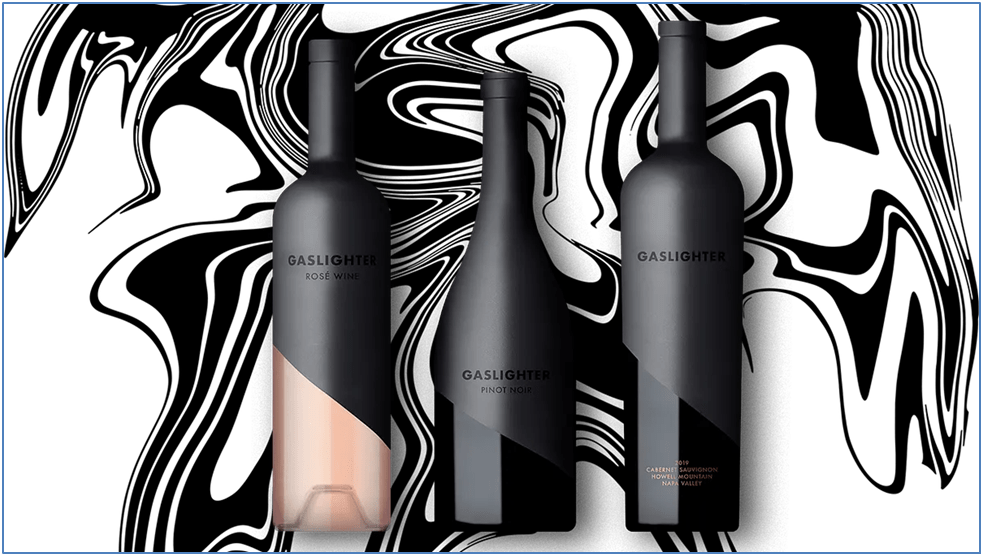
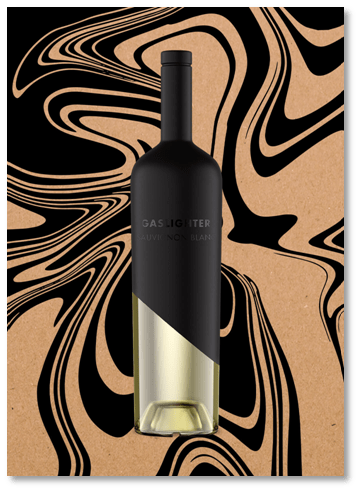
So far, Gaslighter has produced four wines: a Pinot Noir, a Pinot Noir rosé, a Sauvignon Blanc, and a Cabernet. I tried two: the Cab and the Sauvignon Blanc, and both were excellent. And yes, the bottles (with their engraved labels) are about the most beautiful I’ve seen in a long time.

First, the Cabernet. Mine was a 2019, which the winery’s website describes as being “From a single vineyard at the peak of Howell Mountain, with 20 months on 60% French oak, this unapologetically sensuous cab is for anyone who’s ever held their own in the face of chaos.” Loved the description, and I loved the wine even more. It was rich and sensuous, a hearty cab that was a gorgeous dark burgundy color with hints of dark cherries. It’s a little pricey at $145, but if you want to try something a considerable cut above your everyday wines, I’d heartily recommend this one.

The Sauvignon Blanc (from 2021) was even more impressive – and a bargain. I love a lot of California Sauvignon Blancs (I go back and forth between US/West Coast and New Zealand, as I like to note the contrasts). Wine Spectator noted that it was “mouthwatering and pure, with Key lime, lemon verbena and ruby grapefruit flavors on a sleek, light frame, showing a touch of dried pineapple. This is lovely for the precision, power and delicacy.” Highly recommended! And more affordable at $25.

From what I can tell, Gaslighter isn’t widely available at liquor stores just yet, though the rosé is available at some Total stores and the Sauvignon Blanc is available at wine.com. Check the Gaslighter website for availability and pricing.

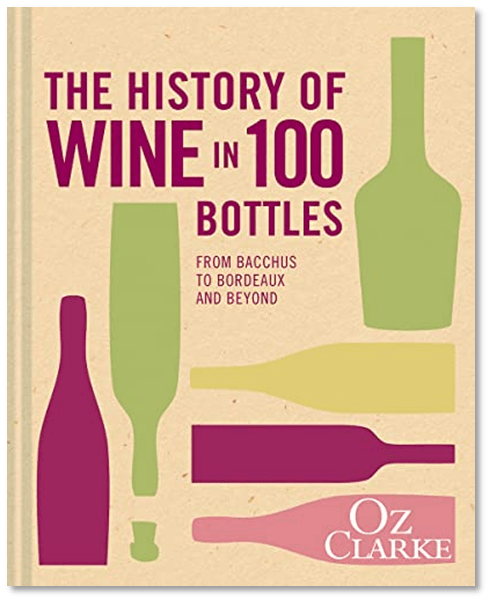
Book recommendation: Oz Clarke is a famous British wine critic who has written countless books and wine reviews, all very entertaining in his inimitable way. His website (ozclarke.com) is called “Let Me Tell You About Wine” and is full of great writing about wines. I recently read his book The History of Wine in 100 Bottles: From Bacchus to Bordeaux and Beyond and really enjoyed it. As his website says, “This fascinating and entertaining book takes a look at 100 bottles that mark a significant change in the evolution of wine and winemaking and captures the innovations and discoveries that have had the biggest impact on the history of ‘bottled poetry.’” I learned a great deal about the history of wine and winemaking.

Wine-focused TV/movie recommendation: I’m going to start including my recommendations on wine-related TV shows or movies for your enjoyment. My recommendation this time is one of the best wine-focused shows I’ve seen in a long time, “Drops of God” on Apple TV+. Without giving too much away, it’s about a family wine fortune (and cellar) and a competition about who will inherit it. It is absolutely wonderful and riveting – check it out.

Wine Playlist: As mentioned in earlier posts, I like to create fun and funky playlists based on some of my interests, so I’ve created a wine playlist – songs with titles or lyrics that include wine. You can find it on Spotify at https://open.spotify.com/playlist/5rAwgh9Thiary4zUplUsaN

I wish I could say that The Chicks had an entry on this one, but alas…. Instead, let’s hear a favorite from Billy Joel – “Scenes from an Italian Restaurant” from his impeccable album The Stranger.

“A bottle of white, a bottle of red
Perhaps a bottle of rose instead
We’ll get a table near the street
In our old familiar place
You and I, face to face

“A bottle of red, a bottle of white
It all depends upon your appetite
I’ll meet you any time you want
In our Italian Restaurant.”

Enjoy!

Postscript: There was a wonderful article by Alex Halberstadt in The New York Times Magazine recently about Maggie Harrison’s unorthodox Antica Terra winery in the Willamette Valley in Oregon. She has a special sensory ability to taste and blend wines (coincidentally, that talent is similar to one of the main characters in “Drops of God”). It is almost as if she treats wine as art.   

Harrison has grapheme-color synesthesia, a form in which numerals and letters become associated with colors, and this turns out to be especially useful in her work. As she tastes her way around the bottled samples, her brain turns every number into a distinct, vibrant color, until the wines in front of her become a palette of umbers, oranges and Prussian blues that she combines into a final composition that aspires to what she describes as “emotional transparency” and a “perfect tension between intensity and levity.” Her synesthesia allows her to hold this overwhelming amount of sensory data in her mind as a palette of color, “keeping it in the sensory realm,” she told me, “without having to translate it into language.”

Wine #18: Charles Joguet Clos de la Dioterie Chinon (and the final wine from the Kermit Lynch book that started this whole thing in the first place!)

(Posted March 6, 2023)

“One should always be drunk. That’s all that matters…But with what? With wine, with poetry, or with virtue, as you chose. But get drunk.” ― Charles Baudelaire, Paris Spleen

Two years ago, I was sitting on a beach on Maui reading Adventures on the Wine Route: A Wine Lover’s Tour of France by the wine importer Kermit Lynch. Lynch, an American wine importer based in Berkeley, California, wrote it in 1988, and it was absolutely one of the most informative and entertaining books on wine I’ve read. In 2013, Lynch published a 25th anniversary edition, with updated information on some of the wines and domaines he wrote about in 1988. It was as close to an epiphany about wines as I can recall. I have long been interested in wines, collected and read many books, and bought a fair share of relatively inexpensive wines over the years (he often calls such wines “plonk”). But his book pushed me in an altogether different direction, one where I yearned to broaden my horizons and start sampling some of the better wines of the world.

With those thoughts as inspiration, I decided I would buy and taste as many of the wines mentioned in Lynch’s book as possible. Some domaines and appellations he mentioned are no longer around, but many are, so after scouring wine importers and online stores, I started gradually stocking up on some of those beauties that Lynch described. Now admittedly some were pricey, so I spaced out my purchases as my budget allowed. But I was surprised to find that many were affordable, and quite a few were even available at my local wine shop.

My goals in starting this adventure were two-fold. First, as mentioned, I really wanted to broaden my horizons and start sampling some of the better wines of the world. Second, I wanted to compare Lynch’s (and others’) descriptions of tastes and aromas with my own – and with those of friends and family who tasted with me. I don’t think I have a very discriminating wine palate, but I knew I was missing something by not focusing enough on a wine’s smells, textures, look, aftertaste, and other characteristics that are unique to every bottle’s distinct terroir and grape blend. Finally, in a pandemic year when I started, I wanted to satisfy some of my wine yearnings that I haven’t yet been able to accomplish, such as opening a wine shop or wine bar. I decided to do the next best thing – a wine bar in my house!

My long-range plan was to sample and describe as many wines mentioned in Lynch’s book as possible, coupled with random musings and other thoughts about wine in particular and the world in general. Once I completed the French wines mentioned in Lynch’s book, I planned to move to wines from other countries such as Italy, the US, New Zealand, and others (I have already posted a few “vinterludes” with other wines from France, Italy, and elsewhere). I hoped to share with you my thoughts and ideas on wine in all its complexities and simplicities. But overall, I just wanted to have fun – and I wanted you to have fun too.

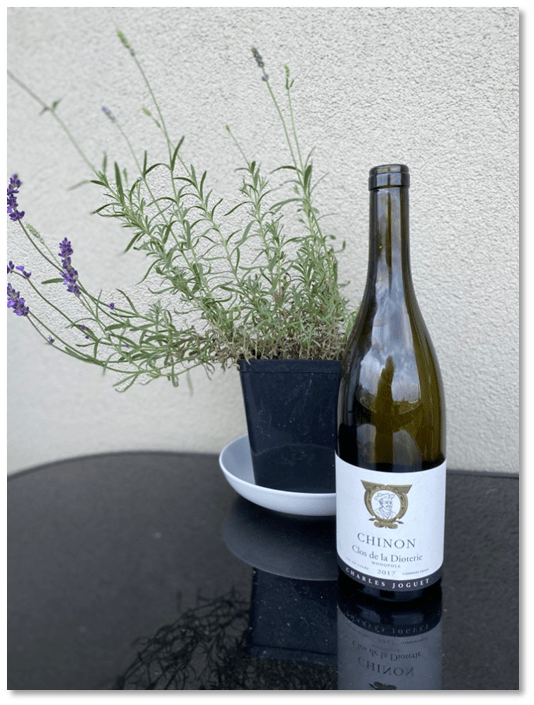
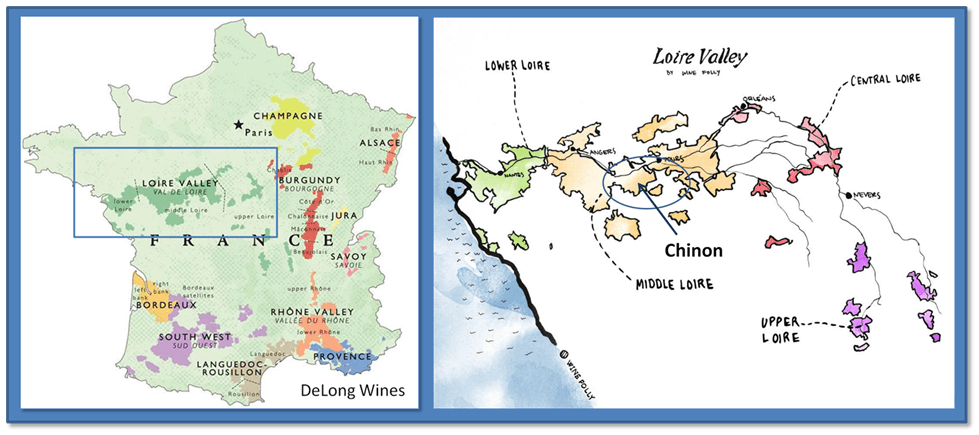
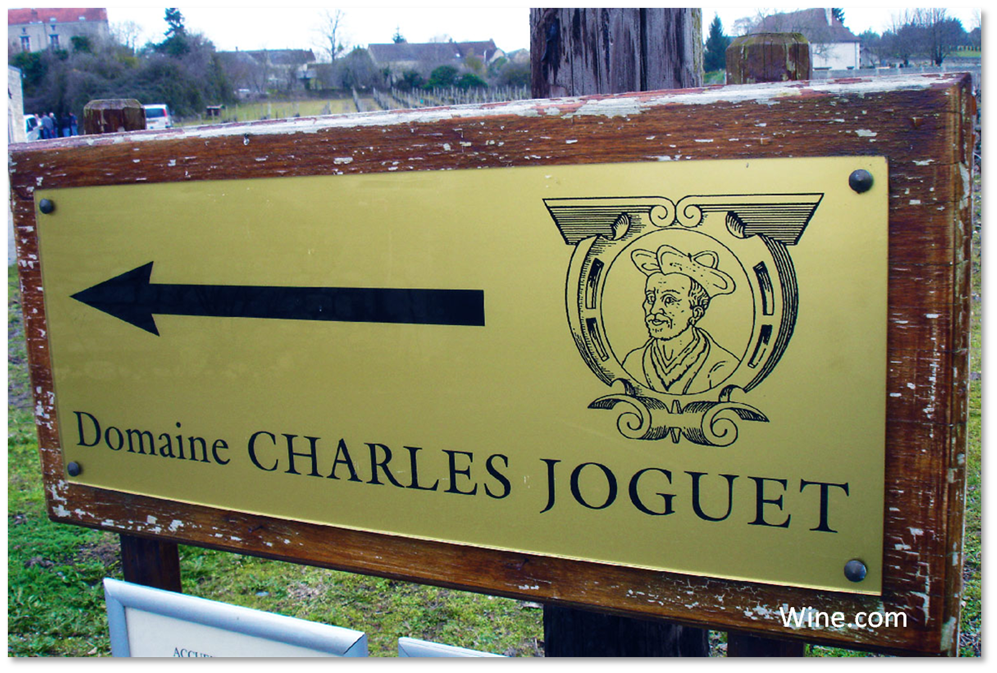
So with that original broad mission still in mind, we can review the final one on my Kermit Lynch list – and return to the original place of inspiration for its tasting – Maui. The eighteenth and final wine on the list is a 2017 Clos de la Dioterie Chinon from the Loire Valley of France from the Domaine Charles Joguet.

Kermit Lynch was effusive about the Joguet Chinon in his book. He called it part of an “intriguing collection of little known Loire Valley reds…. Thus began my love affair with the Cabernet Franc of Chinon… wines which at their best have such a strong personality that novice tasters are often startled.”

He probably spent more time writing about Charles Joguet than any other winemaker in his book. He described Joguet as “one of those rare vintners whose wines can be gripping aesthetically, spiritually, and intellectually, as well as sensuously…. One has the impression that Charles is out there on the edge, willing to take risks and willing to accept losses in order to make magic. There are not many like him in the world of wine.”

Chinon is a red wine appellation in the Touraine (middle) district of the Loire Valley, widely known as the origin of the best red wines in the Loire. The website princevillewinemarket.com tells us, “The wines of Chinon have long been celebrated. French humanist and native son, François Rabelais, sang their praises as far back as the sixteenth century.” 

Let’s do a little linguistic detective work. I was intrigued by the name “Clos de la Dioterie.” The first part of the name, clos, is a French word meaning, according to Merriam-Webster, “A French winery” (duh), especially “one enclosed by a wall, often used prepositively [!] in a compound naming such a vineyard or its wine.” It is related to the English noun “close,” meaning (again duh) “an enclosed area.”

According to the Charles Joguet website, the Clos de la Dioterie was under vine one or two centuries before 1789. The German wine website lebendigeweine says: “The Clos de la Dioterie is the domaine’s most famous vineyard. It was already mentioned in the Middle Ages, when it still had a complete enclosure.”

According to the Joguet website, the vineyard is “entirely planted with Cabernet Franc” and “dates back to 1830 and perhaps longer. As for the Clos de la Dioterie, it was under vine one or two centuries before 1789.”

Joguet took over the winery when his father died in 1957 after flirting with painting and architecture. After he took over, according to the Kermit Lynch website:

He began to question the common practice of selling grapes to negociants, as his family had done for years. The Joguets owned prime vineyard land between the Loire and Vienne Rivers with distinct variations in the soils. To sell the grapes off or vinify the individualized plots together would have been madness. Separate terroirs, Charles believed, necessitate separate vinifications. He took the risks necessary to master single-vineyard bottling with an artistry that Chinon had never before seen.

The daysontheclaise.com website says:

Joguet was not a winemaker, but had trained as an artist in Paris. When he returned to Chinon and picked up the reins he was viewed as an upstart, an outsider, and with his modern ideas about winemaking in a deeply traditional area was the object of considerable local scorn. By recognising the effect of terroir and his conviction that with a more nuanced approach he could make great wine he more or less single handedly created the reputation Chinon AOC enjoys today. He was the first Chinon winemaker to separately vinify different parcels of vines and to bottle and commercialise on the estate. 

And winespecific.com says, “Joguet had the first stainless steel tanks in the Loire: today they are the standard.”

The Joguet website tells us, “In 1997, Charles Joguet took his leave of the wine industry to devote himself entirely to his other work, his other unquenched passion: painting.” The daysontheclaise.com blog continues the story: “The Domaine is now owned and run by the descendants of his business partner, the Genet family. The Genet family continue the innovative and somewhat rebellious tradition of their predecessor with passion and sensitive attention to detail. The aim is to make the highest quality wines they can whilst expressing the rich diversity of terroirs in the Chinon AOC.”

What did Lynch have to say about Joguet Chinon?

When Lynch drove to Joguet’s village and met the winemaker for the first time, they began tasting the 1976 vintage. “The nose was thick with black currants and violets. It was sizable on the palate too. Ripe, rich, and succulent, it felt as if it must be staining my teeth purple. A serious, extravagantly flavored wine, this was way beyond the little country wines of my first trip. Very simply, at that stage it was the finest 1976 red I had tasted from any of the French vineyards. A Chinon!”

What were we to expect from this vintage?

Wines of the World said, “In general they are fresh, fruity, and invigorating, produced from Cabernet Franc, or Breton as it is known locally. What makes these wines so appealing is that they are digestible, convivial, not tiringly heavy, and above all, food-friendly…. The wines have a soft, rounded texture and weight.” The Oxford Companion to Wine tells us, “Chinon is quintessentially a wine of refreshment, being light to medium bodied, often extravagantly scented (lead pencils is one common tasting note), and with an appetizing combination of fruit and acidity.” Lead pencils huh?

And Anthony Lynch from Kermit Lynch Wine Merchants wrote that this 2017 Chinon is “A wine of serious density from north-facing vines planted in the 1930s, only starting to express its full potential. It provides savory sensations highlighted by licorice, mint, and spice, culminating in a majestic tannin. Highly recommended for the cellar, as old vintages of La Dioterie are nothing short of epic.” Epic!

What were our observations?

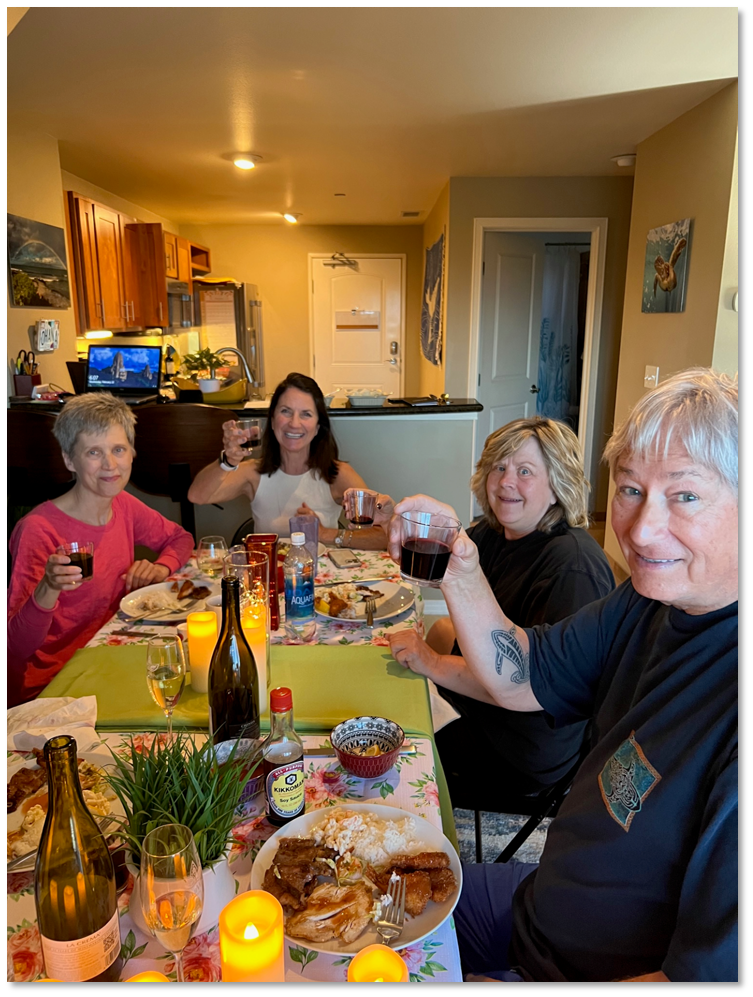
Our guest tasters (Lisa, Mary, Marcella, and Gabi) and I were – how shall I put this – absolutely blown away by this 2017 Chinon. Several of our tasters weren’t big fans of red wine, but became fans thanks to this vintage. It had aromas of stonefruit, specifically dark cherry and plum. It had a similar taste, with dark cherry and peppery notes. It was described as “forward,” “bright,”, and “extremely drinkable.” One taster – again, someone who was not a big fan of red wines – said, “I really love this wine.” No one mentioned pencil lead! I think it helped that – after our initial tastings – we were enjoying it with a famous Hawaiian “plate lunch” of barbecue mix, rice, and macaroni. This 2017 was 13.5% alcohol and sells for about $70.

So what was the verdict?

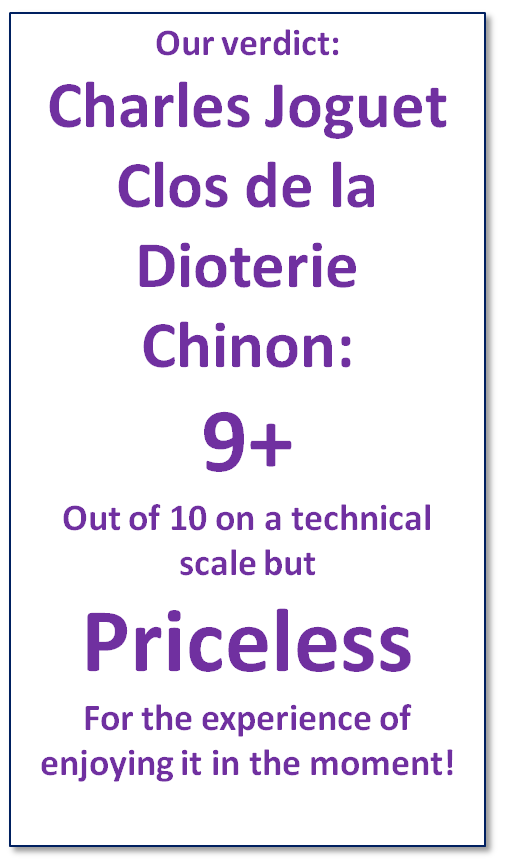
On a scale of 1 to 10, this one would have to be at least a nine and maybe higher on the numerical scale. But I have to say that, similar to other wines we’ve reviewed lately, the experience was as important – if not more so – than its purely numerical rating. My four guest tasters were four college friends who met each other 40 years ago and still try to see each other regularly. They were with us on Maui – just about my favorite place in the world, and where the idea for these reviews came to me two years ago – with the cool breeze and light mist outside. We were all celebrating friendship and a wonderful place. So without a doubt, its experience factor would have to be “priceless!”

Where do we go from here?

Now that we’ve completed reviewing all the wines from Kermit Lynch’s book that we could, we will keep going. I have a lot of other fun wines to try – wines from up and coming winemakers, celebrity wines, obscure but highly recommended wines from all parts of the world. As David Letterman would say, hold on to your wigs and keys – it’s going to be a lot of fun!

Book recommendation: Wine and War by Donald and Petie Klastrup, an extremely entertaining and illuminating history of the plight of French wine during World War II. French winemakers went to extraordinary lengths to hide and preserve their wines, often tricking the Nazis into thinking that their best wines were at their disposal. Very enjoyable, and a testament to the spirit of French winemaking even in the darkest of times.

Wine Playlist: As mentioned in earlier posts, I like to create fun and funky playlists based on some of my interests, so I’ve created a wine playlist – songs with titles or lyrics that include wine. You can find it on Spotify at https://open.spotify.com/playlist/5rAwgh9Thiary4zUplUsaN

Here’s this post’s entry: “Bottle of Wine” by The Fireballs, basically a one-hit wonder from my youth in the 1960s.

”Ramblin’ around this dirty old town
And singin’ for nickels and dimes
Times gettin’ rough
I ain’t got enough
To buy me a bottle of wine”

Enjoy! (And as we say in Maui, “hipa hipa!”)

Wines #16 and 17: Decelle-Villa Savigny-les-Beaune vs. Verset Cornas

(Posted January 18, 2023)

“In wine, there’s truth.” ― Pliny the Elder 

“This is the sixteenth and seventeenth in a review of wines that were mentioned in the great book by Kermit Lynch, Adventures on the Wine Route: A Wine Lover’s Tour of France. Once again a reminder – Lynch’s book is by far one of the most enjoyable and informative books about wine you’ll read.

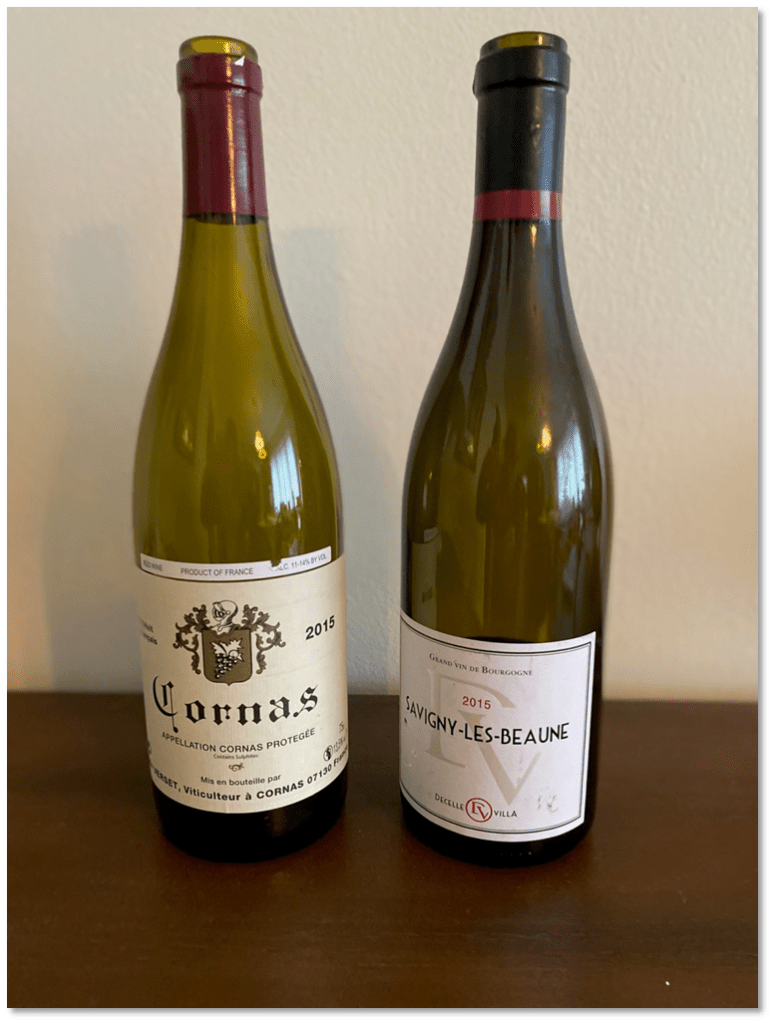
Our wines for this review are a 100% Pinot Noir from Burgundy – a 2015 Decelle-Villa Savigny-les-Beaune – and a 100% Syrah from the Rhône Valley – a 2015 Verset Cornas.

As with the previous French wines I posted about, my approach to reviewing these two was a little different – I used the excuse of a party to ask attendees to taste both and give me their impressions. We’ll get to the results in a bit, but first, a little background.

The Decelle-Villa Savigny-les-Beaune: As a refresher from wines from Burgundy we’ve reviewed earlier, Burgundy is, of course, a famous wine-growing region in east central France. Called Bourgogne in French, it is famous for well-regarded red and white wines, with whites coming almost entirely from Chardonnay grapes and reds from Pinot Noir. According to The Oxford Companion to Wine, vineyards dating to the first century have been found in the area. A tribe of Burgundians from Scandinavia settled the area in the fifth century, giving the area its name. As noted in The World Atlas of Wine, “Burgundy is not one big vineyard, but the name of a province that contains several distinct and eminent wine regions.” Savigny-les-Beaune is a small town in the northern part of the Côte de Beaune subregion of the Côte d’or Region (the heart of the Burgundy wine region).

Kermit Lynch wrote of Savigny quite a bit in Adventures on the Wine Route. One in particular – produced by the Pichenot brothers – particularly caught his eye. “I like the way their wine smells, the expansiveness of it, the solid Pinot quality, some earthiness, a little reminder of the barnyard, a hint of black pepper, its candid, rustic charm.” He also provides some tips on trying red Burgundies: “Listen to it, see what is has to say, get to know it…. Do not demand thick, heavy Burgundy. More often than not, this is a sign of overchaptalization. Instead, look for personality, aroma, lucidity, finesse, wonder, and magic.”

Let’s do a quick primer on one interesting word in that quote: chaptalization. The Oxford Companion says it is a “common winemaking practice, named after its French promulgator Jean-Antoine Chaptal, whereby the final alcoholic strength of a wine is increased by the addition of sugar to the grape juice… before  and/or during fermentation….” The Oxford Companion goes on to say:

Producers of Pinot Noir, most notably in Burgundy but also in Oregon and elsewhere, often add sugar during alcoholic fermentation, particularly towards the end, even if some might not readily confess to it. The aim is not primarily to increase the final alcohol level but to extend the fermentation and thereby improve the flavor and texture of the wine.

More from The Oxford Companion on Savigny: “An engraving dating from 1703 at the Chateau de Savigny describes the wines as nourishing, theological, and disease defying…. The reds [of Savigny] are agreeable, rivaling those of Beaune itself…” And The World Atlas of Wine tells us that Savigny “can be a marvel of finesse.”

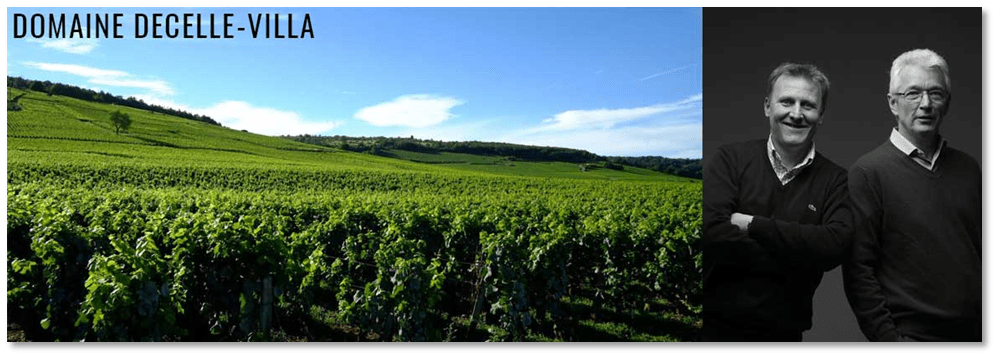
As for the winemakers themselves, heightschateau.com tells us that Decelle-Villa is a partnership started in 2008 “between two of France’s best-known winemakers [Oliver Decelle and Pierre-Jean Villa], dedicated to the production of high quality Burgundy wines…. This single-vineyard red is a stunning wine, spicy and structured, fresh and round on the palate, with silky-soft tannins, bright acidity, and a long finish.”

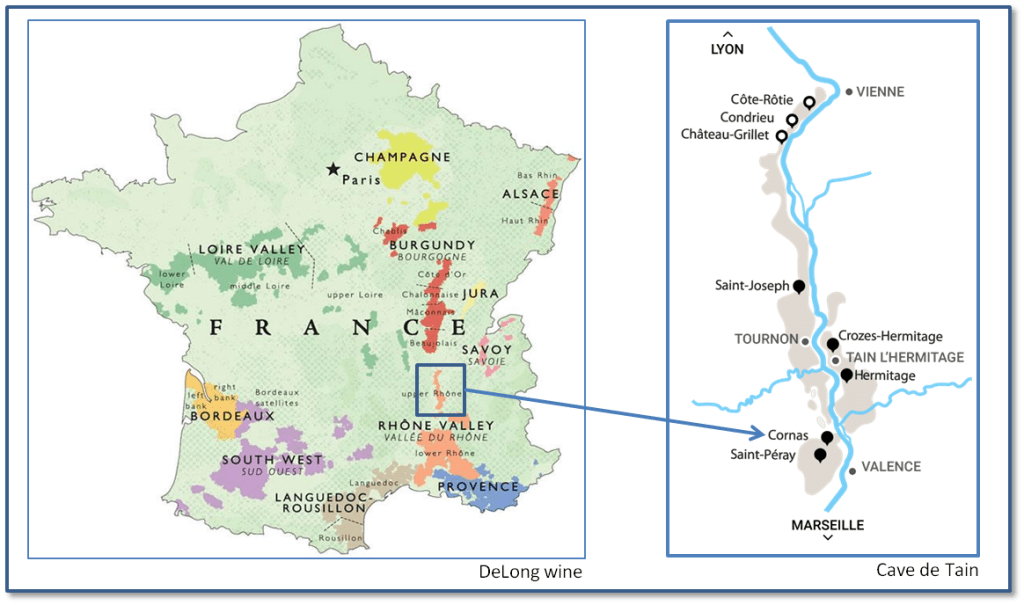
Our second wine was the Verset Cornas, a 100% Syrah from the Cornas area of the northern Rhône River valley. The Oxford Companion says that the appellation “was renowned in the 18th century, but many of the terraced vineyards on its steep south-facing granite slopes fell into decline in the early 20th century. The appellation experienced a revival of interest in the late 1980s with the arrival of ambitious newcomers prepared to re-establish the terraces needed for high quality vineyards.”

Kermit Lynch writes about Cornas’ small stature compared with other vineyards:

In terms of wine itself my heart belongs to the great reds of the northern Rhône. The best combine a reminder of the sunny Mediterranean with the more self-conscious, intellectual appeal of the great Burgundies farther north, which is not a bad combination. And these prized wines of the northern Rhône are France’s rarest: Hermitage has 300 acres planted in vines compared to 7,900 at Châteauneuf-du-Pape. Gigondas has 2,600; Cornas, only 130. To bring it into perspective, Vieux Télégraphe, a single domaine at Châteauneuf-du-Pape, has the same surface in vines as all of Cornas….

He also writes vividly and admiringly about the grape used to produce the Cornas and other nearby reds:

In contrast to the numerous grape varieties permitted down south, the northern Rhône reds are the result of a single variety, the Syrah. One would think that a blend of grapes could create a more complex range of aromas and flavors than a lone variety, yet the Syrah juice eked out from one of these steep hillsides can produce wines of dazzling complexity, wines whose exotic aromas seem to shimmer and change like the flashes of color gleaming from a jewel.

Now that’s great wine writing!

Our Cornas came from the domaine Alain Verset. The website Fine + Rare tells us that Noel Verset, Alain’s uncle, was “one of the world’s great wine legends. His staggering 75-year winemaking career was instrumental in putting Cornas on the fine wine map.”

Empirewine.com tells us: “No one is more revered in the northern Rhône than Noel Verset. But it is not widely known that Noel had a brother, Louis…. While Noel finally retired in 2007 after 63 vintages, Louis stopped making wine in 1994…. Louis had a son, Alain, who took over the domaine upon his father’s retirement…. He continues to make fine old-school Northern Rhône wines, still bearing the mythic Verset name.”

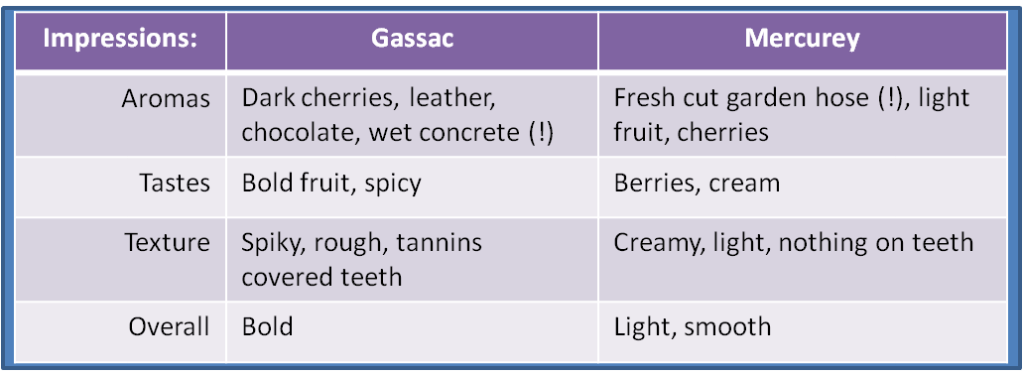
What was our experience? Crowdsourcing – again!

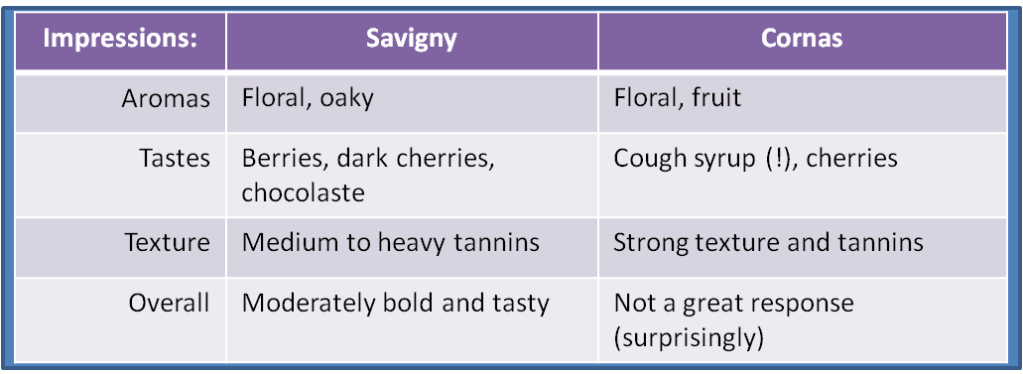
As mentioned earlier, for these two wines, I again tried something a little bit different from most previous tastings – a party of about 20 people, with a rating sheet asking for samplers’ opinions on aroma, taste, and texture, and overall impressions. Here’s what we found out:

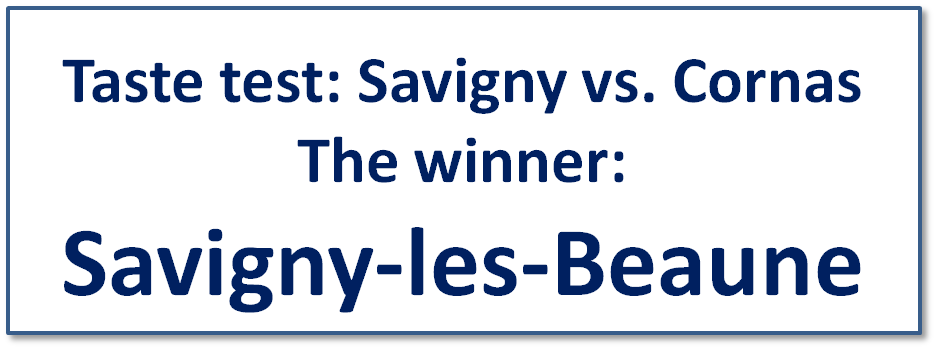
I also asked everyone to vote on which one they liked best. Of the six people who voted, all preferred the Savigny.

My vote: I initially liked the Savigny the best too. I thought it was smooth and dark, full of dark berries and chocolate. I wasn’t initially impressed by the Cornas, but I will say that a couple of days later, I tried it again and thought it was quite delicious. I think it needed to breathe more and age slightly in the bottle. In my experience, Syrah can be feisty and unpredictable, especially depending on where it’s from, but after a day or so this one was better than it was after it was just opened (and yes we did let it breathe!).

You can find the Savigny for around $50, and the Cornas for about $60.

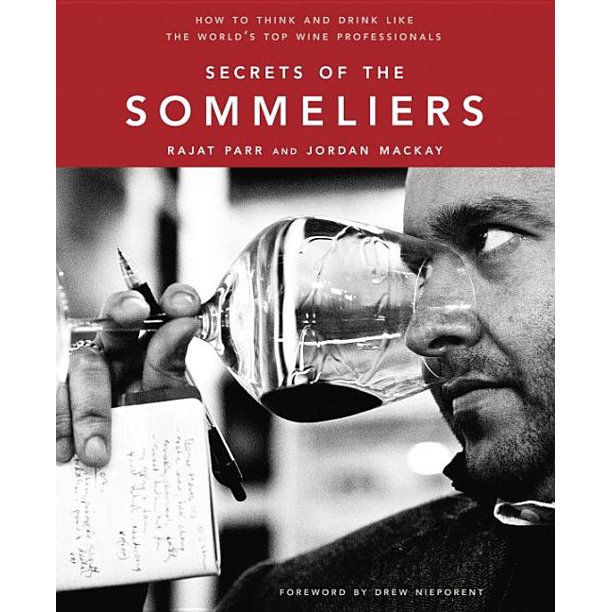
Book recommendation: One of my favorite wine books is Secrets of the Sommeliers: How to Think and Drink Like the World’s Top Wine Professionals by Rajat Parr and Jordan Mackay. It is full of handy tips, including demystifying the world of somms, tasting/buying/storing wine, pairing wine with food, serving and ordering wine, and how to think like a sommelier.

Wine Playlist: As mentioned in earlier posts, I like to create fun and funky playlists based on some of my interests, so I’ve created a wine playlist – songs with titles or lyrics that include wine. You can find it on Spotify at https://open.spotify.com/playlist/5rAwgh9Thiary4zUplUsaN

Here’s this post’s entry: “Napa Crossroads Overture,” from the album Napa Crossroads put together by David Pack (otherwise known as the lead singer for the group Ambrosia), and featuring the wonderful piano of David Benoit.

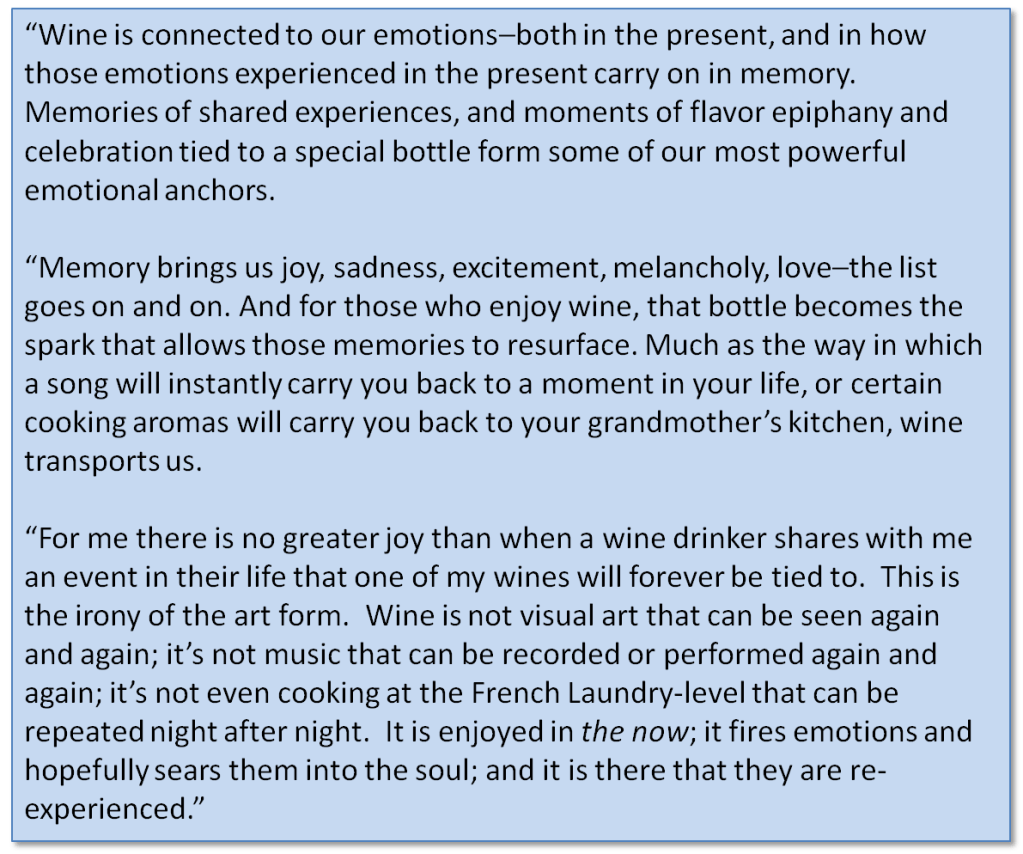
One final note: I’d like to sign off this first post of the new year with a “guest post” that I saw in the weekly blog of Karen MacNeil, the author of The Wine Bible (by the way, if you don’t subscribe to that newsletter, you should – it’s called “Winespeed” and you can subscribe to it at her website at www.karenmacneil.com). She included “A Winemaker’s Thoughts” by Chris Carpenter, and I thought it was eloquent and gave life to my thoughts about wine and how it can be such a positive in our lives. Happy New Year everyone!

Holiday Vinterlude – Some Nice White Wines We’ve Tried Lately

“The discovery of a wine is of greater moment than the discovery of a constellation. The universe is too full of stars.” – Benjamin Franklin

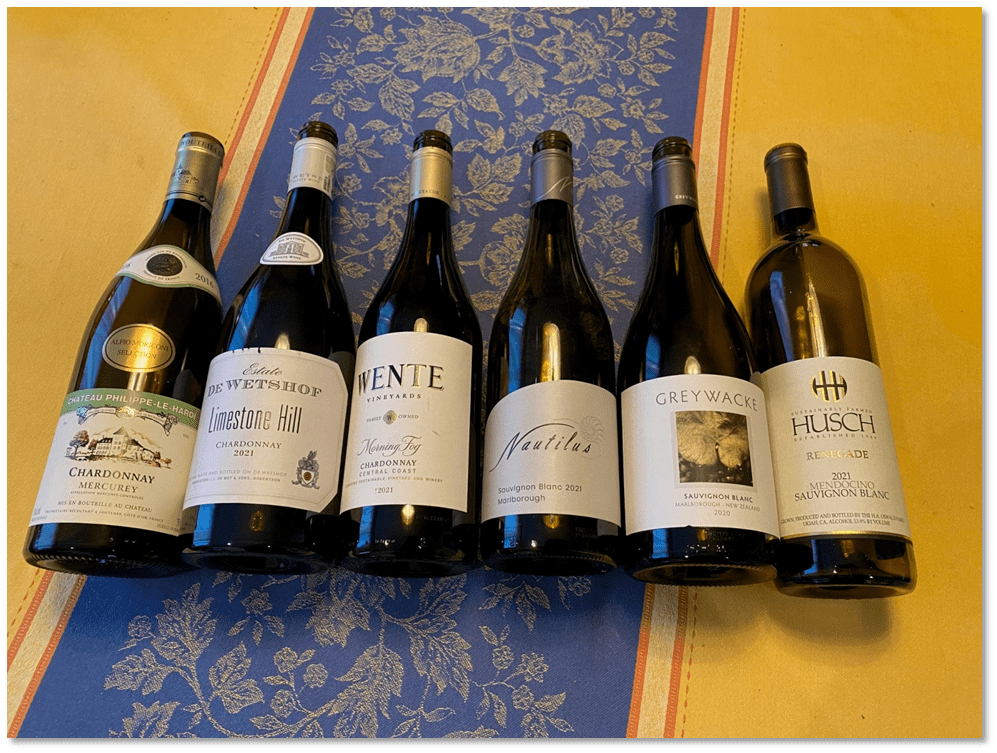
We’re going to take a break from reviewing wines that were mentioned in the great book by Kermit Lynch, Adventures on the Wine Route: A Wine Lover’s Tour of France, to review some really nice whites (three Chardonnays, three Sauvignon Blancs) we’ve had in the last few weeks. Any of these would make great holiday gifts for the wine lover on your list.

You know the old saying – “You can’t wear white after Labor Day!” Well, a lot of people say you can’t drink white after Labor Day. To that I say “Bah!” Whites are good any time of year. I do admit I tend to drink more red wines in the winter than in the summer, but there are still many, many reasons to drink white wines in the “off-season.” 

Many of these I have found by reviewing Wine Spectator or other publications to try to find good values, new wines, and interesting wineries to sample. So let’s get to it!

First, the Chardonnays….

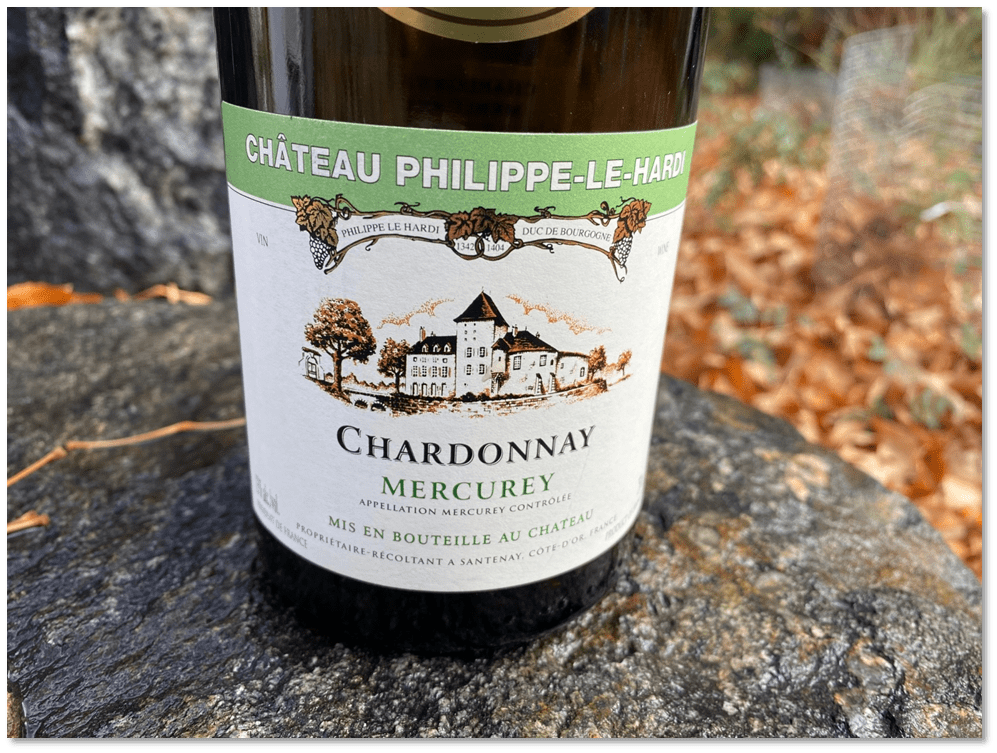
Chateau Philippe le Hardi Mercurey Chardonnay (Burgundy)

Hmmm…. This looks familiar. Oh yeah, we did the le Hardi Mercurey Pinot Noir in our last blog post. This time we’re focused on the same vineyard, same vintner, but the Chardonnay instead of the Pinot.

Not to repeat myself (okay, I will), but you may remember that in several previous posts, we noted that Burgundy wines are always 100% of one grape. Most of the white wine in Burgundy is Chardonnay (approximately 49% of all grapes grown there).

Our Mercurey Chardonnay comes from the Côte Chalonnaise district of Burgundy; the Oxford Companion says that Mercurey is the “most important village” in that district.” The le Hardi Château has been around for quite a while; mtouton.com told us:

Domaine du Château Philippe le Hardi (formerly Château de Santenay) was once the majestic stately home of the first Duke of Burgundy. This historic estate is one of Burgundy’s most prestigious producers….The Château was built in the 9th, 12th and 16th centuries. It was formerly one of several properties belonging to the Duke of Burgundy, Philippe le Hardi (1342-1404), and was named after him for centuries to come.  

Let me just start out by saying that I love, love, love Burgundy Chardonnays. They are so identifiable at first sniff and taste – bold and minerally, usually, but they are clearly more distinctive than other Chardonnays (especially Californians, though I have nothing against Californians!). A few samples of tasting notes from other sources:

·         Winebuyers.com: “A fragrant and delicate wine redolent of citrus and stone fruit, with a creamy texture and refreshing acidity. The finish is impressive, leaving impressions of hazelnuts and sweet spice.”

·         Total: “Hints of mineral, lime and vanilla round out the long, complex finish.”

·         Wine Enthusiast: “This wine is textured, with some spice as well as a tangy orange and lemon character.”

The Oxford Companion notes that Burgundy produces “what are widely considered the finest full-bodied dry white wines in the world.” I would second that emotion! And at $40-$50, this one is a true bargain in my book.

Estate De Wetshof Limestone Hill Chardonnay (South Africa)

This is a lovely Chardonnay from South Africa. I noticed that it kept getting good reviews in Wine Spectator, and it was on the magazine’s Top 100 list in 2021, so I decided to try it. De Wetshof is a famous name in South African wines. According to the estate’s website:

The name De Wetshof has been synonymous with the production of fine wines in South Africa since the 1970’s. As the first registered wine estate in the Robertson Wine Valley, De Wetshof has become known internationally as South Africa’s eminent Chardonnay House due to the pioneering role it played in introducing this noble Burgundian grape to the country. The De Wet family’s winemaking heritage can, however, be traced back to 1694 when the first De Wets arrived at the Cape and immediately made a mark on the South African wine industry.

Gold Medal Wine Club tells us:

The location of the Robertson Valley and its rich limestone base, less than 100 Kilometers (a little over 62 miles) from Agulhas, Africa’s southernmost point, is perfect for the cold-loving Chardonnay to flourish. The chilling currents from the southern oceans causes cooling winds to blow inland on summer afternoons, thereby freshening the vineyards and providing the Chardonnay with a much needed infusion of zest that nourishes the vines.

The winery tells the story: “Heavy clay soils rich in limestone allow this Chardonnay to emit optimum varietal expression in a cloak of rich complexity. An un-wooded wine, Limestone Hill has notes of grapefruit and nuts, with the complexity balanced by a nuanced elegance ending with a delicate ripeness.”

Wine Spectator tells us: “Pear and pineapple fruit flavors are bright and juicy in this lively Chardonnay. Lithe and zesty, with accents of wet stone, grated ginger and verbena gliding through on the lip-smacking finish.” I thought it was crisp and minerally, and a standout Chardonnay. It’s available for around $17 at most wine shops.

Wente Morning Fog Chardonnay

This is a really nice value Chardonnay from an interesting vineyard in California’s Livermore Valley east of San Francisco Bay – not a place you’d normally first think of when considering California wines. According to its website,  “Wente Vineyards is the longest, continuously family-owned and operated winery in the United States…. In 1912, 2nd Generation Ernest Wente persuaded his father and founder, C.H. Wente, to import Chardonnay cuttings from a well-known vine nursery, F. Richter Nursery in Montpellier, France, to the Livermore Valley. Ernest hand-picked vines that showed the best health and pronounced flavors, grafted the two together, and propagated those characteristics forward. The result was aptly called the ‘Wente Clone’, which today makes up over 75% of all Chardonnay planted in California!”

The vineyard takes pride in its sustainability practices and says it is “a certified sustainable vineyard and winery from the California Sustainable Winegrowing Alliance. Less than ten percent of wineries hold both the vineyard and winery certifications.”

This one is a personal favorite of Lisa’s and is bright and crisp with light oak and buttery notes. And it’s a bargain at around $12-$14.

Three nice Sauvignon Blancs

I’m generally a big fan of Sauvignon Blancs, especially Savs from New Zealand (yes, that’s what they often call them down there), but sometimes I can get tired of them as some of the more common (and cheaper) New Zealand Sauvignon Blancs are way too citrusy, both on the nose and in the mouth. (Some even get the interesting description of “cat piss” – maybe just a little too much literal interpretation for me!)

First I wanted to try some different SVs from the Marlborough region of New Zealand so I rounded up a couple:

Greywacke is a winery that has been in business since 2009 and, according to the winery website, “is the Marlborough label of the Judd family and the name of New Zealand’s most abundant bedrock. These understated grey river stones are found throughout Marlborough’s rivers and alluvial vineyard soils” and has “a small, dedicated team running the company from Greywacke HQ in the heart of Marlborough’s Omaka Valley.” The website goes on:

The fruit is sourced from mature vineyards in prime viticultural sites to optimise the potential afforded by Marlborough’s sunny South Pacific climate. All vineyards are sustainably managed with substantial and increasing proportions coming from organically farmed sites. Crop levels are restricted to enhance concentration of flavour and a long, cool growing season produces fruit with incredible varietal intensity and bright, natural acidity. Meticulous canopy management regimes are employed to provide sufficient fruit exposure to deliver ripeness of flavour, textural richness and optimum acid balance.

As for tasting notes, the winery’s website says it’s like “a summer fruit salad – ripe golden peaches, honeydew melon, nectarines and passionfruit, with a generous splash of cassis and a sprinkling of lime zest – this is a subtle, delicately aromatic, ripe interpretation of Marlborough sauvignon blanc. The palate is generous and textural, showing great concentration and finishing with a crisp, succulent finish.”

James Suckling’s review: “A very fresh, lime and grapefruit nose with a gently herbal thread, as well as green passion-fruit notes. The palate has a captivating fusion of fresh acidity and rich, fleshy fruit flavors. Zesty and intense.” Christina Pickard in Wine Enthusiast says it has “Aromas of bright peach, passionfruit, orchard blossom and a vegetal note are seamless on the nose. They flow gently to the palate where there’s a lovely texture, freshness and overall harmony.”  Thewinebuyer.com tells us: “Classic New Zealand loaded with succulent passion fruit, guava, pineapple and pink grapefruit aromas which are underscored by a fresh herbal element. Lush layers of sweet melon, tropical and yellow stone fruit flavors are complemented by an attractive minerality.”

All in all, I thought it was an excellent SV, not too citrusy, and definitely lighter and fresher than most from New Zealand. You can find it for around $20.

Update: the 2021 Greywacke Sauvignon Blanc made Wine Spectator‘s Top 100 wines of 2022 at #13.

Nautilus shows up on many lists of favorite Marlborough Savs from New Zealand. According to the winery’s website: “Nautilus is unusual in effectively having two wineries side by side. The first was built in 2000 and is dedicated to the inspiring but sometimes infuriating grape that is Pinot Noir. The second built in 2006 is for white wine making facility to process our Sauvignon Blanc, Cuvée, Chardonnay and Pinot Gris.”

The wine itself is delightful. The winery tells us: “The 2021 Nautilus Sauvignon Blanc displays intense lifted aromas of blackcurrant, guava, ripe grapefruit and a hint of smoky flint. The palate introduces delightful citrus based mouth-watering intensity and finishes with a strong textural component.” Wine Spectator says it is “Elegant and aromatic, with intense lemongrass and lemon thyme notes leaping from the glass, plus supple citrus and apple flavors at the core. Delivers details of white tea and white pepper that linger.”

Nautilus is another great bargain at $17-$20.

Husch Renegade Sauvignon Blanc is a personal favorite of mine. Full disclosure: the owners are personal friends of mine, but that doesn’t mean the wine is not excellent. Husch is a family-owned (3rd generation) vineyard in the Anderson Valley in Mendocino County in the far northern part of California, and is the oldest winery in the Anderson Valley appellation. It is also a wonderful winery to visit and has a lovely tasting room.

Husch specializes in Chardonnay, Pinot Noir, Cabernet Sauvignon, and Gewurztraminer (apparently the terroir is especially good for that one), among others. But I am especially partial to its Sauvignon Blanc. The winery’s tasting notes include: “Lively aromas of white grapefruit, guava, lemongrass, green mango, and a hint of Asian pear leap from the glass. The wine is crisp and refreshing with flavors that mirror the aromas, with a lengthy and succulent finish.”

Husch is sometimes hard to find at retail outside California, but it has a great mail-order business, so check out its website. This Sauvignon Blanc is available for about $18. Highly recommended!!

Book recommendation: I’m a sucker for basic books about wine. If you’re looking for a nice gift for a wine newbie, this might be one of the best: The 24-Hour Wine Expert by Jancis Robinson. She’s one of the foremost wine writers and critics in the world and has produced such weighty tomes as The Oxford Companion to Wine. But this is a nice, slim, readable volume that will get anyone started on loving wine.

Wine Playlist: As mentioned in an earlier post, I like to create fun and funky playlists based on some of my interests, so I’ve created a wine playlist – songs with titles or lyrics that include wine. You can find it on Spotify at https://open.spotify.com/playlist/5rAwgh9Thiary4zUplUsaN

Here’s this post’s entry:  The wonderful Emmylou Harris with “Two More Bottles of Wine.” “Ain’t gonna let it bother me today/I been workin’ and I’m too tired anyway/But it’s all right ’cause it’s midnight/And I got two more bottles of wine.”

Wines #14 and 15: Gassac and Mercurey

(Posted October 20, 2022)

“Age is just a number. It’s totally irrelevant unless, of course, you happen to be a bottle of wine.” – Joan Collins

This is the fourteenth and fifteenth in a review of wines that were mentioned in the great book by Kermit Lynch, Adventures on the Wine Route: A Wine Lover’s Tour of France. Once again a reminder – Lynch’s book is by far one of the most enjoyable and informative books about wine you’ll read.

Our wines for this review are a red blend from the Languedoc region of France – a 2018 Mas de Daumas Gassac – and a 100% Pinot Noir from Burgundy – a 2017 Château Philippe le Hardi Mercurey. My approach to reviewing these two is a little different – I used the excuse of a party to ask attendees to taste both and give me their impressions. We’ll get to the results in a bit, but first, a little background.

The Mas de Daumas Gassac comes from the southern region of France known as the Languedoc. It is a blend of several red grapes – primarily Cabernet Sauvignon (76%) with small percentages each of Cabernet Franc, Merlot, Petit Verdot, Pinot Noir, Malbec, Nebbiolo, and Dolcetto. That seems like a lot!

Wine Trails has this to say about Languedoc and its neighbor, Roussillon:

Some of the most exciting and innovative wines emerging in France are coming from the vast Languedoc-Roussillon region, which covers much of the south, from the Spanish border up to the vineyards of Provence and the Côte d’Azur. A third of France’s wine is produced here, but for years the region suffered from over-production and poor quality. Not any more. [I hear that last sentence in Peter Sellers’ Inspector Clouseau voice: “That was a priceless Steinway.” “Not any more!”]…. The sheer variety of the landscapes here is spectacular, with vineyards pressing up against the Mediterranean… through dramatic limestone hills and valleys….”

Jancis Robinson in The World Atlas of Wine tells us that Languedoc is “France’s best value, most fluid wine region and certainly its most important in terms of volume of wine produced, and in terms of the importance of viticulture to the region’s economy.”

Mas de Dammas Gassac comes from a well-established vineyard west of Montpelier. According to the estate’s website, in the year 780 AD “Saint Benedict of Aniane, an adviser to Charlemagne, created a vineyard in the Gassac valley in the 780s. We have every reason to believe that Saint Benedict would have invited Charlemagne to sample the first wines produced in the valley. Mas de Daumas Gassac’s Grands Vins were thus born in the shadow of a prestigious abbey, like most famous great wines!” The estate bottled its first vintage in 1978.

Kermit Lynch has high praise for the winery and the wine:

Also to be found in this part of the Languedoc, called the Hérault, is one of the most remarkable new wineries in the world, the Mas de Daumas Gassac, where the dynamic Aimé Guibert has created from what was garrigue, brush, and forestland a vineyard whose wine has captured the imagination of the wine press on both sides of the Atlantic. Guibert’s very first vintage, his 1978 from new vines, burst upon the wine scene leaving behind a shower of sparking accolades which have been surpassed only by the notes accorded to subsequent vintages.

Hold on there Sparky! There was a word in there I wasn’t familiar with: garrigue. The Wine Spectator’s Dr. Vinny tells us that “Garrigue refers to the low-growing vegetation on the limestone hills of the Mediterranean coast, not the limestone itself. There are a bunch of bushy, fragrant plants that grow wild there, such as juniper, thyme, rosemary and lavender, and garrigue refers to the sum of them. Think herbes de Provence, or a mix of fresh minty-herbal notes with more pungent, floral fragrances.” So the implication is that the mixture of those fragrant plants affects the aroma and taste of the wine.

Kermit Lynch quotes The Underground Wineletter as saying that this wine “may very well be the very best buy for a wine of this type to be found anywhere in the U.S….. nothing from California comes close to this quality/price relationship.” (For the record, the 2018 we tried is priced at around $50 a bottle – and it has a cool label too.)

Lynch also has this anecdote about the focus on Cabernet Sauvignon:

The single most important decision was Guibert’s choice of grape variety. Going traditional in the Hérault would have meant planting varieties like Carignan, Grenache, and Cinsault. I asked him why he planted Cabernet Sauvignon in his “Burgundian” soil in the Languedoc. “God’s inspiration,” he replied. (These vignerons in the Languedoc are not the most humble race I’ve encountered. At nine in the morning they speak with the pomp of an Irish poet after he’s had a few.) “No,” he continued, “it was actually a matter of personal taste. I am not a partisan of the Pinot.”

Speaking of Pinot, let’s move on to our Pinot Noir from Burgundy. As a refresher from wines from Burgundy we’ve reviewed earlier, Burgundy is, of course, a famous wine-growing region in east central France. Called Bourgogne in French, it is famous for well-regarded red and white wines, with whites coming almost entirely from Chardonnay grapes and reds coming mainly from Pinot Noir. According to The Oxford Companion to Wine, vineyards dating to the first century have been found in the area. A tribe of Burgundians from Scandinavia settled the area in the fifth century, giving the area its name. As noted in The World Atlas of Wine, “Burgundy is not one big vineyard, but the name of a province that contains several distinct and eminent wine regions.”

Our Mercurey Pinot Noir comes from the Côte Chalonnaise district of Burgundy; the Oxford Companion says that Mercurey is “most important village” in that district…. The red wines tend to be deeper in colour, fuller in body, more capable of ageing, and half as expensive again as those of the neighbouring villages.”

Kermit Lynch doesn’t have a lot to say about Mercurey, other than that “No grape is more sensitive to its vineyard site,” and that Mercurey is among several wines from Burgundy that can have “excellent cuvées.” Dr. Vinny of Wine Spectator tells us that cuvee is a “fancy-sounding word, so sometimes it’s used to indicate a wine of superior quality or a special reserve, but the term is not regulated, so that’s not always the case.”

As noted before, Burgundians don’t blend their wines, so most red wine from there is 100% Pinot Noir, as this one was. One interesting side note I discovered in The Booklovers’ Guide to Wine by Patrick Alexander:

By the early Middle Ages, the wines of Burgundy had achieved such a reputation that they were sought after in the French royal courts in Paris and on the Loire, as well as the Pope’s palace in Avignon. Anxious to maintain the high quality and reputation of his wines, Philippe the Bold, Duke of Burgundy in 1395, made it a hanging offense to make red wine with anything other than Pinot Noir on his territories. Offenders would be hanged from scaffolds out in their vineyards as a visual and swinging reminder to their neighbors.

Okay, that’s a little harsh.

And speaking of the Duke of Burgundy, mtouton.com gives us a little more history:

Domaine du Château Philippe le Hardi (formerly Château de Santenay) was once the majestic stately home of the first Duke of Burgundy. This historic estate is one of Burgundy’s most prestigious producers….The Château was built in the 9th, 12th and 16th centuries. It was formerly one of several properties belonging to the Duke of Burgundy, Philippe le Hardi (1342-1404), and was named after him for centuries to come. In 1395, Philippe le Hardi signed the founding document for single varietal cultivation in Burgundy. The document was named the “Ordonnance de Philippe le Hardi”. Pinot Noir thus replaced Gamay as the varietal used for red wine production in Burgundy. 

What was our experience? Crowdsourcing!

As mentioned earlier, for these two wines, I tried something a little bit different – a party of about 20 people, with a rating sheet asking for samplers’ opinions on aroma, taste, and texture, and a contest! Here’s what we found out:

OK, I’m not sure wet concrete or fresh cut garden hose count as real aromas, but I admire peoples’ creativity! I also asked everyone to vote on which one they liked best. Of the ten people who voted, it was an even tie: five to five. Overall, it was a fun experience and highly recommended for your next dinner party.

My vote: I liked the Gassac blend slightly more than the Mercurey Pinot Noir. I thought the Gassac was bold but not too heavy, with a really nice fruity/spicy taste (as others indicated). But they were both very good. By the way, both are available for about $50.

Book recommendation: I mentioned earlier The Booklovers’ Guide to Wine: An Introduction to the History, Mysteries, and Literary Pleasures of Drinking Wine by Patrick Alexander – it’s a really nice reference, with lots of good basic stuff on grapes, regions, and wine history, sprinkled with interesting literary references.

New Feature: Wine Playlist!

I like to create fun and funky playlists based on some of my interests. One of them, of course, is wine, so of course I’ve created a wine playlist – songs with titles or lyrics that include wine. You can find it on Spotify at https://open.spotify.com/playlist/5rAwgh9Thiary4zUplUsaN?si=517901201b994b3d

Here’s one example: The late, great Loretta Lynn singing “Wine, Women, and Song.”  Take a look at the playlist and feel free to send me your suggestions!

Interlude: A Wine Tour of Italy

(Posted August 21, 2022)

“Wine can of their wits the wise beguile, make the sage frolic, and the serious smile.”
― Homer

We’re taking a break from our one-by-one tastings of the wines mentioned in Kermit Lynch’s Adventures on the Wine Route: A Wine Lover’s Tour of France. Instead, we spent a few weeks in Italy tasting as many wines as possible.

We spent all of July in Italy being retired, we are extremely lucky to take this much time in a place we love. This was my third trip to Italy and by far the best. We were lucky to spend a week at a villa in the Chianti Classico region of Tuscany with a total of 21 people (friends and family members), then several days each in Lucca (also in Tuscany), Cinque Terre, Milan, and Lake Como. We always tried to sample the local wines in each of the areas we visited as we wanted to learn about (and taste) as many wines as possible. So I thought I would recap many of the wines we had so that you might try them too.

Tuscany

Well let’s start with arguably the most famous Italian wine region of all – Tuscany, or Toscana. The Oxford Companion to Wine says that it is “the most important region in Central Italy… it is the region which formed Italy’s language, its literature, and its art, and has thus assumed a central place in the country’s culture and self-image.” The handy little book Decoding Italian Wine tells us that Toscana is “probably the most universally recognized region of Italian wines” and “is also one of the oldest wine-producing regions in the world.”

It appears, based on expert analysis of early cave drawings and pottery markings, that winemaking in Tuscany began as early as the 4th century BC when the area was first inhabited by the Etruscans. Back then, it’s believed that Sangiovese grapes grew in the wild, and the Etruscans began creating wine with them.

Wine Trails tells us that the Etruscans used “huge terracotta amphorae that are today being rediscovered by certain natural winemakers.”

As early as the 5th century BC [4th century BC, 5th century BC, what’s a century or two among friends?], Tuscan wines were exported to France and Greece, and Florence founded its own Wine Merchants Guild as early as 1282. So Tuscany has always been the ambassador of Italian wine, from ancient times through to the days when the eponymous straw-covered flask of Chianti became the house wine of every pizzeria in the world.

Etruscan wine amphorae
Our parents’ old favorite: Chianti in a straw basket

The Wine Bible tells us that Toscana “stretches from the Tyrrhenian Sea in the west to the low mountains that separate the region from Emilia-Romagna, the Marches, and Umbria, its neighbors in the east. At 9,000 square miles, it is the fifth largest region in Italy.” 

Wine Folly

We were in two locations in Tuscany. The first was near the village of Poggibonsi, about 30 miles south of Florence. It is on the far western edge of the Chianti Classico zone. The Chianti region itself encompasses a large area between Florence and Siena. There are several sub-zones in Chianti, with the separate Chianti Classico zone comprising the heart of the area.

Wine Folly

Wine Enthusiast tells us that “Chianti Classico must contain at least 80% Sangiovese. A maximum of 20% of other red grapes Colorino, Canaiolo Nero, Cabernet Sauvignon and Merlot may be used…. There are three quality tiers in the appellation. Annata, or the standard wine, ages for 12 months before release, while Riserva must age 24 months. Gran Selezione has the longest aging requirement at 30 months.”

Wine Enthusiast also tells us that “The emblem of Chianti Classico is the black rooster, or gallo nero. It relates to a legend told about the use of roosters to settle a border dispute between the warring provinces of Sienna and Florence. The black cockerel was the symbol of Florence, while the white cockerel represented Sienna. It’s clear who dominated that contest.” We saw a bunch of black rooster statues at wineries in the area.

The ubiquitous Chianti Classico black rooster

So what were the wines we tried in the Chianto Classico region? Well, we tried several Classicos, including:

  • Il Vicario from Torciano winery (a large wine/restaurant empire near San Gimignano) – 100% Sangiovese;
  • one from Belriguardo, a winery on the far southern end of the region, about 10 miles south of Poggibonsi  – 95% Sangiovese and 5% Merlot;
  • one from Bucciarelli, about 10 miles east of Poggibonsi – 100% Sangiovese; and
  • one from Cinciano, a lovely winery/hotel/restaurant complex just up the road from us – 100% Sangiovese.
Fattoria di Cinciano

Cinciano’s restaurant is called Osteria 1126 – mainly because the original buildings have been there since the year 1126. It was a magical place – highly recommended if you’re ever in the area.

Our take on Chianti Classico? All of them were delicious. Sangiovese is a rich, red grape full of fruit flavors, mainly cherries and plum, and it was outstanding in all its iterations. Of course, it helped that we were in the Chianti Classico region, but they were wonderful nevertheless. We liked them all, but we especially liked the Cinciano, as we were able to visit the winery and see how it was made.

What about white wines from Tuscany? Tuscan whites don’t get as much press as the reds, but there are some outstanding whites to try. Two in particular stood out.

Vernaccia is one of my favorite whites from the region, for a lot of reasons. First of all, it’s delicious, with bright crisp flavors, and is readily available at most wine stores in the US. Second, it’s from the magical medieval town of San Gimignano (about 15 miles west of where we were staying near Poggibonsi). Wines of the World tells us that this wine has been around since at least 1276 (!) and “has the longest pedigree of any white varietal wine in Italy.” One we tried was from the Cecchi vineyards. It had the added bonus of having a lovely label with the towers of San Gimignano silhouetted.

The medieval towers of the lovely town of San Gimignano

The second white wine we spent some time with in Tuscany was Vermentino. These wines come mainly from the island of Sardinia, but the grapes are being planted more and more throughout Italy. Similar to Vernaccia, the Vermentino wines were light and crisp, perfect for the hot summer days we had in Italy. One we tried was from Antinori vineyards; this one was from the Bolgheri area on the far western portion of Tuscany along the coast.

Two great white wines from Tuscany: Vernaccia and Vermentino

Our second stop in Tuscany was the walled medieval town of Lucca, about 50 miles west of Florence. There were two wonderful whites we tried there.

Sunset in Lucca

San Germano Passito Toscana is from the Tenuta di Ghizzano winery, an organic winery about 20 miles southwest of Lucca, near Pisa (the word “tenuta” means “estate”). It was comprised of a wonderful blend of 80% Trebbiano along with Colombana Nera and Malvasia grapes. According to Decoding Italian Wine, Trebbiano is the “second most widely planted grape in the world and is used in more than a quarter of Italy’s” primary wines, yet it “flies under the radar” because “it’s most commonly employed as a blending component, and its moniker rarely appears on labels.” Fun fact: “Trebbiano grapes are also used to produce balsamic vinegar. During the course of aging and fermentation over many years, the Trebbiano grape juice syrup gradually turns its trademark dark brown color and develops the unique balsamic vinegar flavor loved by many.” Who knew?

Another white we liked while in Lucca was Fattoria Nanni Origini Verdicchio. In addition to having a wonderful colorful label, it was also from a region we hadn’t experienced before: the Marche. This region is to the east of Tuscany and runs to the Adriatic Sea. Verdicchio, according to The Oxford Companion, is “one of central Italy’s classic white wines….the best wines are cool with minerally mandarin fruit, lifted lemony acidity, and a slight chew on the finish.” Very detailed description!

Two other whites from different parts of Tuscany – San Germano from Ghizzani (sorry about the torn label), and Fattoria Nanni Origini from the Marche region (plus it has a beautiful label!)

Cinque Terre

Our next stop was in the far northwest corner of Italy, in the Liguria region. You might say it’s the top of the sock of the boot of Italy. We stayed in the Cinque Terre zone, on the far eastern part of the region. Cinque Terre means “five lands,” and it’s comprised of five former fishing villages that have become tourist meccas in the last 50 years (thanks to new roads and better rail service). It’s often described as Italy’s Riviera. Our base of operations was Monterosso del Mare, the northernmost (and largest) town of the five.

Winetourism.com
Landscapes-revealed.com

To say that Monterosso (and all of Cinque Terre) is picturesque is an understatement. It was spectacularly beautiful, and we were lucky enough to stay in a rental near the harbor with absolutely wonderful views of boats, people, and stunning sunrises, sunsets, and the harbor at night.

Monterosso views

Liguria is the second-smallest wine-producing region in Italy, with most of the vineyards lying on the region’s steep, rocky hills.

Vertical vineyards in Cinque Terre

Our first wines in the region were three nice whites:

  • a Scià, a wonderful wine made of Vermentino along with Bosco and Albarola grapes, aged about seven months (and with possibly the best label I’ve ever seen);
  • Lvnae Colli di Luna Vermentino. The winery’s website says that “The name Lvnae is inspired by the town of Luni, an ancient Etruscan and Greek port, consecrated to the goddess Selene by the Greeks (Luna, for the Romans). The first Luna settlement was founded by the Romans in 177 BC.” Quite the pedigree; and
  • Macaia Sassarini, a local Monterosso wine, with Vermentino grapes.

You may notice the preponderance of Vermentino grapes in these local wines. As noted earlier, Vermentino is prominent on Sardinia and (to a lesser extent) in Tuscany. But an article in Forbes Magazine had high praises for these locally produced vintages: “producing a Vermentino from seaside vineyards gives the wines a special character that you don’t find from a warmer, inland area. Vermentino from a maritime climate tends to display a minerality or saltiness in the finish – as though you are tasting the soils and/or experiencing the tanginess of the sea when you are enjoying the wine.”

Our next wine adventure was at a nice little bistro in Monterosso called Enoteca Internazionale. It featured a tasting of five different wines from – you guessed it – the five towns of Cinque Terre. The five were:

  • Begasti from our home base Monterosso;
  • Cheo from Vernazza;
  • La Polenza from Corniglia;
  • Forlini Cappellini from Manarola; and
  • LItan from Riomaggiore.

All five had roughly the same blend of Vermentino, Bosco, and Albarola grapes. Our challenge was to sample all five to determine how each was subtly different based on the specific conditions of each vineyard – sun, soil, verticality, precipitation. They were all wonderful, but we were partial to our “hometown” wine from Begasti. And we got to keep a cool souvenir placemat too.

Five wines from the five lands

Finally, I made sure we were able to try one type of local wine we hadn’t had before – Pigato. The Italian Wine Guide tells us that Pigato is genetically identical to Vermentino, but it “nevertheless achieves unique expression: pigato favors the earthy side of the flavor spectrum, is a bit more acidic and has a touch more body weight… in addition, pigato is inclined to have more pronounced saline notes, making it ideal for local seafood and shellfish.”  Yes, we had it with a lovely main course of fish at the Torre Aurora restaurant in Monterosso.

Lombardy

Our last region in Italy that we explored was Lombardy, in the north central portion of Italy along the border with Switzerland. We visited Milan and Lake Como, and both exposed us to wonderful wines. One of our best experiences was a nice rosé from Cantrina vineyards in Beddizole, in the eastern portion of the region. It was made from Pinot Noir grapes and was delightfully refreshing. We had it at a hilltop restaurant in the town of Bellagio on Lake Como. And of course, it had a great label (did I tell you I am a sucker for cool labels?).

Perhaps the most common white wine in Lombardy is Lugana. The Italian Wine Guide tells us that Lugana wines are comprised of “a minimum of 90% Trebbiano [grapes]. Trebbiano-based wines deliver light, crisp green fruits with a touch of chalky minerality and bitter almond.” We had this one several times, primarily at Lake Como, and it was our go-to wine for most meals.

Three in particular we liked, all from vineyards just south of Lake Garda on the eastern border of Lombardy, and all 100% Trebbiano:

  • I Frati, with a very elegant label (!), described on the vineyard’s website as “the jewel in the crown”;
  • Marangona, from an organic winery; and
  • La Rifra.

As noted earlier, Trebbiano is the second most widely planted grape in the world and is used in more than a quarter of Italy’s primary wines, yet it is often looked down upon as a run-of-the-mill grape. Wines of the World calls it a “fairly ordinary grape,” and the Italian Wine Guide says “Overall, it is a lackluster grape and usually makes disappointing neutral-tasting wines” but “At their best, they deliver subtle, crisp green fruits and a touch of chalky minerality with high levels of acidity.” We enjoyed our Luganas, and we thought it was especially refreshing on hot afternoons.

What About the Reds?

You may have noticed that most of the wines I mentioned were whites, other than the Chianti Classicos from Tuscany. Obviously, there are many, many great red wines from Italy – including my favorite, Brunello, along with Barolo, Barbera, Montepulciano d’Abruzzo, and many more. We tried a few, but honestly, given the extremely hot weather in Italy, we focused primarily on whites just because they were more refreshing on those hot days.

One of these days, I’m going to start reviewing a lot of Italian wines, so I’ll be sure to include my favorite reds, so stand by.

Conclusions and Observations

Overall, we were extremely pleased by the variety of wines we tried in Italy. If I could pick out two favorites, they would be:

  • The Chianti Classico, with its wonderful dark and refreshing fruit taste; and
  • A tie between the Vernaccia from San Gimignano and the a Scià Vermentino from Cinque Terre. Did I mention the latter had about the best label I’ve ever seen?

Ciao, salute, and cin cin!