(Posted April 13, 2021)
Earlier this year, I spent a couple of weeks on a beach and immersed myself in Kermit Lynch’s Adventures on the Wine Route: A Wine Buyer’s Tour of France . Lynch, an American wine importer based in Berkeley, California, wrote it in 1988, and it was absolutely one of the most informative and entertaining books on wine I’ve read. In 2013, Lynch published a 25th anniversary edition, with updated information on some of the wines and domaines he wrote about in 1988. It was as close to an epiphany about wines as I can recall. I have long been interested in wines, collected and read many books, and bought a fair share of relatively inexpensive wines over the years (he often calls such wines “plonk”). But his book pushed me in an altogether different direction, one where I yearned to broaden my horizons and start sampling some of the better wines of the world.
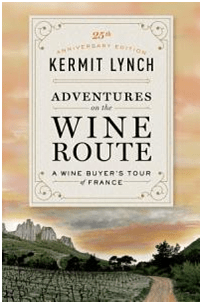
With those thoughts as inspiration, I decided I would buy and taste as many of the wines mentioned in Lynch’s book as possible. Some domaines and appellations he mentioned are no longer around, but many are, so after scouring wine importers and online stores, I started gradually stocking up on some of those beauties that Lynch described. Now admittedly some are pricey, so I am spacing out my purchases as my budget allows. But I was surprised to find that many were affordable, and quite a few were even available at my local wine shop.
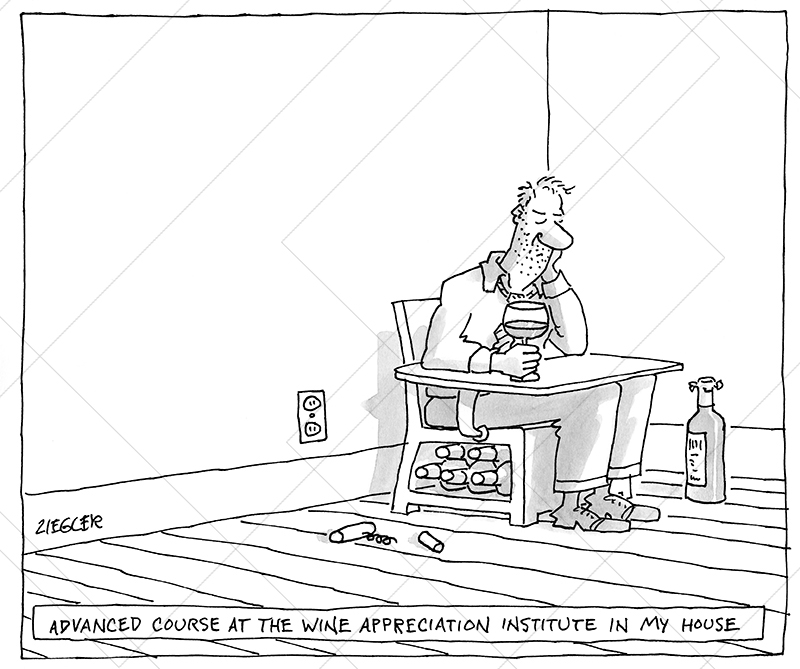
My goals in starting this adventure were two-fold. First, as mentioned, I really wanted to broaden my horizons and start sampling some of the better wines of the world. Second, I wanted to compare Lynch’s (and others’) descriptions of tastes and aromas with my own – and with those of friends and family who tasted with me. I don’t think I have a very discriminating wine palate, but I knew I was missing something by not focusing enough on a wine’s smells, textures, look, aftertaste, and other characteristics that are unique to every bottle’s distinct terroir and grape blend. (Side note: whenever I see or hear the word “terroir” the first thing I think of is the “mawwage” scene in “The Princess Bride.”) Finally, in a pandemic year, I wanted to satisfy some of my wine yearnings that I haven’t yet been able to accomplish, such as opening a wine shop or wine bar. I decided to do the next best thing – a wine bar in my house!
My long-range plan is to sample and describe as many wines mentioned in Lynch’s book as possible, coupled with random musings and other thoughts about wine in particular and the world in general. Once I have completed the French wines mentioned in Lynch’s book, I hope to move to wines from other countries such as Italy, the US, New Zealand, and others. I hope to share with you my thoughts and ideas on wine in all its complexities and simplicities. But overall, I just want to have fun – and I want you to have fun too.
So with that broad mission in mind, we can start with the first one on my list – and my first “extravagant” purchase: Bandol rouge 2018 from Domaine Tempier.
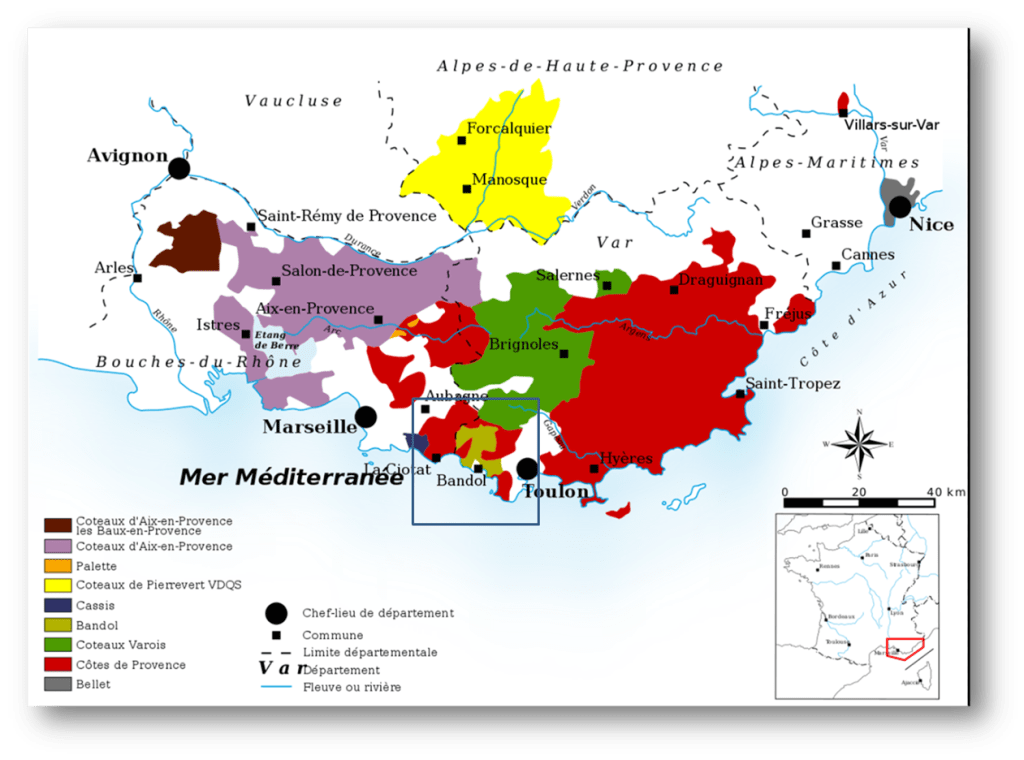
Where and what is Bandol? Bandol is in Provence and is located on the Mediterranean coast, east of Marseilles and south of Aix-en-Provence. According to the World Atlas of Wine,
In size it may be dwarfed by the oceans of Côtes de Provence that make up the bulk of wine produced in this sunny corner of France. But in stature it is the most admired appellation of France’s Mediterranean coast. While 70% of its wine is rosé nowadays, Bandol is best known for its supremely Mediterranean reds, based on the Mourvèdre grape (the only such French appellation) often blended with some Grenache and Cinsault. Thanks to a climate benign enough to ripen a vine variety with one of the longest growing cycles of all, most red Bandol is voluptuously ripe, with almost feral herbiness.
And according to Wine Folly, “Mourvèdre (aka Monastrell) is a full-bodied and rustic wine that originated in Spain. Rumor has it that the seafaring Phoenicians brought it over as early as 500 B.C.”
A common description among many wine distributors (I can’t tell who originated this) is:
This powerful, Mourvèdre-dominant blend provides a savory surprise from southern France’s rosé-heavy Provence region. Bold flavors of juicy dark fruit, black currants, garrigue spice, crushed flowers, balsamic, and cedar are balanced by robust tannins and truckloads of natural acidity.
I was intrigued by the term “garrigue”, so I found this from Wine Spectator’s Dr. Vinny:
Garrigue refers to the low-growing vegetation on the limestone hills of the Mediterranean coast, not the limestone itself. There are a bunch of bushy, fragrant plants that grow wild there, such as juniper, thyme, rosemary and lavender, and garrigue refers to the sum of them. Think herbes de Provence, or a mix of fresh minty-herbal notes with more pungent, floral fragrance.
And of course, you gotta love the label (I’m a big fan of wine labels and am not ashamed to admit that I often purchase wine based on its cool label). I mean, show me a bottle of wine with a cool pirate ship or something along those lines, and I’m there!

What did Kermit Lynch have to say about the Bandol region? Lots. He muses about the potential for cross-pollination of fruit and grapes from bees, resulting in distinct aromas and flavors. He notes that in Bandol, “black-cherry trees are planted alongside the vines. Their flavor has a thick, ripe presence in the aroma of Bandol’s wines.”
What did Kermit Lynch have to say about Domaine Tempier Bandol? “Domaine Tempier is a place in Provence, a home with its winery and vineyards, its olive trees and cypresses… there is a certain vital spirit that one imbibes with each gorgeous swallow of Domaine Tempier’s wine… Domaine Tempier today makes the finest red wine of Provence….” His book has wonderful stories of the domaine’s origins and the winemakers he got to know – really enjoyable reading!
So what was the verdict? The words used to describe Bandol focus on ripeness and intensity: “voluptuously ripe…” “black-cherry…” “bold flavors…” “juicy dark fruit, black currants… balsamic, and cedar…”
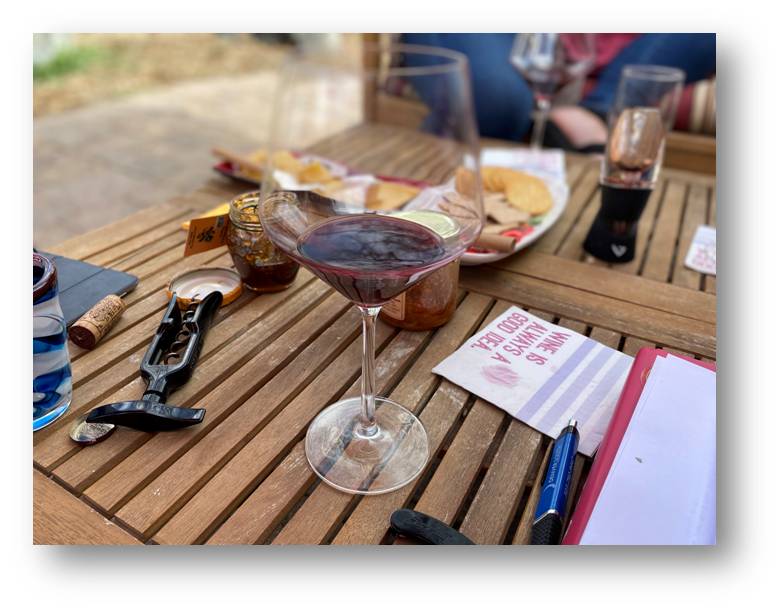
My tasting partners (Lisa and Bethany) were very meticulous to try to help isolate aromas and flavors. As mentioned above, I don’t have a terribly discriminating palate, and confess to being led down flavor paths based on the power of suggestion of others. But I think with higher-quality wines such as Bandol, the aromas and flavors really begin to shine compared with cheaper models (duh!). So instead of scarfing it down, we took our sweet time, small pours, nice swirls, lots of sniffing, and really talking among ourselves about what we smelled and tasted.
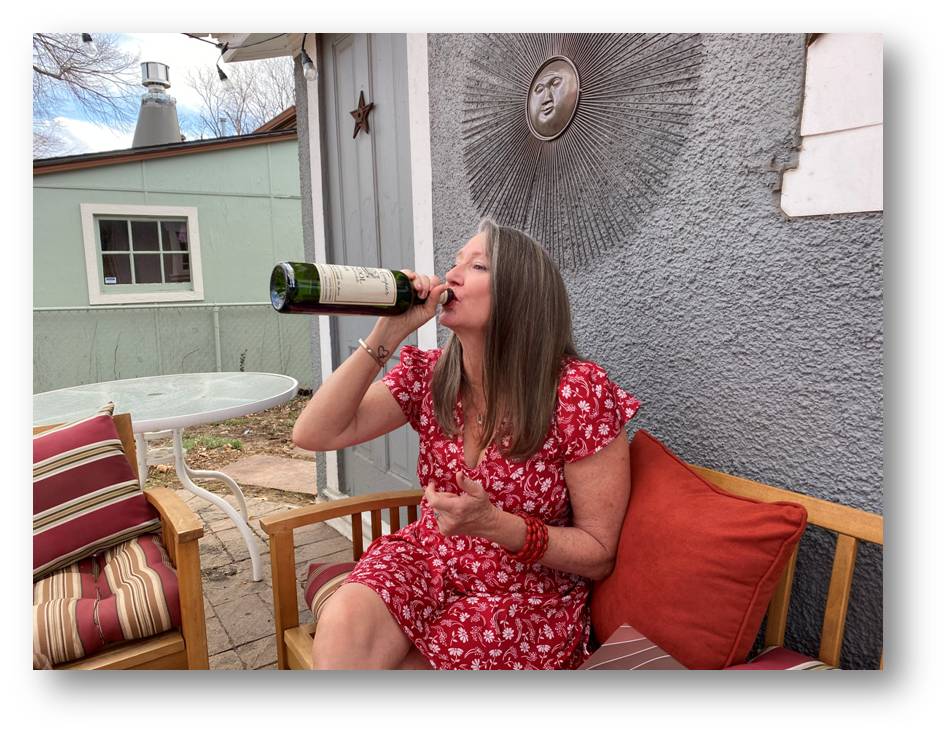
So yes, we definitely detected dark cherry aromas after a few swirls – in fact, it was very intense, more so in the aroma than the flavor for me. I detected raisins too, and Bethany and Lisa chimed in with currants and pomegranates. (Now I gotta be honest, I see currants listed ALL the time as aromas or flavors of red wine, but I’m not really sure what those smell or taste like. I decided I’m going to get one of those wine aroma kits to help with future tastings.) As far as garrigue spice and that cedar/balsamic description, we didn’t really pick that up, though perhaps we’ll be more sensitive to it next time.
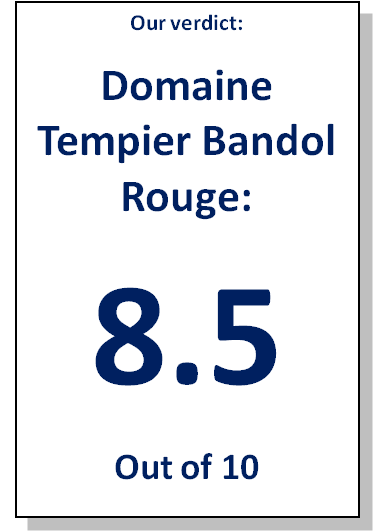
Our verdicts: nice purple color, medium clarity, high viscosity (it was 14% alcohol), medium tannins and acidity and body, and balanced texture. Overall, a very nice medium body red wine with a great flavor of dark cherry fruit. On a scale of 1 to 10, we gave it an 8.5, mainly because this was our first tasting and I can’t yet imagine wines that would reach perfection or near-perfection at 9 or 10. But we’re going to try to find them!
Where can you get it? Both wines.com and Kermit Lynch’s wine distributor site (appropriately named kermitlynch.com) have it for approximately $60-65 per bottle – well worth it!
Wine book recommendation: So many to choose from! But I’d be remiss if I didn’t start with the book that inspired this blog – Kermit Lynch’s Adventures on the Wine Route: A Wine Buyer’s Tour of France. It’s as informative and entertaining today as it was in 1988, when it was written, and 2013, when it was re-issued. You will learn so much about France and its countryside and people – those stories are as important as the wine tastings and discoveries. This one needs to be on every wine lover’s bookshelf!
 The Cellar Door
Tim, you are going to be my new resource for wine shopping! Grazie, gracias, obrigada, and merci 😉
LikeLike