
(Posted June 11, 2021)
“I cook with wine, sometimes I even add it to the food.” ― W.C. Fields
This is the fourth in a review of wines that were mentioned in the great book by Kermit Lynch, Adventures on the Wine Route: A Wine Lover’s Tour of France. Once again a reminder – Lynch’s book is by far one of the most enjoyable and informative books about wine you’ll read.
About our fourth wine and its provenance, Lynch writes: “The Mâconnais [region] forms a perfect sort of entrée into the world of Burgundy, in terms of both wine and place. The first time I traveled to Burgundy, trailing along with another importer, we arrived by the old highway from Paris via Auxerre, Avallon, and Saulieu. We came around a curve and he turned off the highway onto a little road, and suddenly we were surrounded by vineyards. He stopped and pointed out his window, saying, ‘This is Le Montrachet.’ It was a dramatic way to arrive, but one could complain that it was a climactic way to arrive. After that, how much lessened was the impact of seeing the Meursault slopes for the first time, or Volnay, or Pommard, and so on?…When you start at Mâcon and head north by the route de vin through the Côte Chalonnaise vineyards of Montagny and Mercurey, you have prepared yourself for that first magical glimpse of Le Montrachet.”
So the fourth wine in our adventure is a white from Burgundy: Chassagne Montrachet ‘En Pimont’ from Domaine Au Pied Du Mont.
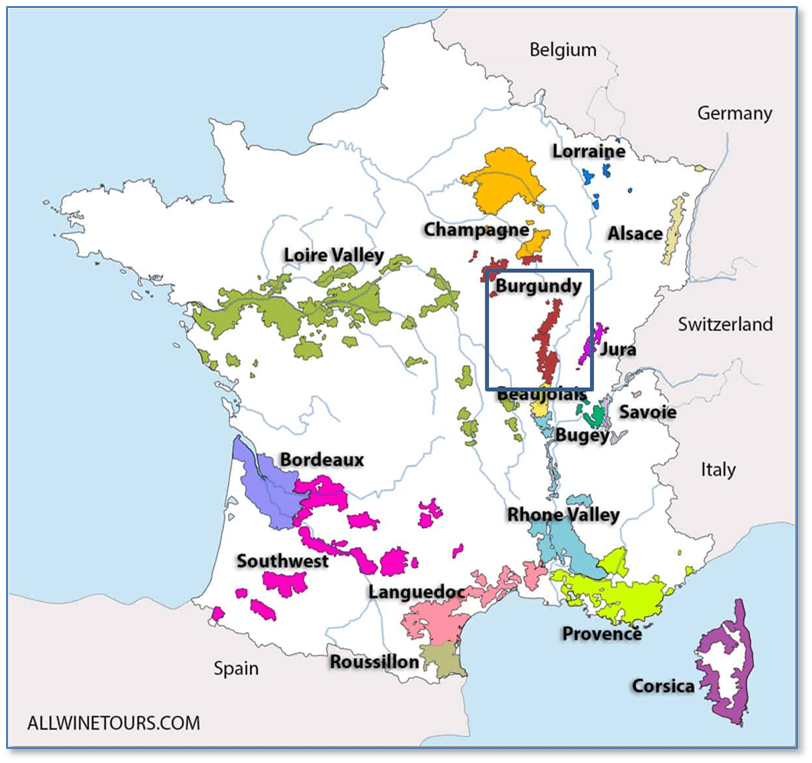
Burgundy is a famous wine-growing region in east central France. Called Bourgogne in French, it is famous for well-regarded red and white wines, with whites coming almost entirely from chardonnay grapes. According to The Oxford Companion to Wine, vineyards dating to the first century have been found in the area. A tribe of Burgundians from Scandinavia settled the area in the fifth century, giving the area its name. As noted in The World Atlas of Wine, “Burgundy is not one big vineyard, but the name of a province that contains several distinct and eminent wine regions.” Montrachet comes from the Southern Côte de Beaune, centered around the village of Beaune roughly in the center of Burgundy (the word “côte” means hillside or slope, so the name of the sub-region literally means “the slopes around Beaune”).
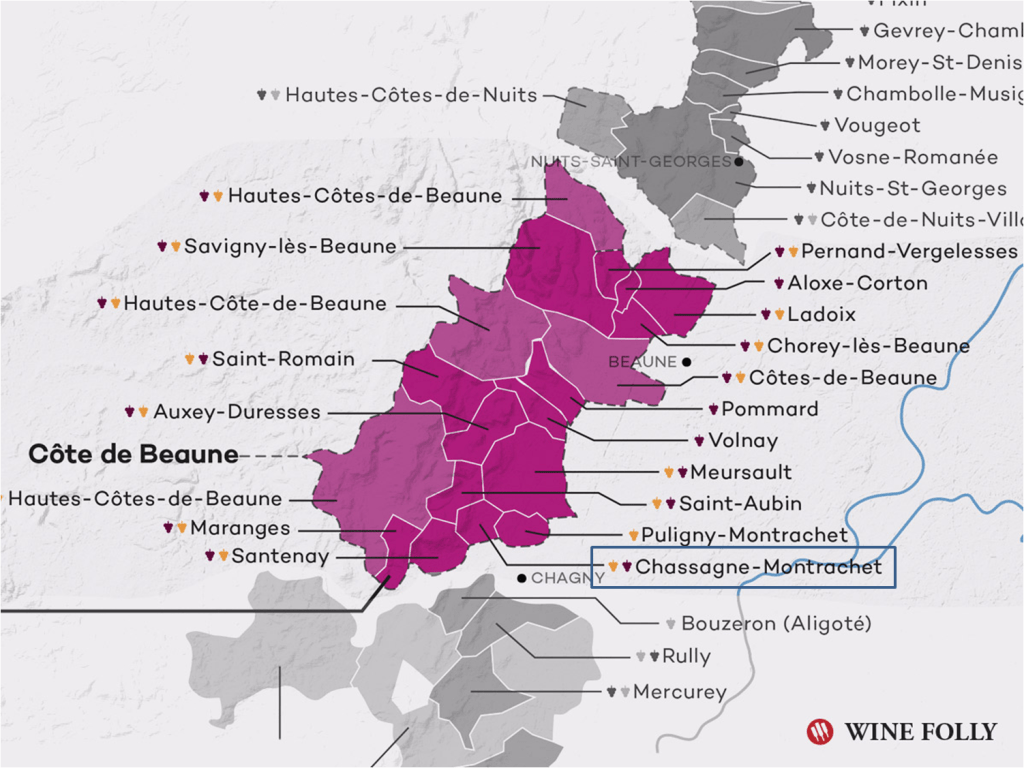
According to The Oxford Companion, Chardonnay is grown on approximately 49% of the Burgundy region’s vineyards. Zeroing in on our wine, Wine Searcher tells us that Chassagne-Montrachet (from which our wine gets its name) is a village in the Côte de Beaune, and Le Montrachet is a grand cru vineyard in the southern Côte de Beaune that is “widely considered to be the world’s best for Chardonnay. It is located on the midslope of the Montrachet hill above the villages of Puligny- and Chassagne-Montrachet , covering land in both communes. Its wines, considered the ultimate expression of Chardonnay, are rich and structured and can sell for thousands of dollars a bottle.” (Note: ours did not!)
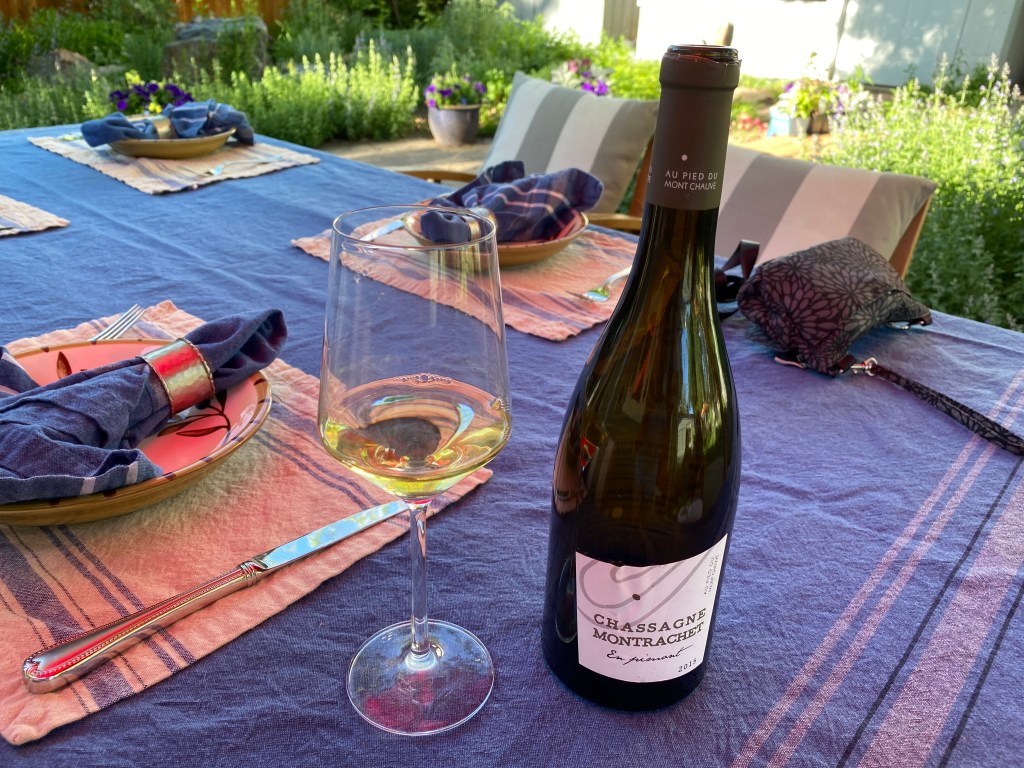
Wine Searcher also tells us that “the first mention of Montrachet came in the 13th Century, when the site was donated to the local Benedictine abbey. It grew in fame and prestige over the centuries, and was confiscated and sold during the French Revolution. In the late 19th Century, both Puligny and Chassagne added Montrachet to their village name, as was the custom at the time …. Le Montrachet was made an appellation in 1937, around the same time as most of Burgundy’s other top grand cru vineyards.”
The Oxford Companion describes Montrachet as being “the most famous grand cru white burgundy, the apogee of the Chardonnay grape produced from a single vineyard” in the area. Part of its fame comes from its terroir, with its vineyards planted in limestone on the rocky slopes of the area. Rumor has it that the famous French writer Stendhal asked about Montrachet, “How can a little hill so ugly and so dry produce such great wines?“
A little something about the producer: Millesima-usa.com tells us something about the domaine:
“The Domaine Au Pied du Mont Chauve with its curious name is at the core of a lovely family history. Francine Picard, daughter from one of the biggest winemaking families in Burgundy, decided to return to the family business after gaining her own professional experience to take over the domaine, a position traditionally held by her father. For those who know Burgundy, Mont Chauve means Montrachet in the local dialect. Ideally located, the Domaine Au Pied du Mont Chauve extends over Chassagne-Montrachet, Puligny-Montrachet and Saint-Aubin communes in the heart of the most beautiful climats and soils for Burgundy wine.”
And talkingwines.co.uk tells us:
“Château de Chassagne-Montrachet is part of the much larger Family Picard group, which in total comprises 5 estates and about 135 hectares of vines. The Picard group began life in 1950, but the Chateau in Chassagne (and its impressive 14th century cellars) was purchased by them in 1998. The vineyards of the Chateau are a mix of red and white wines; red and white from both Chassagne and St.Aubin, reds from Corton and whites Puligny. The Chateau is a beautiful place to visit, with fine old cellars, multi-coloured barrels and nice tasting room.” I want to go there!
So what were we to expect? Most reviewers have extremely high praise for Montrachet. Wine.com says, “The best sites in Chassagne-Montrachet have complex soils of sedimentary rock and limestone (with less marl). Whites, which are by law composed of 100% Chardonnay (as in all classified white Burgundy from Côte d’Or), have steely power, bright and concentrated citrus, stone or tropical fruit characteristics and attractive textures ranging from plush to tactile, grippy and mineral-driven.” Total says that “This Chardonnay has a nose of pears and green apple. The mouth follows the nose with a rich, full-bodied, toasty texture, pulling into a long finish.”
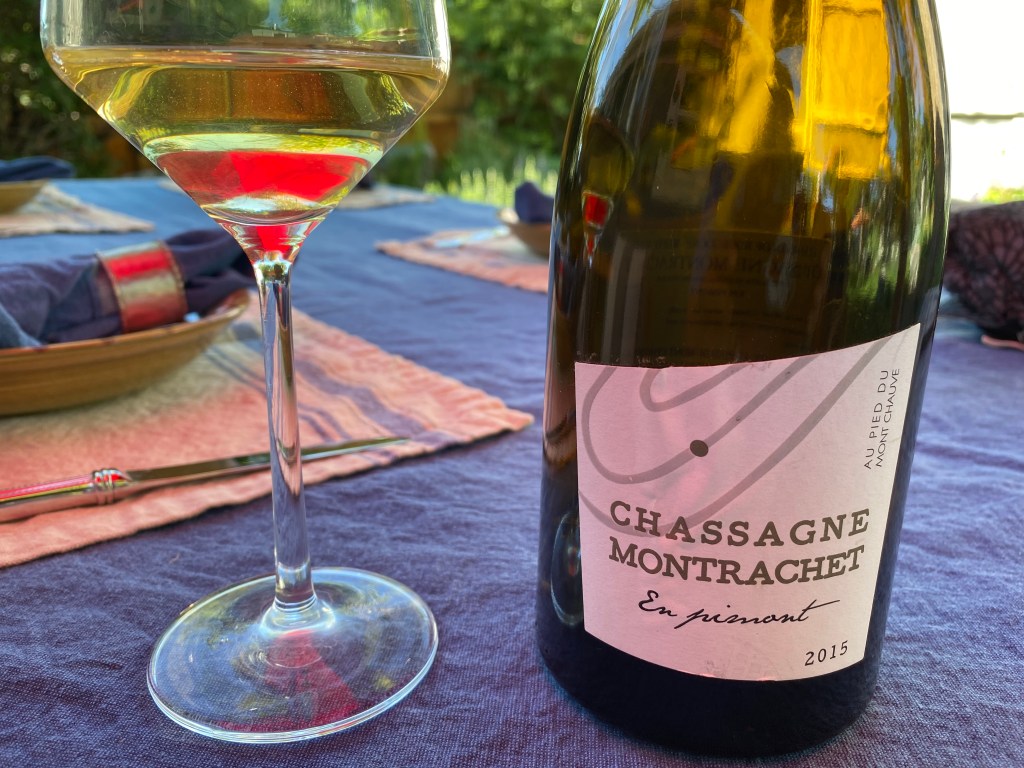
Louis LaTour says, “The Chassagne-Montrachet 2015 [our vintage] has a beautiful pale gold color. The nose is complex and reveals floral notes imbued with acacia honey. The palate is rich and intense with hints of fresh almonds and honey. Try pairing with seafood, fish, charcuterie and goat cheese.” Wine Magazine says it has “Tight acidity [that] accompanies hints of toastiness and ripe peach and apple flavors.”
Vins de Bourgogne was even more effusive: “This wine is the Chardonnay grape dressed in glittering gold! It boasts firm coloration with green highlights. Aromas of mayflower, acacia, and honeysuckle blend with verbena and hazelnut and in some cases toast or fresh butter. This wine boasts a profound minerality (flint). Age brings in notes of honey or ripe pear. Rounded and often opulent, its attack is instantaneous. On the palate, fleshiness is matched by mellowness, and both are equally persistent.”
My guest tasters – Lisa, Jim, and Arleen – liked this wine. Our initial aromas were apple, and, after it opened up a few minutes, caramel. Our tastes were widespread, with some noting the minerality – flinty or even metallic – mentioned earlier, due to the limestone-filled vineyards. We definitely tasted pear and apple, even melons (cantaloupe?), and a strong (but not unpleasant) mineral aftertaste.
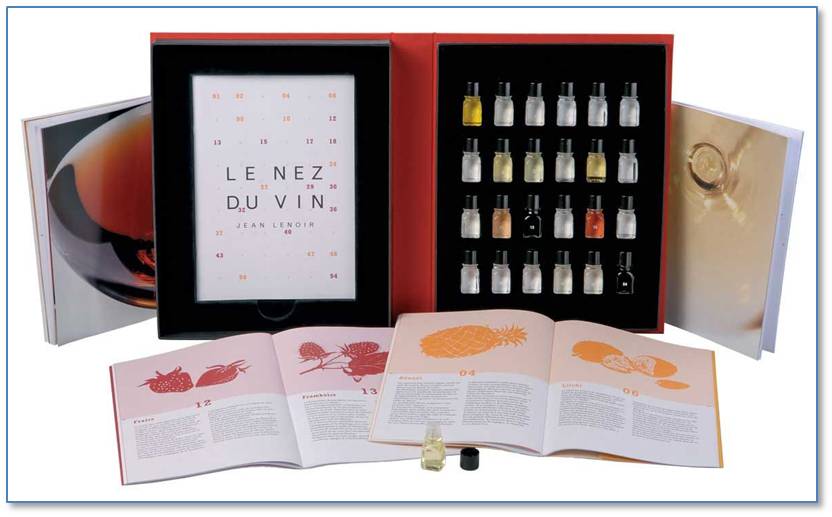
We were curious about some of the other aromas and flavors noted by reviewers – particularly honey and toast. So we went to our trusty “smelly kit” (not to be confused with “smelly cat”) – our Le Nez du Vin of liquid samples of common wine aromas – and “refreshed” our noses and brains with the aromas of honey and toast. Sure enough, we took a whiff of each, then sniffed and tasted the wine again, and we could detect it. Power of suggestion? Maybe. But it was fun being a wine detective to track down those specific aromas and tastes that other reviewers mention but that we didn’t notice at first sniff – or taste.
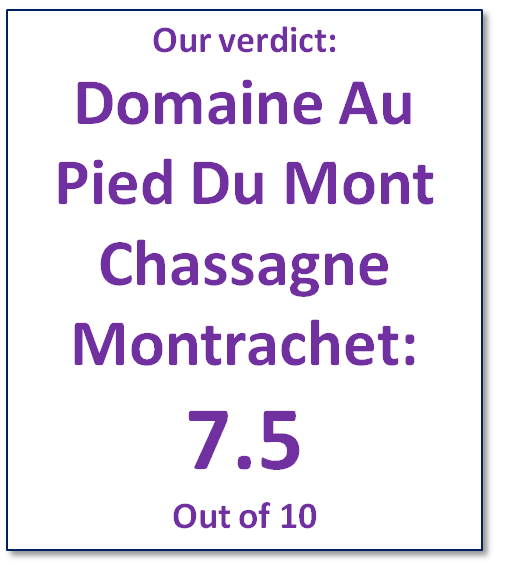
So what was the verdict?
We liked this wine, especially on a hot day paired with apple and goat cheese on toast (thanks Arleen!). It was definitely on the dry side, with medium to high acidity (thus the strong aftertaste? Or were we confusing minerality with acidity?). On a scale of 1 to 10, we gave it a 7.5. This was still very good, but a long way from the “perfect” wine that would rate a 10 (I’m not convinced it exists).
Where can you get it? Depending on the vintage, you can find this Montrachet at Total, Kermit Lynch, and Louis LaTour at a price ranging from $70 to $85 a bottle.
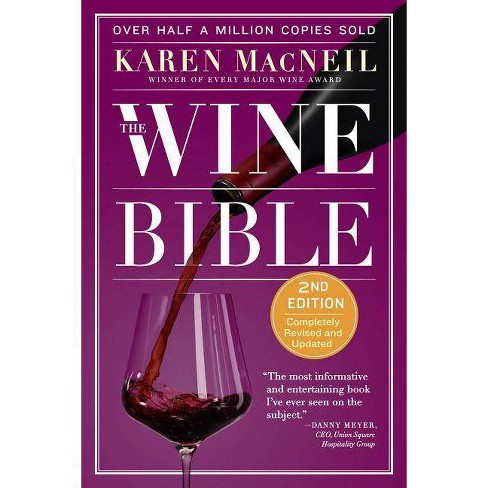
Wine book recommendation: You can’t go wrong with The Wine Bible, one of the standard references every wine lover should have. Written in an informal, breezy style by Karen MacNeil, it is known as the most authoritative wine book in the US. Its 2nd edition was published in 2015. You can also visit Karen’s website and subscribe to her email newsletter, Winespeed.
 The Cellar Door