(Published October 19, 2021)
“Wine makes every meal an occasion, every table more elegant, every day more civilized.”
― Andre Simon
We’re taking a break from our one-by-one tastings of the wines mentioned in Kermit Lynch’s Adventures on the Wine Route: A Wine Lover’s Tour of France. Instead, we spent a few weeks in France tasting as many wines as possible – whether they were mentioned in Lynch’s book or not!
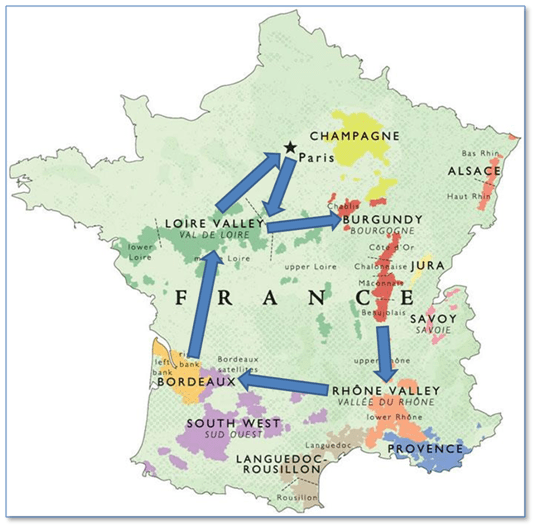
We spent a part of August and all of September in France en vacances – being retired, we are extremely lucky to take this much time in a place we love so much. Lisa tries to spend a month every year in Paris – she is indeed a Francophile! – so we decided to combine her yearly sojourn in the City of Light with a tour focused on several of the major wine regions of France. We’re not exactly re-creating Kermit Lynch’s wine tours – about which he wrote on 1988 – but our trip here had a certain logic to it. We traveled clockwise from Paris and spent a few days each in the Burgundy, Rhone, Bordeaux, and Loire wine regions, focusing on local wines, people, sights, and culture. But bien sur mainly the wines!
First, a note on our travels. France is one of the few countries in the European Union that does not require a negative COVID test to enter if you are fully vaccinated. The government of France does sponsor a Pass Sanitaire, which allows people to upload their vaccination record into a national database and then receive a QR code that is displayed on your phone whenever you enter a restaurant, museum, or other indoor facility. We sent our information in before I got there in late August but never received our codes – we did receive emails saying they were “working on it, don’t contact us again,” etc., but it never came through. So we merely showed our CDC-issued vaccination cards wherever we went – and no one objected (though we did get few confused looks at times).
So here is a summary of the wonderful French wines we tried on our trip.
First, Paris. I realize this is cheating a little bit because Paris and its environs are not known to be a major wine region. But, hey, we were in France – how bad could it be?
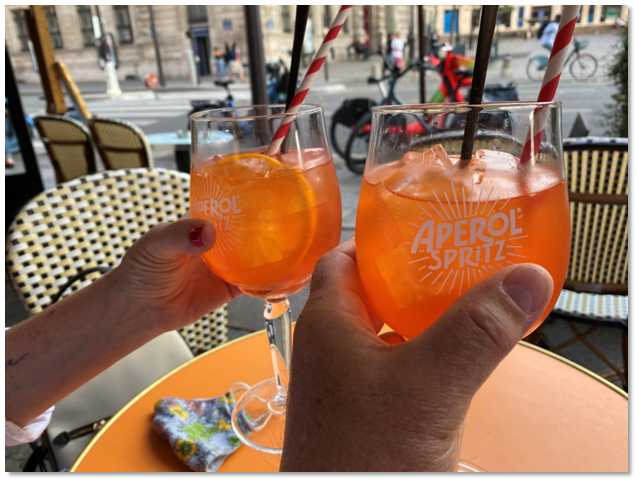
Bien sur, for us the way to start every evening before dinner was with a wonderfully refreshing Aperol Spritz, or just “Spritz” on the happy hour menu. A great combination of champagne and Aperol liqueur, it is both sweet and slightly tart at the same time, very orange-ish in nature. Can’t be beat! (Plus we promised ourselves we would get these cool glasses once we get home!)
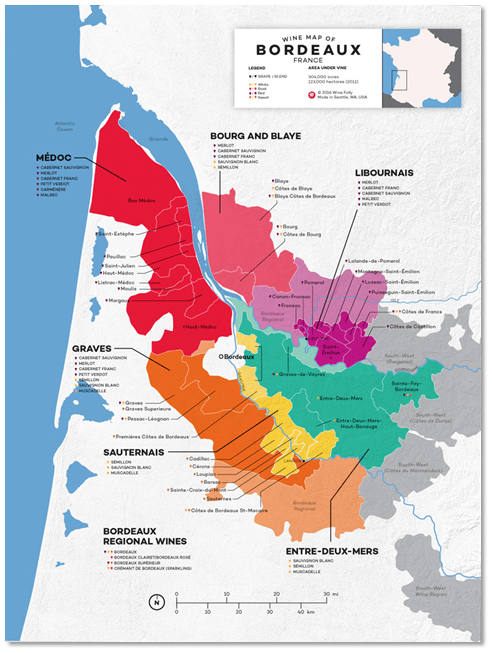
One of best adventures was a cooking school at La Cuisine Paris. Our chef led us through the preparation of a wonderful three-course meal focused on duck with fig sauce along with potatoes au gratin (made with cream, not cheese) as the main course, and a great plum soufflé as dessert. Of course, it included a great wine too – a nice Sauvignon Blanc from Berticot vignerons, grown in the Côtes de Duras region of Southwestern France (see”Sud Ouest” in the map above). The white wines of this area are described as “dry and mellow, seductive, delicate and fruity.” It was excellent with the duck, and it is very affordable in the US (going for $10-$15).


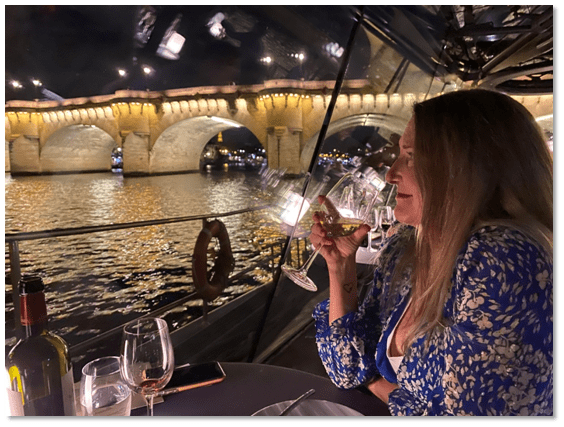
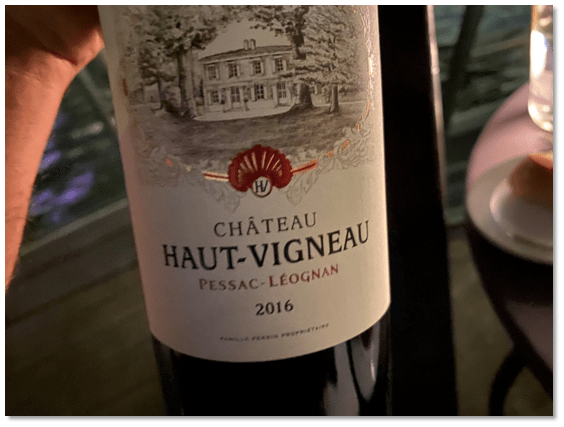
Our other big wine-focused Paris adventure was a nighttime dinner cruise on the Seine. Again, a wonderful multi-course dinner topped off by a great Pessac-Leognan from the Chateau Haut-Vigneau in Bordeaux. This great red is 60% Cabernet Sauvignon and 40% Merlot, and it (as the website reminded us) was full of dark fruit (blackberries) and a subtle grilled/smoky flavor and aroma. Lisa is ordinarily not a fan of red wines, but this and others she had on this trip have broadened her outlook considerably, she says. You can find this nice red in the US for around $25.
Next stop: the Loire Valley (part one). We visited friends and family in Nevers, on the far eastern end of the valley, and took a day trip to Sancerre. The town itself is in the Central Loire region, just north of Nevers.
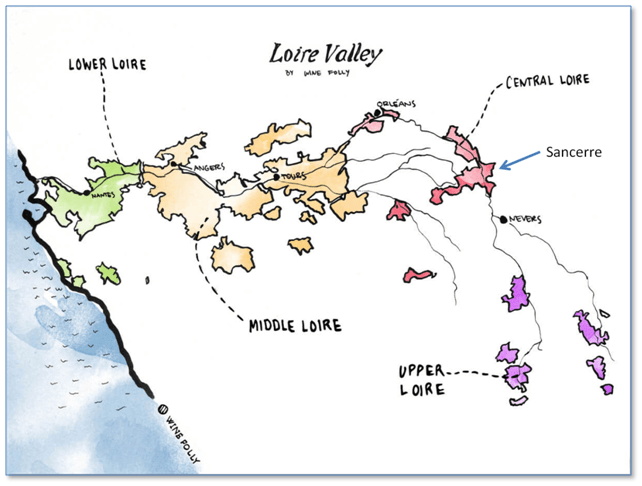
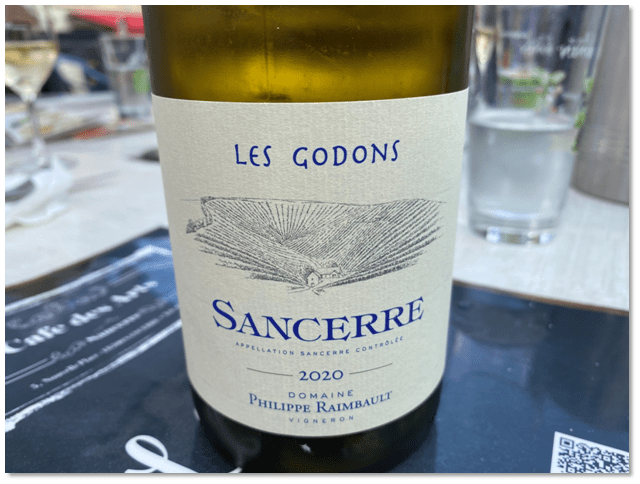
We visited the Château de Sancerre tasting room in the middle of this quaint town, where we were able to try a number of wonderful types of …. well, Sancerre wines. The Oxford Companion to Wine says that the town is a “dramatically situated hilltop town on the left bank of the Loire which lends its name to one of the Loire’s most famous, and famously variable, wines: racy, pungent, dry white Sauvignon Blanc.” Sancerre has been one of my favorite white wines, and we were happy to try a number of high-quality Sancerres at the Château. But my favorite was the one we had a lunch in the square of the town – a Les Godons Sancerre from Philippe Raimbault. A little citrusy, a little fruity, and a little minerally, which makes sense given that the soil is gravel and limestone in the soil. You can find it in the US for $25-$30.
Next up was the Burgundy region, in northeastern France. We made two stops here: Beaune (in the Côte de Beaune in the central part of the region) and Dijon (in the Côte de Nuits in the northeast).
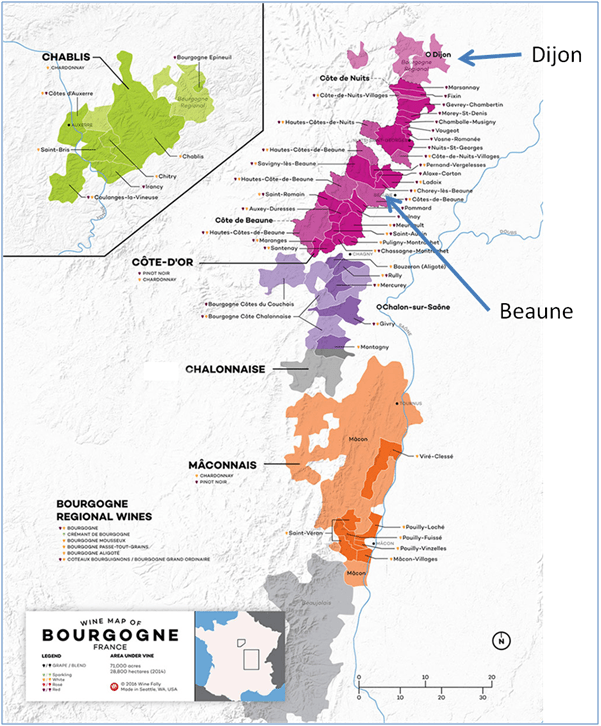
Now without being too snooty about things, the Burgundians think (perhaps rightly but everyone can judge for themselves) that their wines are superior to every other region’s. Perhaps it’s their focus on purity – their wines are 100% one grape, no blends. The primary wines are Chardonnay (roughly 50% of the region’s production) and Pinot Noir (roughly 35%). Lesser-volume wines are Gamay at 8% (the primary grape used in the region’s Beaujolais) and Aligoté at 6%. You may ask, how can so many different types of wine be produced with the same grapes? Well, my friend, it all comes down to terroir – a loosely defined aspect of wine-growing that The Oxford Companion says is a “quintessentially French term and concept” for which “no precise English equivalent exists.” Terroir encompasses soil type, sun exposure, weather (particularly microclimates), and growing techniques. That means that a Chardonnay grown in one plot in Burgundy could taste significantly different from one grown in another. But I digress.
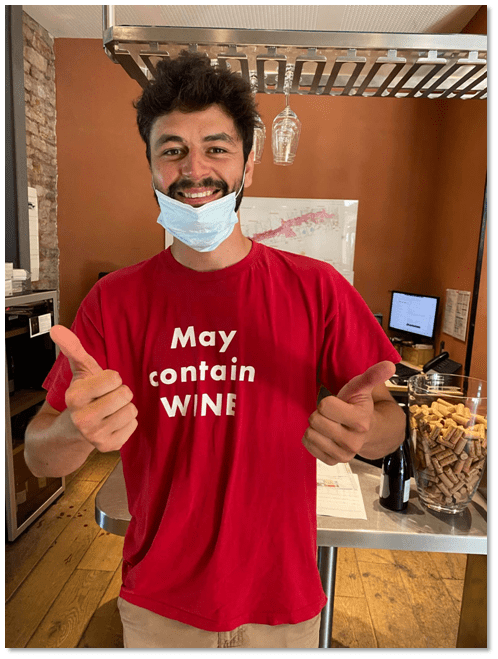
The latter wine mentioned above, with only 6% of production in Burgundy – Aligoté – was one of the pleasant surprises on this trip. We discovered it on a wonderful bike tour of the area around Beaune. The bike tour was a magical trip through small towns, beautiful vineyards, and limestone cliffs – one of the highlights of the entire trip.

Theo, our tour guide, introduced us to Aligoté on a brief stop amid the beautiful vineyards of the region. The Oxford Companion calls Aligoté “Burgundy’s ‘other’ white grape” and “Chardonnay’s underdog but in a fine year, when ripeness can compensate for its characteristic acidity” and is “arguably a beneficiary of climate change” and its warming effect on the vineyards. Wine Searcher describes it as “generally dry in style, with floral and herbal notes, naturally enhanced by the variety’s high levels of acidity.” We thought it was deliciously refreshing, and we bought a bottle several times on our trip regardless of the region we were in. We had one from Vignerons de Buxy on our bike tour – you can find it in the US for $25-$30.
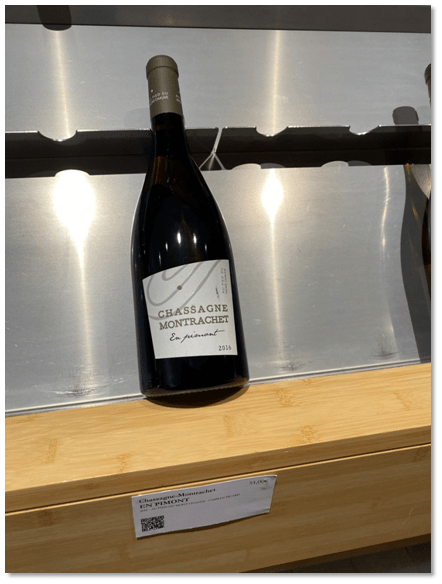
Interestingly, our bike trip took us to the Domaine Au Pied Du Mont, home of the great Chassagne Montrachet ‘En Pimont’ that we reviewed earlier in #4 in our series. It was just as delicious in France as it was in the US!
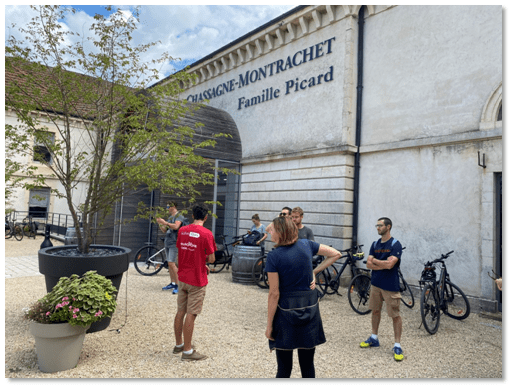
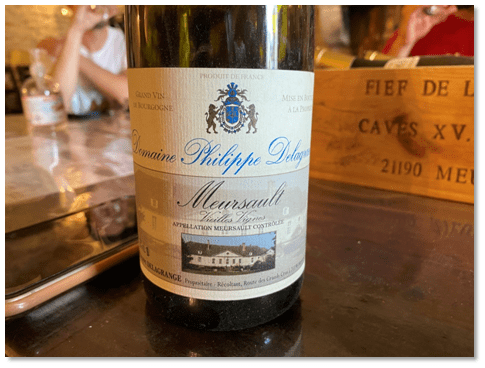
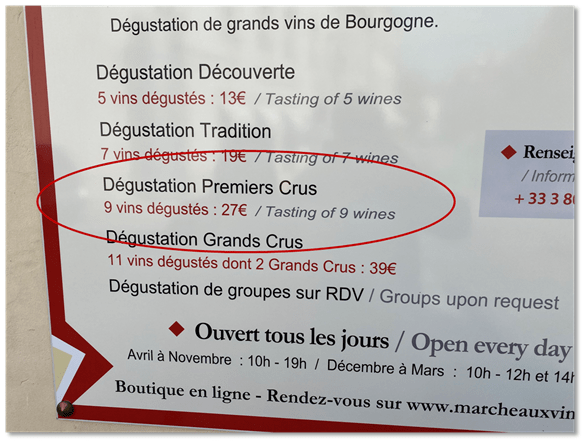
Another wine we liked in Burgundy was Meursault – a wonderful white wine made from Chardonnay. Our bike tour took us through the lovely village of Meursault, and we stopped at the Domaine Philippe de la Grange for some tastings (you can find it in the US for around $50). We also had a Meursault at a great … um… multi-tasting room at Marché aux Vins in the village of Beaune. (Nine! Count ‘em! Nine!).
The Beaune tourism website tells us that some believe the name “Meursault” means “mouse’s jump,” because “the plots producing red wine would not have been separate from those producing white by more than a mouse’s jump.” The site describes Meursault as having a “clear and bright golden-green colour, a nose of great finesse with aromas of lime, hawthorn and butter ntoes, hazelnuts and honey depending on the ‘climat.’” Now I could spend pages and pages describing how the Burgundians classify their wines, their terroir, and their tiny plots of land called climats. It’s almost too much to absorb – my head hurt trying to understand it all. Suffice it to say that their four-tiered classification system is worth studying in more detail… if you’re a master sommelier! (Sort of kidding.)



On to our second stop in Burgundy, the town of Dijon. At dinner one night, we had a wonderful Mercurey from the Challonnaise subregion of Burgundy (on the opposite southern end of the Burgundy region from Dijon. Apparently there are no rules against serving a wine from one sub-region in another!). The Vins de Bourgogne website describes Mercurey as a “deep, profound ruby. This crisp-fruited wine evokes strawberry, raspberry, and cherry. Age brings in notes of underbrush, spicy tobacco notes and cocoa beans. In the mouth this wine is rich, full-bodied, and chewy. In its youth, the tannins of this wine lend it a mineral firmness. When aged, it is attractively rounded and meaty.” No meaty here, though ours – from Domaine Gouffier – was aged four years. You can find this one in the US for around $35.

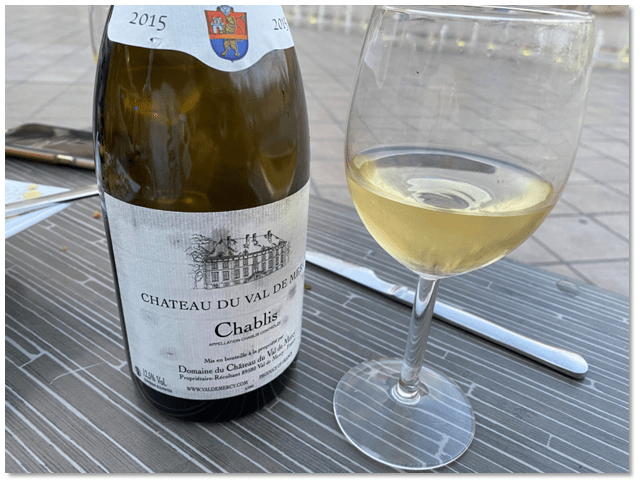
Another Burgundy wine we loved was Chablis, a Chardonnay produced in the farthest northern subregion of the Burgundy region. The Oxford Companion says it is a “uniquely steely, dry, age-worth white wine…. Chablis remains one of the great white wines of the world. It is sometimes overshadowed by the greater opulence of a fine Meursault… but it has an individuality of its own that sets it apart from the great white burgundies of the Côte d’Or. There is a unique streak of steely acidity, a firm flintiness, and a mineral quality that is not found elsewhere in Burgundy.” We had one at a Dijon restaurant from Domaine du Chateau du Val de Mercy, and it can be found in the US for around $15.
Next stop: Lyon, just north of the Rhône wine valley. It’s located at the junction of the Rhône and Saône Rivers north of the town of Vienne, and is not technically in the wine valley, but provides a convenient jumping-off point to learn about and explore the area. You may remember that we tried and wrote about three wines from the Rhône valley in the blog previously: a Châteauneuf-du-Pape and a Gigondas from the southern Rhône, and most recently a Côte Rôtie from the northern Rhône.
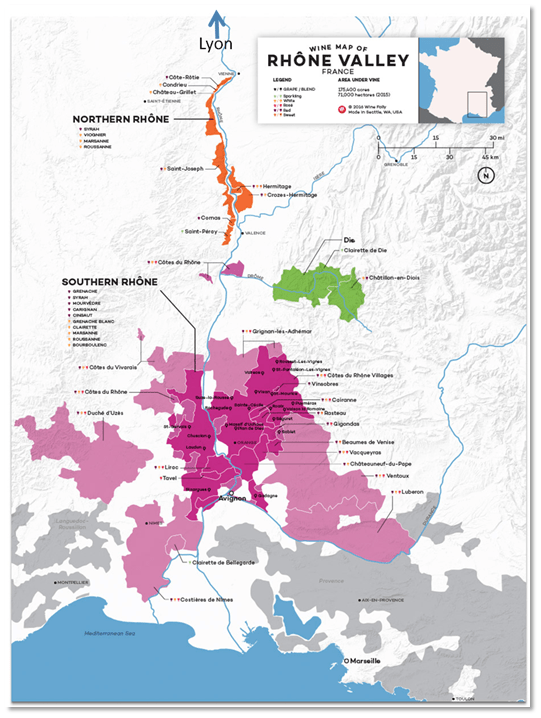
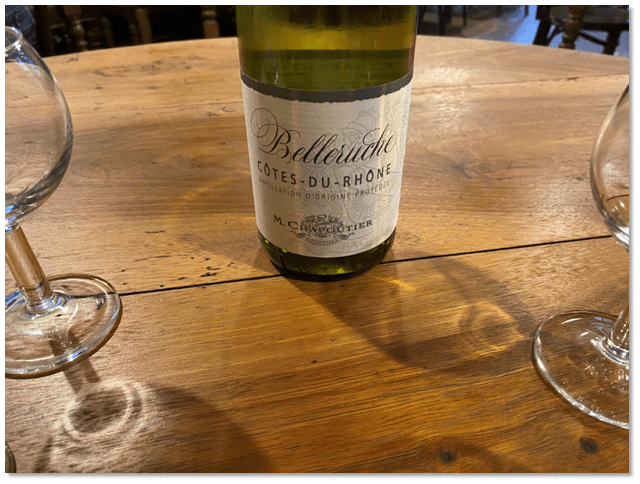
Two “local” wines stood out while we were in Lyon. First was a Côtes du Rhône, from the Southern Rhône subregion. This one – a white from M. Chapoutier – was a blend of Grenache blanc, Roussanne, Viognier, Clairette and Bourboulenc. The domaine’s website tells us that it has a “bright golden yellow hue,” with “intense and expressive” aromas of apricot, fennel, and floral, with a “complex and very elegant palate” with a finish that “reveals subtle notes of aniseed.” It was very nice, and can be found in the US for around $15.
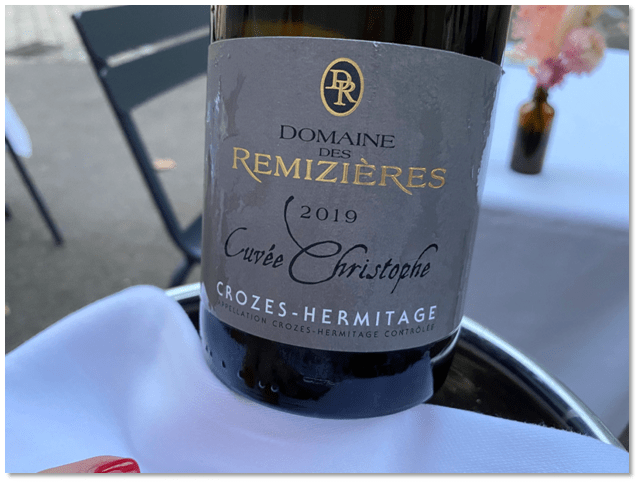
Another good wine we tried in Lyon was a Crozes-Hermitage Cuvée Christophe white from Domaine des Remizières from the northern Rhône valley. It is a blend of 85% Marsanne and 15% Roussanne grapes, two varietals that are primarily found in the Rhône valley, though they make appearances in a few other regions of Europe. Vivino tells us that this wine has an oaky, buttery taste with hints of vanilla, apricot, peach, and pear. It was delicious! I read that this Cuvée was named after the winemaker’s oldest son, Christophe. Makes sense. It can be found in the US for around $25.
On to Bordeaux – wine capital of France (but don’t tell the Burgundians that!). Nestled on either side of the Garonne River in the southwest of France near the Atlantic Ocean, Bordeaux is one of the great pleasures for anyone who loves wine.
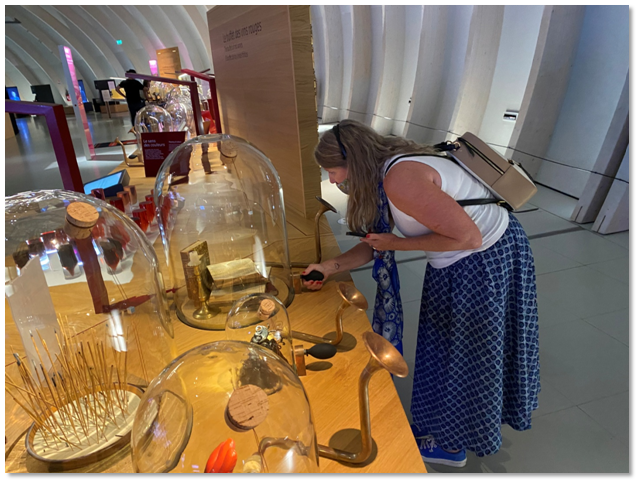
One of the best things about the City of Bordeaux is that it is home to the Cité du Vin, a spectacular architectural apparition along the river that is one of the most fascinating museums I’ve been to. I think it looks like a giant decanter; others say it represents the swirl of wine in a glass. Through a series of interactive and visual displays, we learned the history of wine in general and of Bordeaux wines in particular. One of our favorite parts was the “smell” chamber, where we could whiff aromas commonly found in wines. And of course admission comes with a free glass of wine at the top in a spectacular observation deck. Highly recommended!

A trip to the City of Bordeaux would not be complete without a day-trip tour of the beautiful countryside. Our primary tour took us to the wonderful medieval town of Saint Emilion, to the east of the city. One wine stood out during the trip – of course it was from Saint Emilion, a grand cru classé from Château Villemaurine. This wonderful red was a blend of 80% Merlot and 20% Cabernet Franc. The Wine Advocate describes it as “deep garnet purple colored” with “baked black cherries, mulberries, and fragrant earth scents giving way to preserves, plums, and cinnamon toast…. The palate is jam-packed with black fruit preserve flavors, framed by ripe, velvety tannins and tons of freshness, finishing long and spicy.” Well that has to be one of the most impressive fruit-flavored reviews I’ve ever read. You can find it for around $65 in the US.

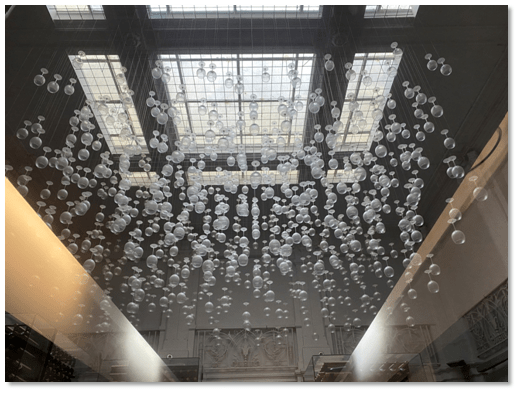
One of the greatest pleasures of Bordeaux is its wine bars – they are everywhere with cute names like “Wine More Time” (one of our favorites). But the best wine bar has to be the Max Bordeaux Wine Gallery, a fascinating place to surround yourself with great wines and interesting architecture (including an entire ceiling made of wine glasses – hmmm, maybe I’ll try that at home!).
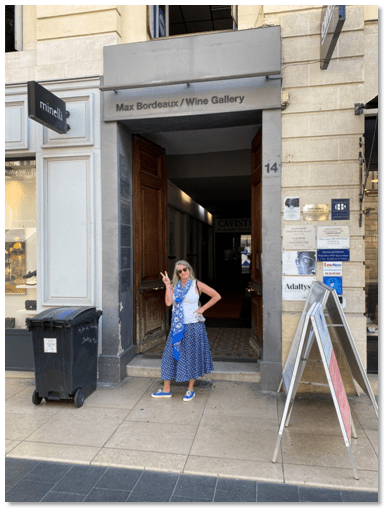
Max’s place allows you to pick and choose wine tastings, so we decided to try one of the cheapest and one of the most expensive tastings (roughly $100 bottles and above) and compare. Honestly, my unrefined palate can’t tell much difference.
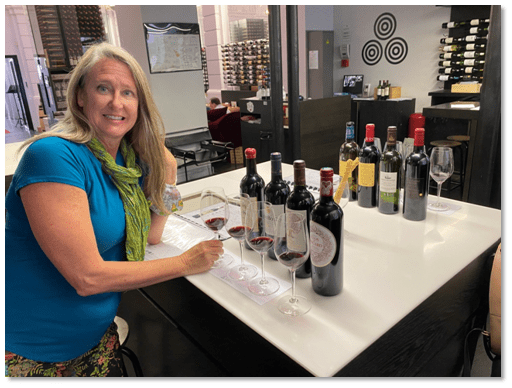
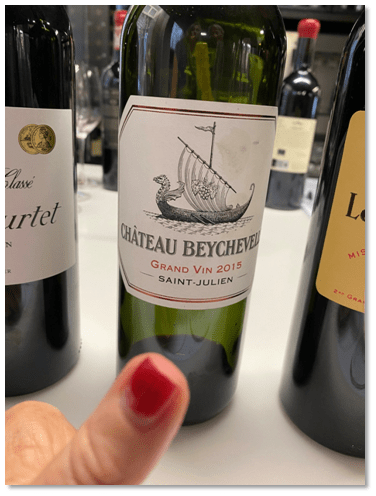
One wine that stood out (as noted by Lisa’s thumbs-up sign) was a Chateau Beychevelle Saint-Julien Grand Vin 2015 vintage, a spectacular red that is 50% Cabernet Sauvignon and 40% Merlot, with Cabernet Franc and Petit Verdot comprising the rest – a very nice blend. Wine Enthusiast described it as “properly firm with tannins although this structure is well balanced with the ripe, stylish black-currant fruits and acidity.” It was on the pricey side of the table, running for about $150 in the US.
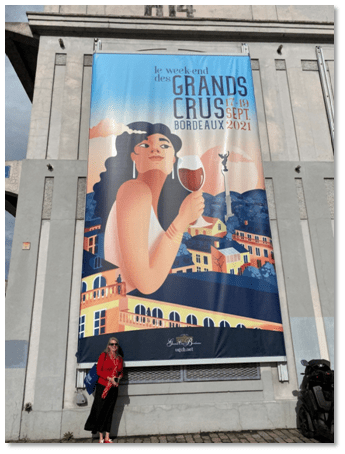
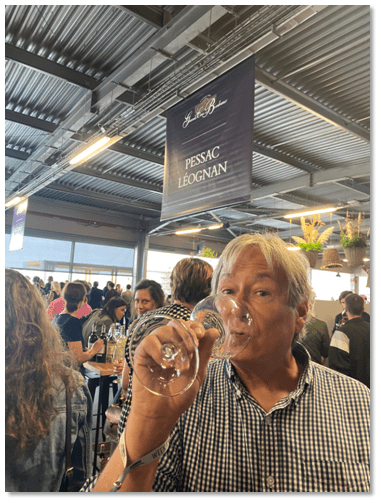
Of course no visit to Bordeaux would be complete without a large wine-tasting party. In this case, we were fortunate enough to be in the city during “Le Weekend des Grand Crus” – where more than 120 producers of Bordeaux wines were in one place for the sampling. The festival took place in a restored “hangar” or warehouse that formerly serviced boats on the Garonne River.

We shared the venue with a few hundred of our closest friends, and thoroughly enjoyed the chance to sample the best of Bordeaux wines. My personal favorite was Pomerol – a spicy and wonderful red from the region’s right bank – not far from Saint Emilion that we had visited earlier. Pomerol is comprised primarily of Merlot grapes, with a smattering of Cabernet Franc. I tried several vintages, and they were all delicious! Vins de Bordeaux tells us that Pomerol has aromas of violet, red berries, truffles, and game. Well since I’m not a fan of truffles or wild game, I’ll go with the violet and red berries! Incidentally, Total advertises a 2011 Pomerol for around $4000 (!) but you can find others for anywhere from $35 to $65.
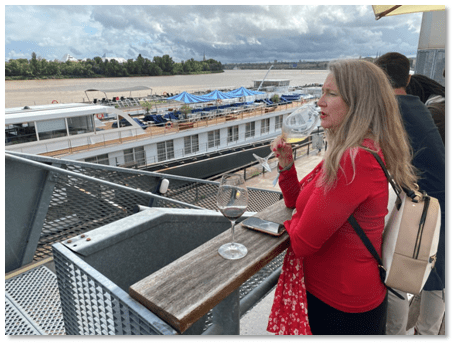
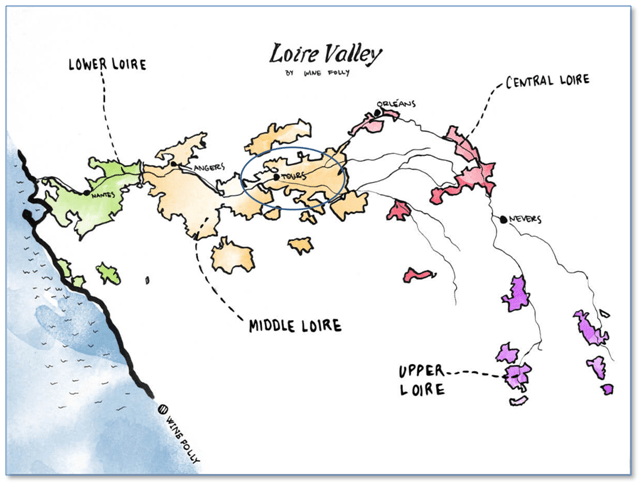
Our final stop was a return visit to the Loire Valley, where we started. We stayed in the wonderful medieval town of Tours, located roughly in the center of the valley (in the “middle Loire”).
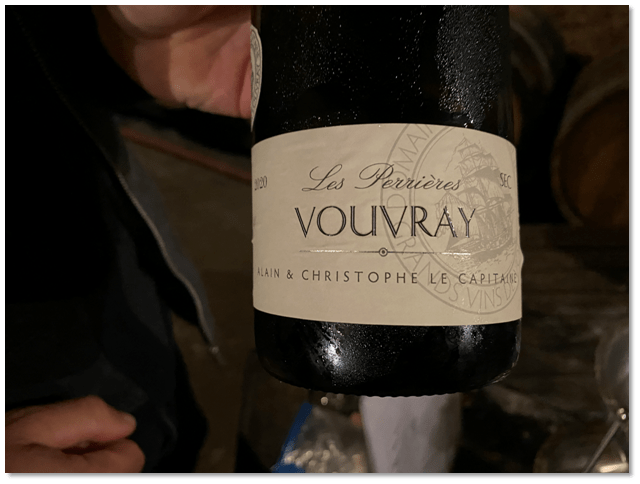
We took a couple of … well, tours from Tours and got to know many of the great local wines. One tour led us to a nice Vouvray from Les Perrieres. We tasted a Vouvray in #6 of our previous tastings, and noted that it had aromas and flavors of citrus, apple, floral, and pears. Vouvray remains one of our favorite white wines, and this was no exception. You can find this wine in the US for around $15.
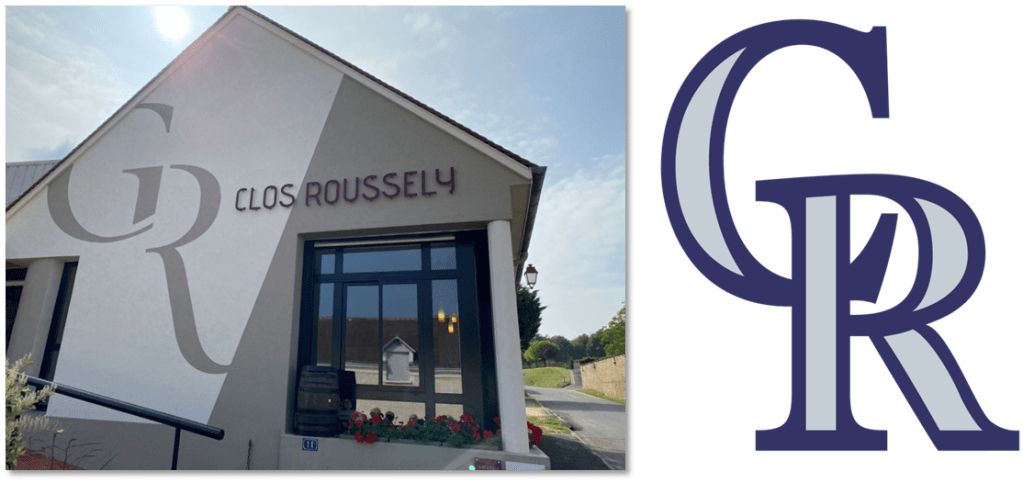
Our next tour from Tours took us to the Clos Roussely winery, near Chenonceau, where we had a wonderful tour of its vineyards and had a nice light lunch to go along with our tastings. Incidentally, we noted that this winery’s logo looks suspiciously like the Colorado Rockies logo – amirite? Should we report them to the Trademark police?
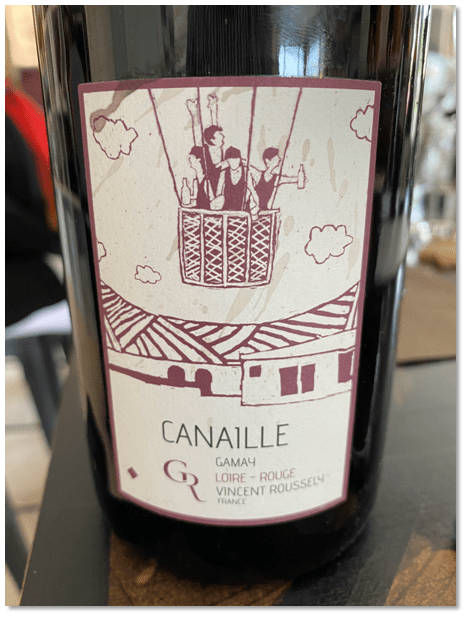
We liked this winery for a number of reasons, not the least of which was its use of whimsical artwork on its labels. Two wines stood out in our visit. The first was called Temps Danse (“dance time”), which was a nice rosé made from a mixture of 60% Pineau d’Aunis and 40% Gamay, with “notes of red fruits and spices” according to the winery’s website. The Oxford Companion tells us that Pineau d’Aunis is sometimes called Chenin Noir (though not related to Chenin Blanc) and is used to bring a “peppery liveliness and fruit” to local rosés. Gamay, you may remember, was one of the lesser grapes raised in Burgundy and is used in Beaujolais. I haven’t seen it on sale in the US, but it goes from the winery for around $10.

Another wine we liked was a red called Canaille (which means “scoundrel”). This wine is made from 100% Gamay grapes, yet because of the region’s terroir, it is not as fruity as a traditional Beaujolais. Vivino tells us that it is earthy with hints of leather and salt, with notes of cherry and red fruit. You can find it in the US for $20-$25. Again, you can’t beat the artwork on the label!
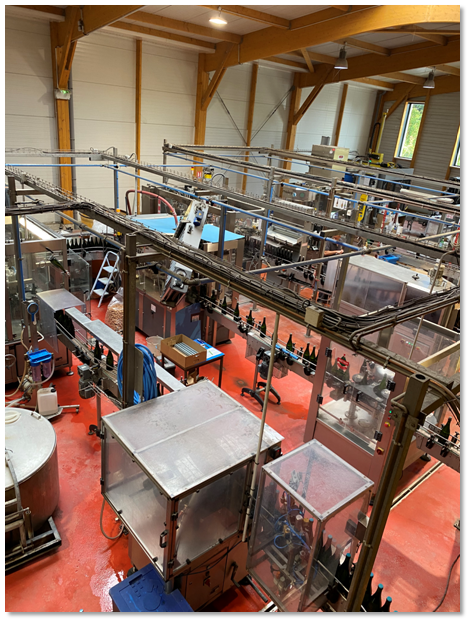
Another tour took us to a local wine co-op, where different vineyard owners bring their wine for production. When we were there, we saw sparkling wine being produced in an elaborate assembly line that reminded me of Willy Wonka and the Chocolate Factory.
While at the co-op, we tried a lovely Chinon from Couly-Dutheil Les Chanteaux, a refreshing white wine made from Chenin Blanc grapes. The Oxford Companion tells us that “Chinon is quintessentially a wine of refreshment, being light to medium bodied, often extravagantly scented (lead pencils is one common tasting note) [!] and with an appetizing combination of fruit and acidity.” We didn’t note any lead pencils, but we did like it for an earthy/fruity taste. You can find it in the US for around $25.

We finished our Loire visit with a nice meal accompanied by a lovely Savennières, (which we reviewed in #2 in our series) made from Chenin Blanc grapes. This one was from Domaine des Deux Vallees and was a great way to end our wine tours (you can find this one in the US for $20-$25). I love Savennières for its nice aroma and taste of honey and pears and it is one of my favorite whites. It was a perfect way to end our own Tour de France!

Let’s wrap it up. Here’s my final thoughts:
Favorite white wine: I’ll always have a soft spot in my heart (and palate) for Sancerre and Savennières, but the best discovery was Aligoté – the little-known wine from Burgundy.
Favorite red wine: Far too many to remember, but my favorite had to be the several types of Pomerol I had at the Le Weekend des Grand Crus in Bordeaux – memorable!
Favorite wine tour: A definite tie:
The bicycle tour in the Burgundy countryside was magical – beautiful scenery, wonderful wine, and great exercise. If you’re ever in Beaune, check out the tours offered by Bourgogne Evasion by Active Tours. Ask for Theo!

Right up there with the bike tour was the Loire Valley Wine Tour offered by VinoLoire. Vincent was incredibly knowledgeable and friendly. Our all-day tour was a great education in winemaking and tasting, and we got to see the beautiful countryside to boot. Check it out!
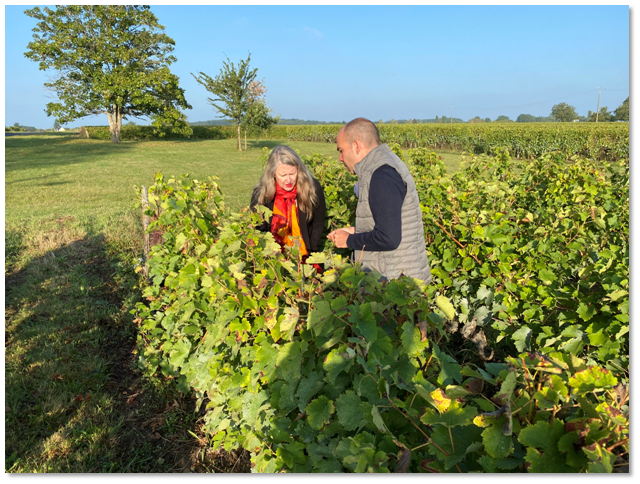
Merci for joining us on this wonderful journey!
 The Cellar Door
I AM SOOOO JEALOUS. Am out walking so I will read it all when I get home but my God, you had me at the cooking school in Paris. Hope to talk soon. Barb
LikeLike