(Posted November 15, 2021)
“Age appears best in four things: old wood to burn, old wine to drink, old friends to trust and old authors to read.”
― Francis Bacon
This is the eighth in a review of wines that were mentioned in the great book by Kermit Lynch, Adventures on the Wine Route: A Wine Lover’s Tour of France. Once again a reminder – Lynch’s book is by far one of the most enjoyable and informative books about wine you’ll read.
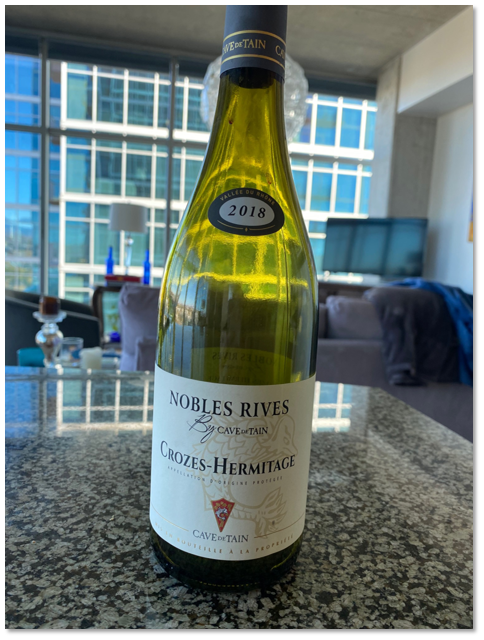
The eighth wine in our adventure is a wonderful red from the northern Rhône valley: a Crozes-Hermitage from Nobles Rives by Cave de Tain (a well-known co-op in the valley).
About this type of wine (and the Rhône valley), Lynch writes:
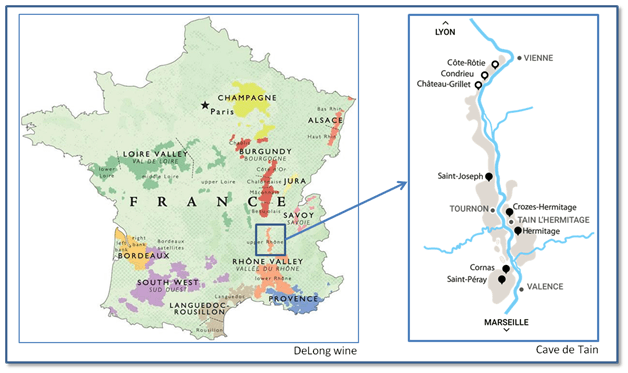
“Sorting out the Rhône is not difficult…. The two regions, north and south, are about an hour’s drive apart. There are profound differences between the two in terms of landscape, soil, climate, and grape varieties employed …and finally in the taste of the wines themselves… most Crozes today comes from flat, sandy soil. An extraordinary Crozes is hard to find….
“After the dizzying number of appellations in the south, the northern Rhône is easy. There are but a handful, including some of France’s noblest: Saint Péray, Cornas, Saint-Joseph, Hermitage, Crozes-Hermitage, Condrieu, Château Grillet, and Côte Rôtie [reviewed earlier]. And in contrast to the numerous grape varieties permitted down south, the northern Rhône reds are the result of a single variety, the Syrah.
“One would think that a blend of grapes could create a more complex range of aromas and flavors than a lone variety, yet the Syrah juice eked out from one of those steep hillsides can produce wines of dazzling complexity, wines whose exotic aromas seem to shimmer and change like the flashes of color gleaming from a jewel.” Now that’s colorful writing!
Eric Asimov of The New York Times wrote about Crozes-Hermitage’s relationship to its more costly and famous neighbor to the south, Hermitage:
“Crozes-Hermitage has suffered, often rightly, in the shadow of Hermitage, a wine of greatness and grandeur grown on the magnificent hill called Hermitage. By virtue of its attachment to the Hermitage name, Crozes-Hermitage — grown in a region extending about 10 miles north and south of the hill — has often operated largely on the principle of reflected glory…. But this has been changing in the last 20 years, as more producers have sought to make wines of genuine quality. Crozes-Hermitage may not have the potential of the granite hillsides of St-Joseph, another northern Rhône region, but the wines can be delicious in their own right.”
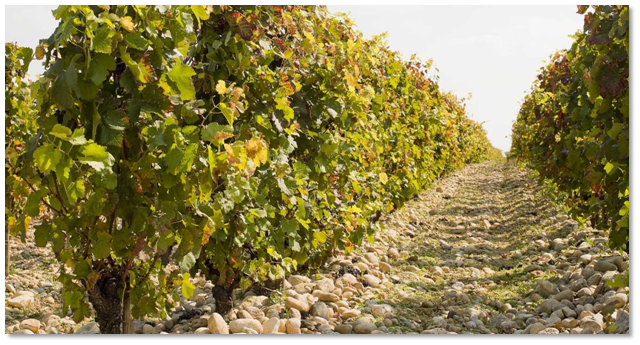
Cave de Tain
The World Atlas of Wine talks about the “competition” between Hermitage and Crozes-Hermitage: “Crozes, the village round the back of the hill, gives its name to Hermitage’s shadow, an appellation producing much more approachable wines….”
The Oxford Companion to Wine tells us that Crozes-Hermitage produces “more than eleven times as much wine as the much more distinguished vineyards of Hermitage which it surrounds…. The best reds are softer and fruitier than Hermitage because the soils are richer…”
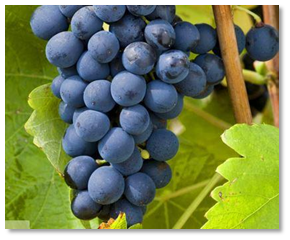
So let’s explore two issues in more depth. First, the Syrah grape. It was also used in a wine we previously reviewed, the Côte Rôtie. The Oxford Companion tells us that Syrah “is one of the noblest and most fashionable red grapes, if nobility is bestowed by an ability to produce serious red wines capable of ageing majestically for decades and if fashionability is measured by the extent to which new cuttings have been going into the ground all over the world…. So popular is the variety that in 2010 it was the world’s sixth most planted wine grape of either colour…” Syrah apparently originated in southern France, and it was “probably taken to Australia, possibly from Montpellier, in 1832…” where it is known as Shiraz.
The Wine Cellar Insider
The other issue I want to highlight is co-operatives. The Oxford Companion tells us that co-ops are wine makers that produce wine from a number of growers and are “ventures owned jointly by a number of different members, are extremely important as wine producers and have the advantage for their members of pooling winemaking and marketing resources and costs…. France’s cave cooperatives (often referred to locally simply as la cave) are declining in number and influence, but in 2013 the national total of 690 were still responsible for half of all wine produced in France.”
The World Atlas of Wine tells us:
“Unlike Hermitage, land in Crozes-Hermitage is relatively affordable and available – an opportunity for enthusiastic newcomers, joined by an increasing number of local growers who want to bottle the fruit of their own labours, rather than send it to the Cave de Tain co-op, which is still responsible for about 40% of the appellation.”
The co-op website focuses on its sustainability practices and says that “It unites the leading wineries in the largest vineyards in France.” Hey, if you’re interested in becoming a part owner of the co-op, check out the Cave de Tain website! It has a section titled “How to become a vineyard owner.” I’m in! Who’s with me??
So what were we to expect? I think that many of us are familiar with Syrah and its unique fruity taste, whether we tasted it from France or Australia or elsewhere. (I first discovered Syrah in a bar car on a train traveling from London to Edinburgh in 2000 – I was intrigued and have tried many since). But here are tasting notes from all over:
- Handpickedselections.com: “Rich, full, and well-structured, with aromas of blackberry, cassis, pepper, licorice and violets. The palate offers a remarkable level of balance, with opulent ripeness combined with the indelible finesse of cool-climate Syrah. Very long on the finish.”
- Total: “Peppery and cassis scents, plum flavors and soft tannin.”
- Decanter.com: “Lightly jammy, dark curranty fruit, a slight tarriness, chewy tannins, and some pepperiness on the finish. It’s aged partly in tank and partly in French oak for 9 to 11 months.”
- Wine.com: “Intense garnet red color with purple tints. Delicate aromas of blackberry fruits, with vanilla and light oaky notes. Rich on the palate with a good sweetness and a firm tannic structure. Final notes of fresh blackcurrant, violet and oriental spices.”
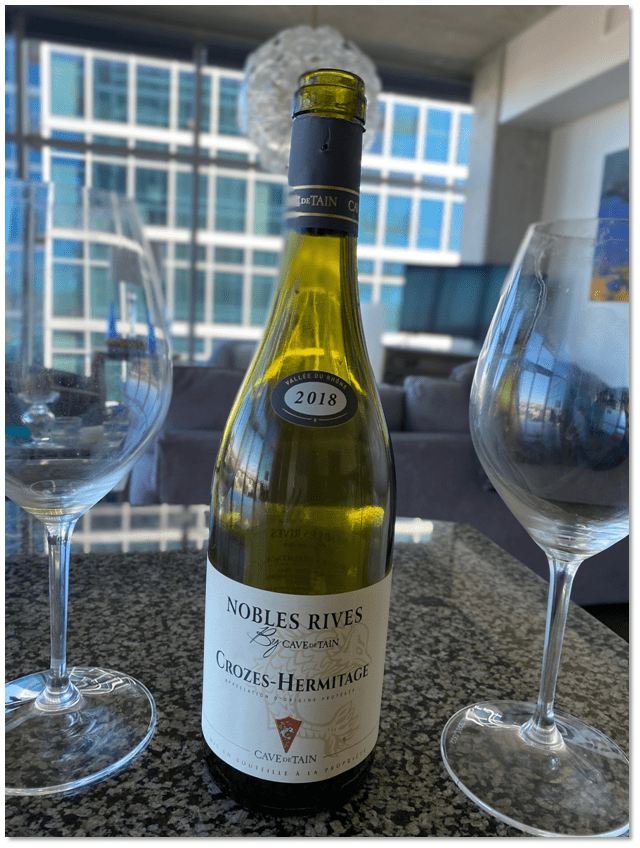
What was our experience? This was a lovely red wine that was very pleasant on the palate (especially when “slurped” – check out the previous entry). Our guest tasters – Lisa, Arleen, and Jim – really liked it and noted its dark ruby red color, its floral and dark fruit aromas, and its spicy/peppery and plum flavors. As a reminder, Kermit Lynch said that Syrah from the northern Rhône results in “wines of dazzling complexity, wines whose exotic aromas seem to shimmer and change like the flashes of color gleaming from a jewel.” I think we smelled some of those exotic aromas – not sure about the jewel part but it was definitely dark ruby red!
So what was the verdict? Again, I hesitate in delivering numerical ratings to the wines we review, as they have all been excellent in their own way. In this case, I was still basking in the glow of our month-long trip to France’s wine regions a month earlier. The day of our tasting, I had just returned from a week-long “isolation” retreat in Jackson Hole, my annual “quiet time” in the Teton mountains. I was eager to try a new wine and excited to be with friends again, and I was not disappointed – by the wine or the friends. It was a great time, with good food and great conversation.
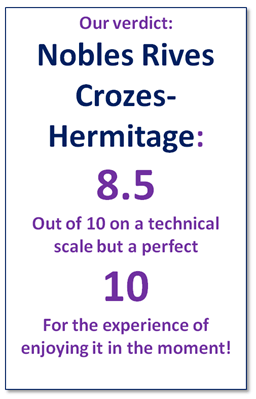
So on a technical scale, I’d give this one an 8.5 – but a perfect 10 for the experience (I’m detecting a pattern here!).
Where can you get it? Prices for our 2018 Crozes-Hermitage range from around $25 to $30 a bottle at most wine shops.
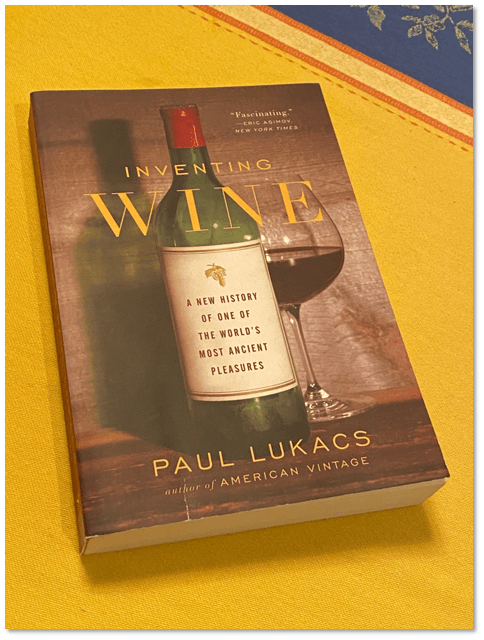
Wine book recommendation: One of my favorite books on wine is Inventing Wine: A New History of One of the World’s Most Ancient Pleasures, by Paul Lukacs. It is an exquisite history of how wine evolved over eight thousand years from its accidental beginnings (“the nectar of the gods”) to its worldwide popularity today.
 The Cellar Door