(Posted June 2, 2022)
“If we sip the wine, we find dreams coming upon us out of the imminent night”
― D. H. Lawrence
This is the thirteenth in a review of wines that were mentioned in the great book by Kermit Lynch, Adventures on the Wine Route: A Wine Lover’s Tour of France. Once again a reminder – Lynch’s book is by far one of the most enjoyable and informative books about wine you’ll read.
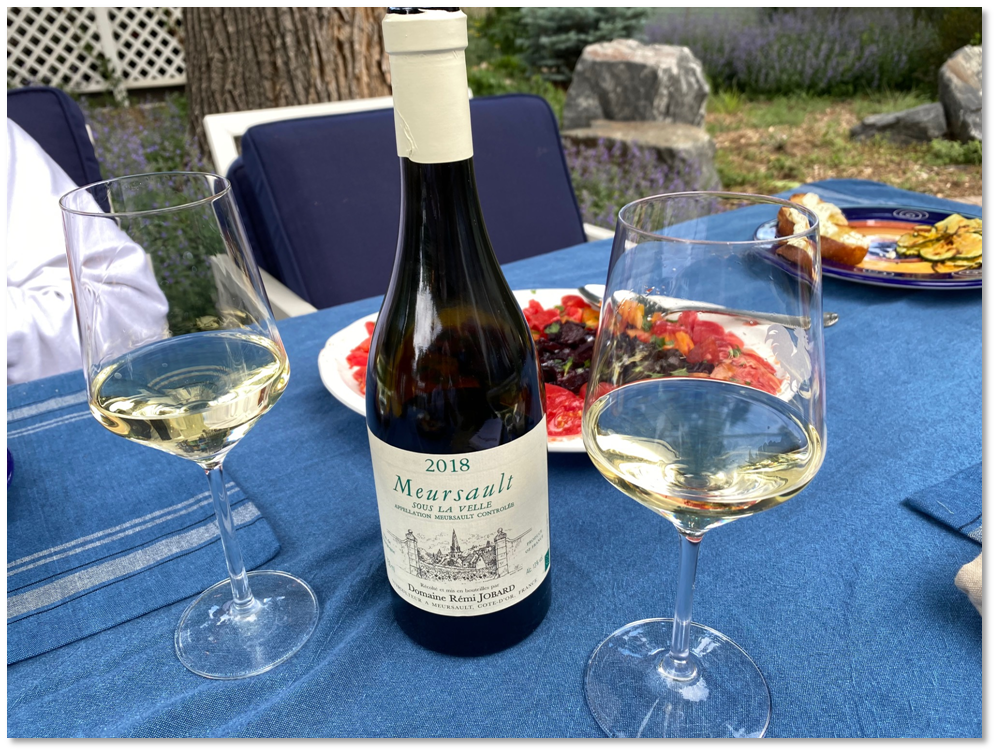
Our wine for this review is another white wine from Burgundy – a Chardonnay from the village of Meursault (pronounced “Mehr-so”) and the Domaine Rémi Jobard. About Meursault, Kermit Lynch writes:
The Côte d’Or is largely, almost exclusively, planted in Pinot Noir until you arrive at Meursault, Puligny, and Chassagne [wines from which we reviewed earlier], today’s great white Burgundy villages. Here are the Chardonnays that launched a thousand Chardonnays, which all the wine-producing countries of the world desire to emulate…. Meursault has been kind to me over the years. I have worked with a number of proud growers, each with his distinctive style, each with plots of vineyard in several different sections of the slope, so that Meursault has become in my mind a mosaic of friendly faces, cellars, and wines.
As a refresher from wines from Burgundy we’ve reviewed earlier, Burgundy is, of course, a famous wine-growing region in east central France. Called Bourgogne in French, it is famous for well-regarded red and white wines, with whites coming almost entirely from chardonnay grapes. According to The Oxford Companion to Wine, vineyards dating to the first century have been found in the area. A tribe of Burgundians from Scandinavia settled the area in the fifth century, giving the area its name. As noted in The World Atlas of Wine, “Burgundy is not one big vineyard, but the name of a province that contains several distinct and eminent wine regions.”
Our Meursault came from the Côte d’Or region of Burgundy (the word “côte” means hillside or slope, so the name of the region literally means “golden slopes” or “golden hillsides”). The Oxford Companion to Wine tells us that the Côte d’Or is “the heart of the Burgundy wine region,” and that Chardonnay is grown on approximately 49% of Burgundy vineyards (the other major wine grown there is Pinot Noir).
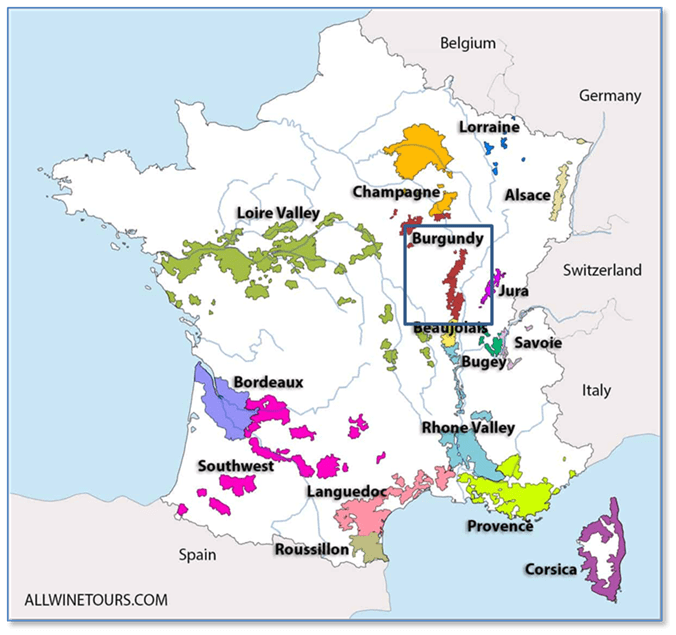
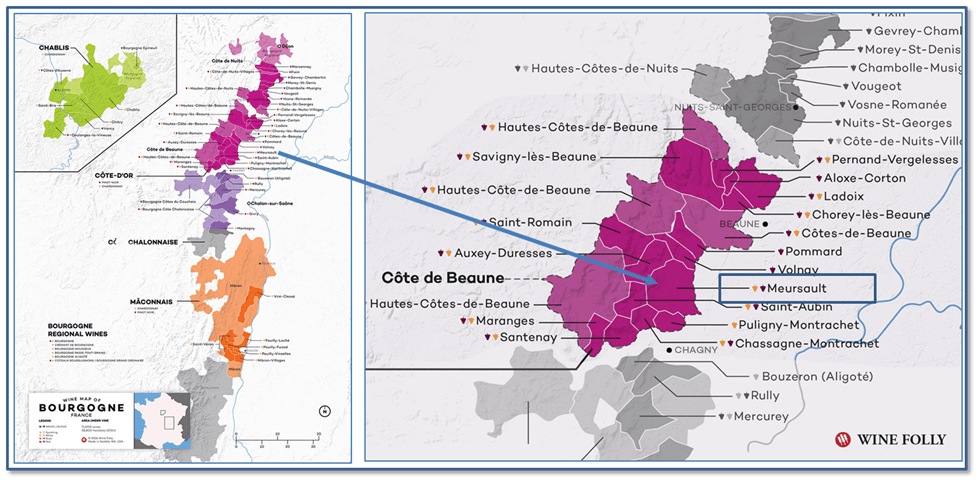
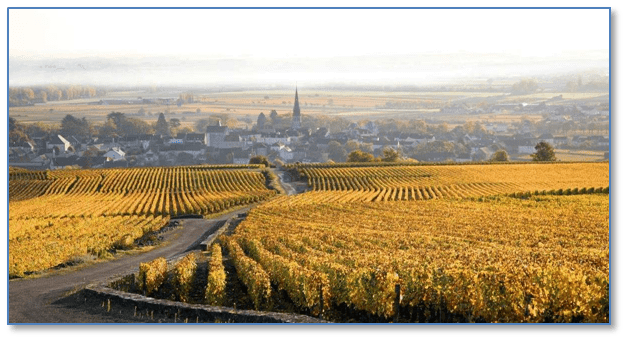
Meursault is a village in the southern Côte de Beaune subdistrict of the Côte d’Or region. The Oxford Companion tells us that Meursault is a “large and prosperous village… producing mostly white wines from the Chardonnay grape…. Although Meursault contains no grand cru vineyards [the highest level of quality in Burgundy], the quality of white burgundy from Meursault’s best premiers crus is rarely surpassed.”
Beaunetourism.com tells us, “They say that the name Meursault means ‘mouse’s jump’ because, in the past, the plots producing red wine would not have been separate from those producing white by more than a mouse’s jump…. The village of Meursault with its beautiful wine châteaux, prosperous village houses and the spire of the Gothic church that seems to tease the clouds, is a dream, but the important work goes on underground. For this is where the alchemy, dosed with just the right proportion of clay, limestone and marl, prepares the inimitable style of the wines of Meursault….”
The Jobard vineyards were established in 1860 and are now run by the family’s fifth generation. Wine.com says “Rémi Jobard is the dynamic son of Charles Jobard and nephew to Francois Jobard. Growing up and learning form these legendary brothers inspired Rémi to follow in his father’s footsteps and eventually take the helm at this remarkable domaine. As is normally the case in Burgundy, with a famous last name comes an enviable assortment of vineyards. Since 1994, the domaine has not used any herbicides or pesticides. After Rémi took over, he decided to take the quality of farming to the next level, converting to organics and eventually getting certification [as organic] in 2011.”
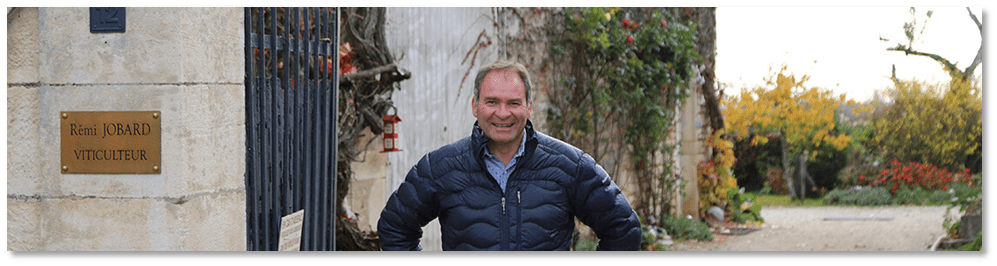
Wine.com says, “All of Rémi’s wines show a breathtaking clarity of terroir, which come from the impeccable farming and a simple hands-off approach in the cellar; all of the wines are aged in a mixture of barrique [barrels] and large older foudre [large oak casks]. When asked about his approach Rémi says, ‘We are very privileged to have great terroir in Meursault. Everything I do in the vineyard and in my cellar is to make sure that terroir is transparent and completely unobscured.’ Tasting through the lineup is a true masterclass of Meursault – a sensual tour of rock and vine.”
Incidentally, the words “sous la velle” on the label means “under the eaves.” I couldn’t find anything specific referring to why this wine was named that way, but it’s quaint nonetheless.

So what were we to expect?
Most reviewers were ecstatic about Meursault in general and Jobard’s in particular. For example, Wines of the World said, “This large village is renowned for its sumptuous white wines; great Meursault is not just rich and hedonistic, it is also invigorating.” Hedonistic eh? Beaunetourism.com writes, “A clear and bright golden-green colour, a nose of great finesse with aromas of lime, hawthorn and butter notes, hazelnuts and honey depending on the ‘climat’, i.e the soil – that’s the calling card of a Meursault wine. Whether you’re an amateur or a connoisseur, the aromatic power of the wine of Meursault, a magical balance between smoothness and freshness, and its length on the palate impress.”
Winesearcher.com says, “The commune’s wines are renowned for being among the richer, more full-bodied Burgundy whites. Tasting notes commonly cite notes of butter, almonds and grilled hazelnuts, alongside the finer citrus fruit and mineral elements. The geological differences across the commune’s vineyards are famously discernible in their wines.”
Winelibrary.com tells us, “Offering up aromas of pear, white flowers and almond paste, the 2018 Meursault Sous la Velle is medium to full-bodied, satiny and enveloping, with a more textural profile than its 2017 counterpart, though it remains lively and precise, concluding with a saline finish.”
Grapecollective.com calls Meursault “The Stranger You Can Take Home” and tells us, “When the wine is young, it shows a bouquet of white and yellow flowers along with flint minerality, and buttery, honeyed citrus fruits. On the palate it is rich, almost fat and round, with a toasted nutty flavor of almonds and hazelnuts.”
What was our experience? I have to admit that our experience with this Meursault wasn’t as overwhelming as that of the reviewers I mentioned above. My guest tasters (Lisa and Bethany) and I detected aromas of light citrus and vanilla, with a taste that was better and stronger than its aroma. It definitely had a buttery and mineral taste, but to us it wasn’t anything outstanding or out of the ordinary. Its alcohol was 13%, it was relatively dry with medium acidity and body. But it didn’t knock our socks off. It did improve after being open for half an hour or so, and it tasted better with our appetizers (crostini with goat cheese). But compared with other white Burgundies we’ve tried, it didn’t particularly stand out. I was definitely expecting more!
So what was the verdict? On a scale of 1 to 10, this would have to be a 7.5, on the strictly subjective numerical scale (lower than other Burgundy whites we’ve tried). But what about the Bang for the Buck? Our Meursault ranged from $75 to $90 on various sites, and you can find other Meursaults on the lower end of that range at many wine stores. But as mentioned, it wasn’t particularly outstanding compared with other white Burgundies we’ve tried. So on the “bang for the buck” scale, this was low to medium. I have to say I was slightly disappointed given the glowing reviews others gave this one. Maybe ours was an exception, or maybe we didn’t give it enough time to oxygenate or age (even though it was a 2018). But if I was going for a white Burgundy, I’d go for some of the others we’ve reviewed (such as the Puligny-Montrachet, Montagny, or even an Aligoté) instead of this one.

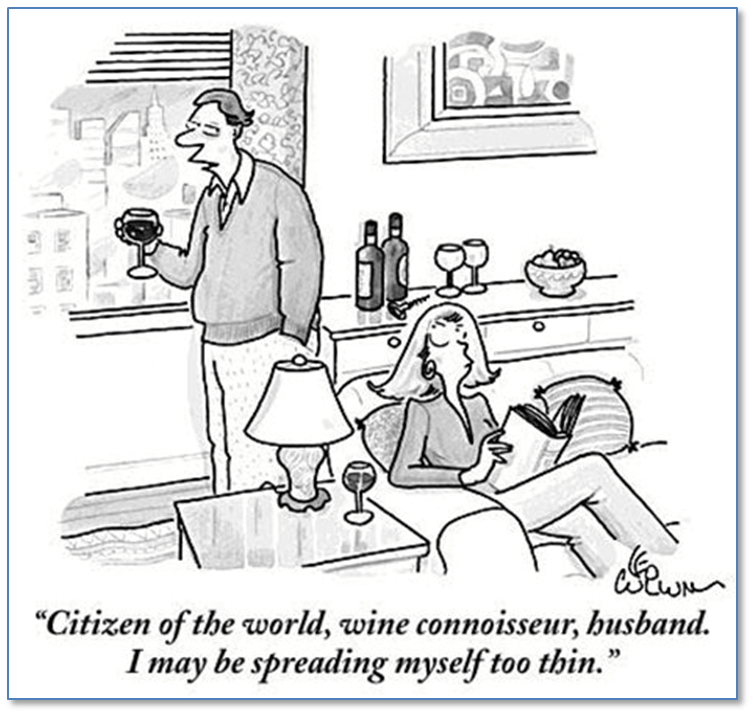
Experience reminder: I’ve been exploring more about how our experiences with wine shape our tastes and memories. Nikki Goddard has an interesting article on the website of the Napa Valley Wine Academy called “Wine and the Power of Suggestion.” Goddard writes:
When we sniff and sip wine, the brain takes cues from the sensory cells on our tongue and the olfactory bulb in our nose. It gets right to work on converting the contents of the glass to a coherent taste analysis based on our memories, expectations, and even our mood. These factors impact our experience of wine on a given occasion. It explains why someone can fall in love with a wine first tasted during a honeymoon trip to Italy but then be underwhelmed by the very same wine (the second bottle you brought home) after a tough day at work. And if you were anticipating that the second bottle would be just as revelatory as the first, it might compound that effect, as you’ve set your expectations way too high.
Goddard goes on to say, “You’ll want to work on trusting your instincts and remembering the high degree of subjectivity and personal variance involved in the perception of wine. In wine education, tasting groups—blind or otherwise—are an invaluable study tool and a great way to spot gaps in your tasting threshold (which we all have) while sharing your unique insights with others to help fill their gaps.” Good advice!
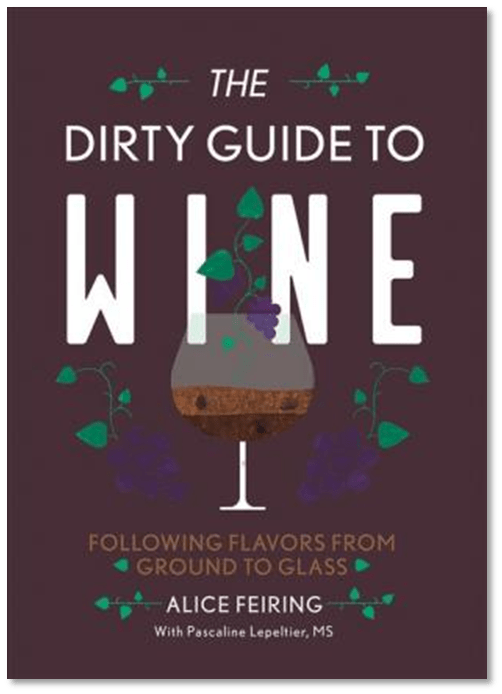
Book recommendation: An interesting little book is The Dirty Guide to Wine: Following Flavors from Ground to Glass by Alice Feiring. This one doesn’t organize wine by grape or region but instead focuses on the ground and the soil in which grapes are grown and how those factors affect wine’s taste and texture. Fascinating stuff!
 The Cellar Door