(Posted October 20, 2022)
“Age is just a number. It’s totally irrelevant unless, of course, you happen to be a bottle of wine.” – Joan Collins
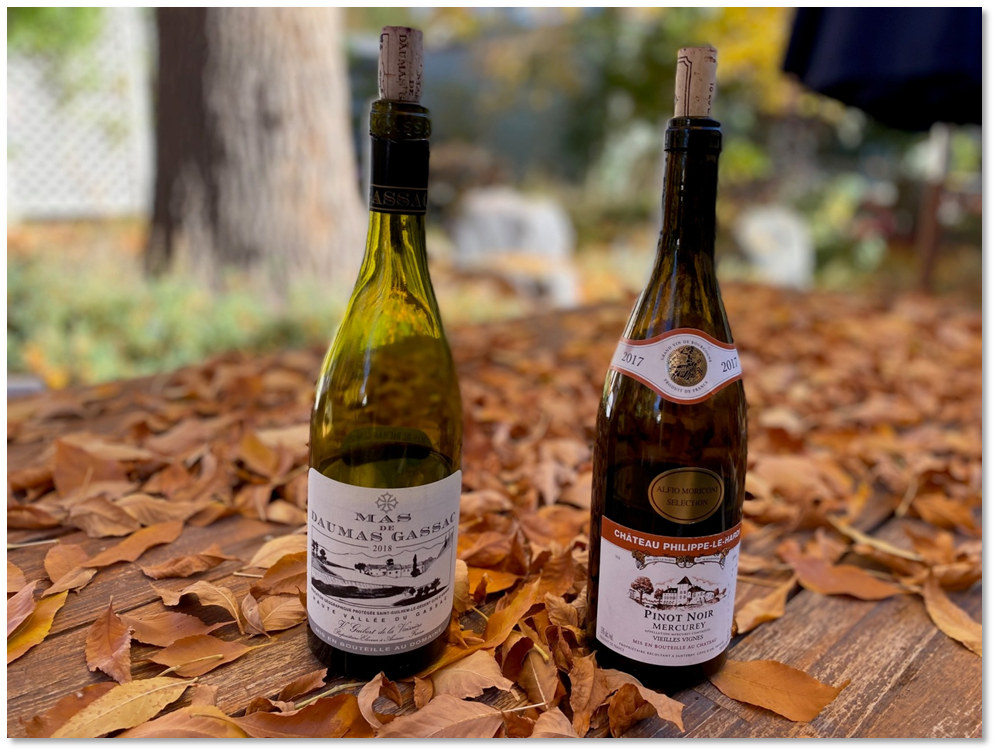
This is the fourteenth and fifteenth in a review of wines that were mentioned in the great book by Kermit Lynch, Adventures on the Wine Route: A Wine Lover’s Tour of France. Once again a reminder – Lynch’s book is by far one of the most enjoyable and informative books about wine you’ll read.
Our wines for this review are a red blend from the Languedoc region of France – a 2018 Mas de Daumas Gassac – and a 100% Pinot Noir from Burgundy – a 2017 Château Philippe le Hardi Mercurey. My approach to reviewing these two is a little different – I used the excuse of a party to ask attendees to taste both and give me their impressions. We’ll get to the results in a bit, but first, a little background.
The Mas de Daumas Gassac comes from the southern region of France known as the Languedoc. It is a blend of several red grapes – primarily Cabernet Sauvignon (76%) with small percentages each of Cabernet Franc, Merlot, Petit Verdot, Pinot Noir, Malbec, Nebbiolo, and Dolcetto. That seems like a lot!
Wine Trails has this to say about Languedoc and its neighbor, Roussillon:
Some of the most exciting and innovative wines emerging in France are coming from the vast Languedoc-Roussillon region, which covers much of the south, from the Spanish border up to the vineyards of Provence and the Côte d’Azur. A third of France’s wine is produced here, but for years the region suffered from over-production and poor quality. Not any more. [I hear that last sentence in Peter Sellers’ Inspector Clouseau voice: “That was a priceless Steinway.” “Not any more!”]…. The sheer variety of the landscapes here is spectacular, with vineyards pressing up against the Mediterranean… through dramatic limestone hills and valleys….”
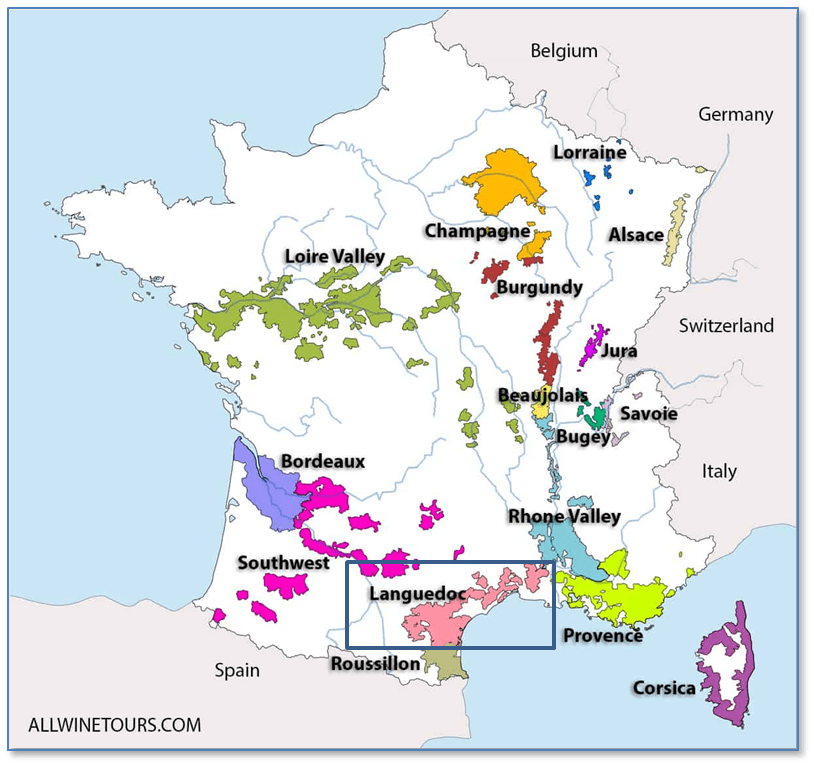
Jancis Robinson in The World Atlas of Wine tells us that Languedoc is “France’s best value, most fluid wine region and certainly its most important in terms of volume of wine produced, and in terms of the importance of viticulture to the region’s economy.”
Mas de Dammas Gassac comes from a well-established vineyard west of Montpelier. According to the estate’s website, in the year 780 AD “Saint Benedict of Aniane, an adviser to Charlemagne, created a vineyard in the Gassac valley in the 780s. We have every reason to believe that Saint Benedict would have invited Charlemagne to sample the first wines produced in the valley. Mas de Daumas Gassac’s Grands Vins were thus born in the shadow of a prestigious abbey, like most famous great wines!” The estate bottled its first vintage in 1978.
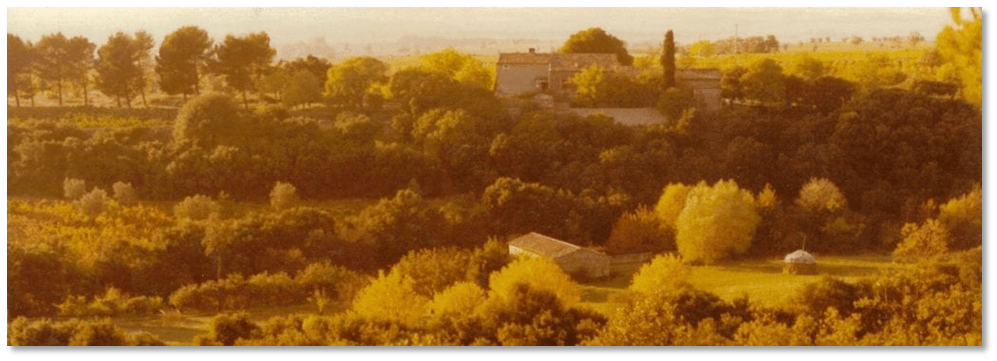
Kermit Lynch has high praise for the winery and the wine:
Also to be found in this part of the Languedoc, called the Hérault, is one of the most remarkable new wineries in the world, the Mas de Daumas Gassac, where the dynamic Aimé Guibert has created from what was garrigue, brush, and forestland a vineyard whose wine has captured the imagination of the wine press on both sides of the Atlantic. Guibert’s very first vintage, his 1978 from new vines, burst upon the wine scene leaving behind a shower of sparking accolades which have been surpassed only by the notes accorded to subsequent vintages.
Hold on there Sparky! There was a word in there I wasn’t familiar with: garrigue. The Wine Spectator’s Dr. Vinny tells us that “Garrigue refers to the low-growing vegetation on the limestone hills of the Mediterranean coast, not the limestone itself. There are a bunch of bushy, fragrant plants that grow wild there, such as juniper, thyme, rosemary and lavender, and garrigue refers to the sum of them. Think herbes de Provence, or a mix of fresh minty-herbal notes with more pungent, floral fragrances.” So the implication is that the mixture of those fragrant plants affects the aroma and taste of the wine.
Kermit Lynch quotes The Underground Wineletter as saying that this wine “may very well be the very best buy for a wine of this type to be found anywhere in the U.S….. nothing from California comes close to this quality/price relationship.” (For the record, the 2018 we tried is priced at around $50 a bottle – and it has a cool label too.)
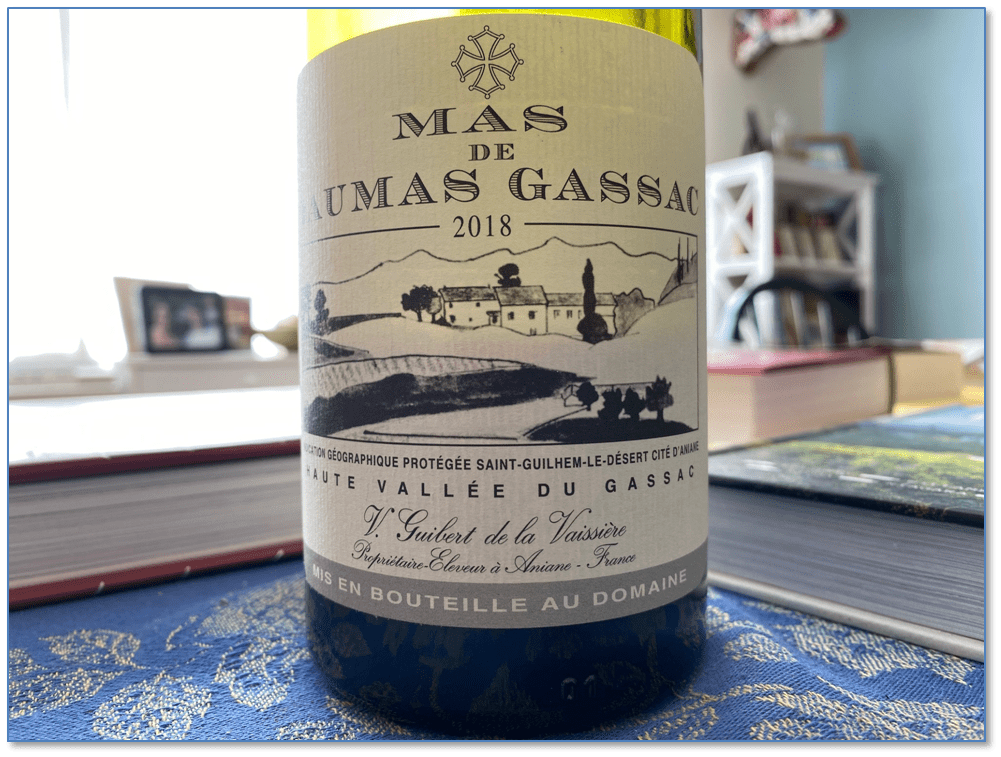
Lynch also has this anecdote about the focus on Cabernet Sauvignon:
The single most important decision was Guibert’s choice of grape variety. Going traditional in the Hérault would have meant planting varieties like Carignan, Grenache, and Cinsault. I asked him why he planted Cabernet Sauvignon in his “Burgundian” soil in the Languedoc. “God’s inspiration,” he replied. (These vignerons in the Languedoc are not the most humble race I’ve encountered. At nine in the morning they speak with the pomp of an Irish poet after he’s had a few.) “No,” he continued, “it was actually a matter of personal taste. I am not a partisan of the Pinot.”
Speaking of Pinot, let’s move on to our Pinot Noir from Burgundy. As a refresher from wines from Burgundy we’ve reviewed earlier, Burgundy is, of course, a famous wine-growing region in east central France. Called Bourgogne in French, it is famous for well-regarded red and white wines, with whites coming almost entirely from Chardonnay grapes and reds coming mainly from Pinot Noir. According to The Oxford Companion to Wine, vineyards dating to the first century have been found in the area. A tribe of Burgundians from Scandinavia settled the area in the fifth century, giving the area its name. As noted in The World Atlas of Wine, “Burgundy is not one big vineyard, but the name of a province that contains several distinct and eminent wine regions.”
Our Mercurey Pinot Noir comes from the Côte Chalonnaise district of Burgundy; the Oxford Companion says that Mercurey is “most important village” in that district…. The red wines tend to be deeper in colour, fuller in body, more capable of ageing, and half as expensive again as those of the neighbouring villages.”
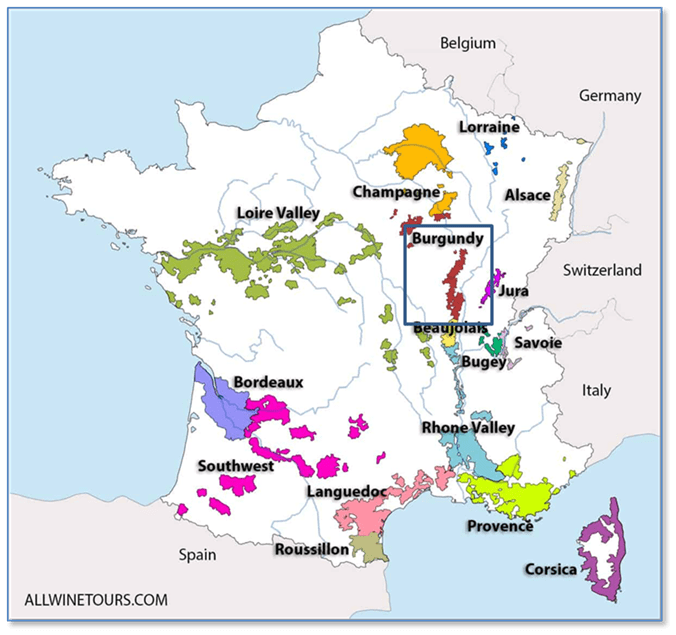
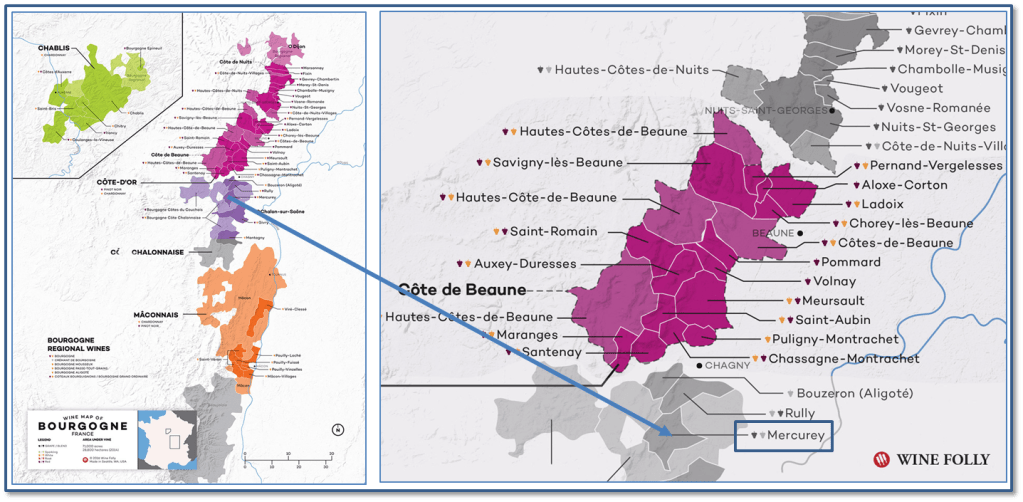
Kermit Lynch doesn’t have a lot to say about Mercurey, other than that “No grape is more sensitive to its vineyard site,” and that Mercurey is among several wines from Burgundy that can have “excellent cuvées.” Dr. Vinny of Wine Spectator tells us that cuvee is a “fancy-sounding word, so sometimes it’s used to indicate a wine of superior quality or a special reserve, but the term is not regulated, so that’s not always the case.”
As noted before, Burgundians don’t blend their wines, so most red wine from there is 100% Pinot Noir, as this one was. One interesting side note I discovered in The Booklovers’ Guide to Wine by Patrick Alexander:
By the early Middle Ages, the wines of Burgundy had achieved such a reputation that they were sought after in the French royal courts in Paris and on the Loire, as well as the Pope’s palace in Avignon. Anxious to maintain the high quality and reputation of his wines, Philippe the Bold, Duke of Burgundy in 1395, made it a hanging offense to make red wine with anything other than Pinot Noir on his territories. Offenders would be hanged from scaffolds out in their vineyards as a visual and swinging reminder to their neighbors.
Okay, that’s a little harsh.
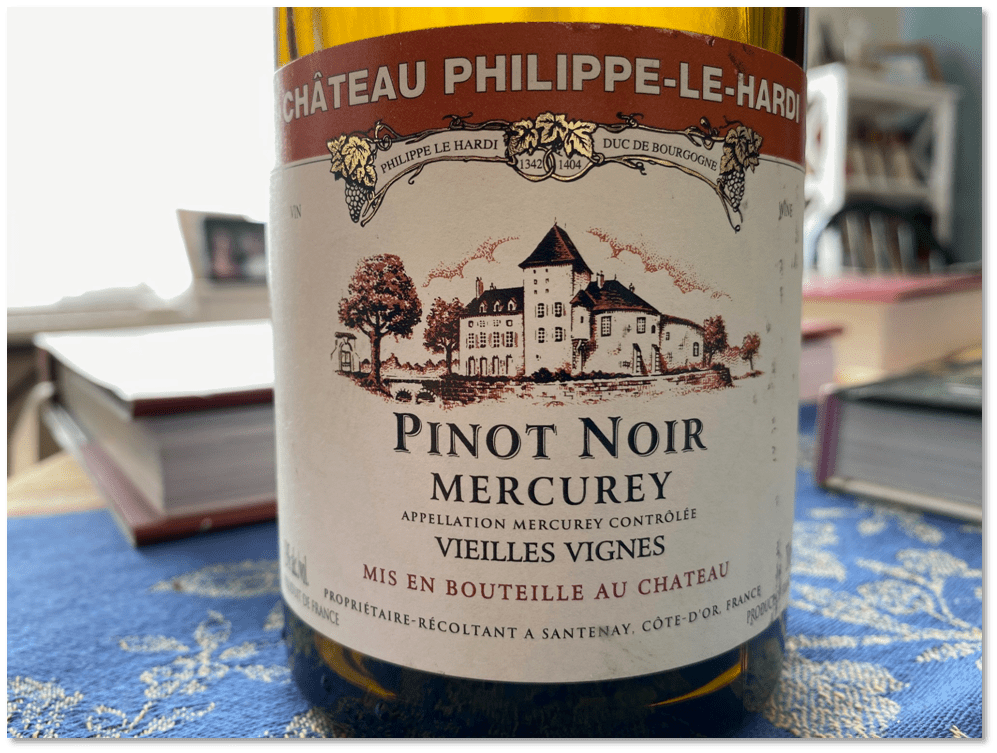
And speaking of the Duke of Burgundy, mtouton.com gives us a little more history:
Domaine du Château Philippe le Hardi (formerly Château de Santenay) was once the majestic stately home of the first Duke of Burgundy. This historic estate is one of Burgundy’s most prestigious producers….The Château was built in the 9th, 12th and 16th centuries. It was formerly one of several properties belonging to the Duke of Burgundy, Philippe le Hardi (1342-1404), and was named after him for centuries to come. In 1395, Philippe le Hardi signed the founding document for single varietal cultivation in Burgundy. The document was named the “Ordonnance de Philippe le Hardi”. Pinot Noir thus replaced Gamay as the varietal used for red wine production in Burgundy.

What was our experience? Crowdsourcing!
As mentioned earlier, for these two wines, I tried something a little bit different – a party of about 20 people, with a rating sheet asking for samplers’ opinions on aroma, taste, and texture, and a contest! Here’s what we found out:
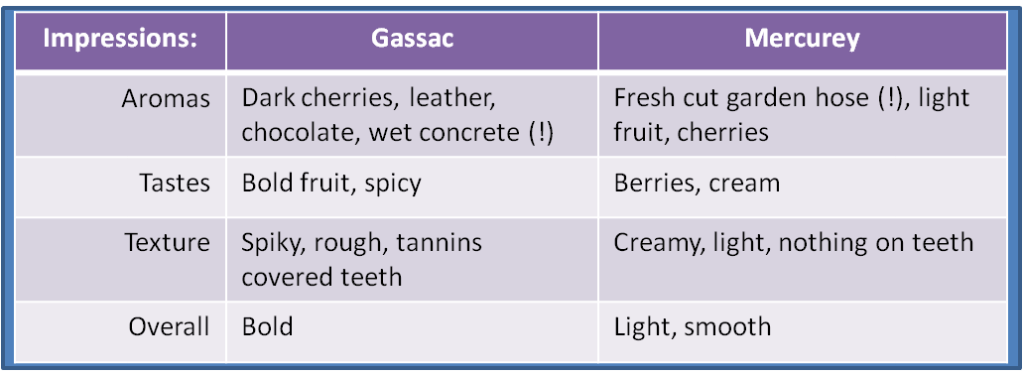
OK, I’m not sure wet concrete or fresh cut garden hose count as real aromas, but I admire peoples’ creativity! I also asked everyone to vote on which one they liked best. Of the ten people who voted, it was an even tie: five to five. Overall, it was a fun experience and highly recommended for your next dinner party.
My vote: I liked the Gassac blend slightly more than the Mercurey Pinot Noir. I thought the Gassac was bold but not too heavy, with a really nice fruity/spicy taste (as others indicated). But they were both very good. By the way, both are available for about $50.
Book recommendation: I mentioned earlier The Booklovers’ Guide to Wine: An Introduction to the History, Mysteries, and Literary Pleasures of Drinking Wine by Patrick Alexander – it’s a really nice reference, with lots of good basic stuff on grapes, regions, and wine history, sprinkled with interesting literary references.

New Feature: Wine Playlist!
I like to create fun and funky playlists based on some of my interests. One of them, of course, is wine, so of course I’ve created a wine playlist – songs with titles or lyrics that include wine. You can find it on Spotify at https://open.spotify.com/playlist/5rAwgh9Thiary4zUplUsaN?si=517901201b994b3d
Here’s one example: The late, great Loretta Lynn singing “Wine, Women, and Song.” Take a look at the playlist and feel free to send me your suggestions!
 The Cellar Door