(Posted March 6, 2023)
“One should always be drunk. That’s all that matters…But with what? With wine, with poetry, or with virtue, as you chose. But get drunk.” ― Charles Baudelaire, Paris Spleen
Two years ago, I was sitting on a beach on Maui reading Adventures on the Wine Route: A Wine Lover’s Tour of France by the wine importer Kermit Lynch. Lynch, an American wine importer based in Berkeley, California, wrote it in 1988, and it was absolutely one of the most informative and entertaining books on wine I’ve read. In 2013, Lynch published a 25th anniversary edition, with updated information on some of the wines and domaines he wrote about in 1988. It was as close to an epiphany about wines as I can recall. I have long been interested in wines, collected and read many books, and bought a fair share of relatively inexpensive wines over the years (he often calls such wines “plonk”). But his book pushed me in an altogether different direction, one where I yearned to broaden my horizons and start sampling some of the better wines of the world.
With those thoughts as inspiration, I decided I would buy and taste as many of the wines mentioned in Lynch’s book as possible. Some domaines and appellations he mentioned are no longer around, but many are, so after scouring wine importers and online stores, I started gradually stocking up on some of those beauties that Lynch described. Now admittedly some were pricey, so I spaced out my purchases as my budget allowed. But I was surprised to find that many were affordable, and quite a few were even available at my local wine shop.
My goals in starting this adventure were two-fold. First, as mentioned, I really wanted to broaden my horizons and start sampling some of the better wines of the world. Second, I wanted to compare Lynch’s (and others’) descriptions of tastes and aromas with my own – and with those of friends and family who tasted with me. I don’t think I have a very discriminating wine palate, but I knew I was missing something by not focusing enough on a wine’s smells, textures, look, aftertaste, and other characteristics that are unique to every bottle’s distinct terroir and grape blend. Finally, in a pandemic year when I started, I wanted to satisfy some of my wine yearnings that I haven’t yet been able to accomplish, such as opening a wine shop or wine bar. I decided to do the next best thing – a wine bar in my house!
My long-range plan was to sample and describe as many wines mentioned in Lynch’s book as possible, coupled with random musings and other thoughts about wine in particular and the world in general. Once I completed the French wines mentioned in Lynch’s book, I planned to move to wines from other countries such as Italy, the US, New Zealand, and others (I have already posted a few “vinterludes” with other wines from France, Italy, and elsewhere). I hoped to share with you my thoughts and ideas on wine in all its complexities and simplicities. But overall, I just wanted to have fun – and I wanted you to have fun too.
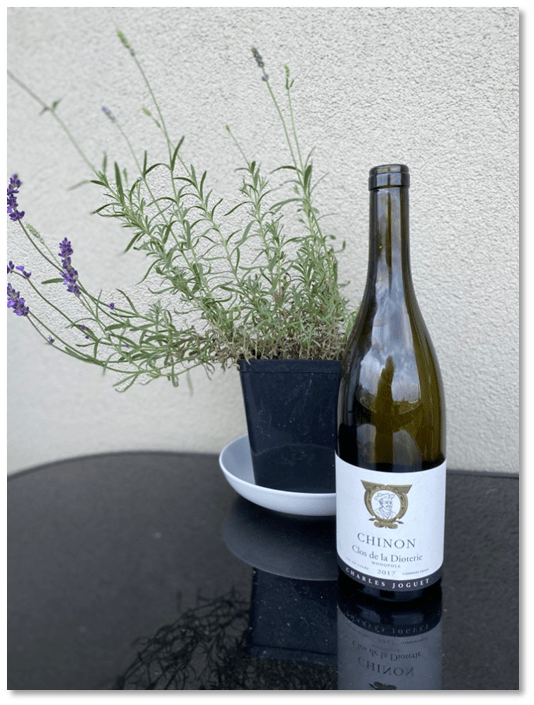
So with that original broad mission still in mind, we can review the final one on my Kermit Lynch list – and return to the original place of inspiration for its tasting – Maui. The eighteenth and final wine on the list is a 2017 Clos de la Dioterie Chinon from the Loire Valley of France from the Domaine Charles Joguet.
Kermit Lynch was effusive about the Joguet Chinon in his book. He called it part of an “intriguing collection of little known Loire Valley reds…. Thus began my love affair with the Cabernet Franc of Chinon… wines which at their best have such a strong personality that novice tasters are often startled.”
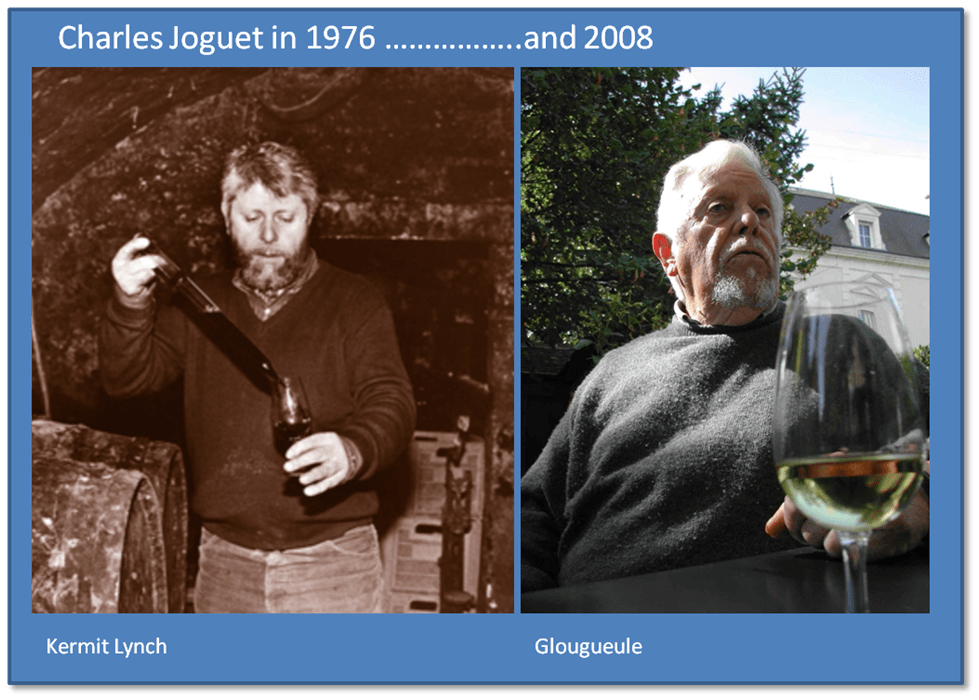
He probably spent more time writing about Charles Joguet than any other winemaker in his book. He described Joguet as “one of those rare vintners whose wines can be gripping aesthetically, spiritually, and intellectually, as well as sensuously…. One has the impression that Charles is out there on the edge, willing to take risks and willing to accept losses in order to make magic. There are not many like him in the world of wine.”
Chinon is a red wine appellation in the Touraine (middle) district of the Loire Valley, widely known as the origin of the best red wines in the Loire. The website princevillewinemarket.com tells us, “The wines of Chinon have long been celebrated. French humanist and native son, François Rabelais, sang their praises as far back as the sixteenth century.”
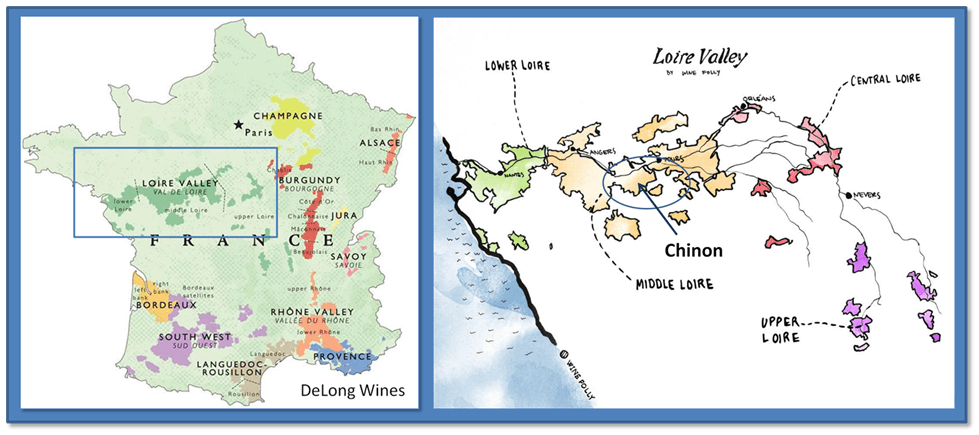
Let’s do a little linguistic detective work. I was intrigued by the name “Clos de la Dioterie.” The first part of the name, clos, is a French word meaning, according to Merriam-Webster, “A French winery” (duh), especially “one enclosed by a wall, often used prepositively [!] in a compound naming such a vineyard or its wine.” It is related to the English noun “close,” meaning (again duh) “an enclosed area.”
According to the Charles Joguet website, the Clos de la Dioterie was under vine one or two centuries before 1789. The German wine website lebendigeweine says: “The Clos de la Dioterie is the domaine’s most famous vineyard. It was already mentioned in the Middle Ages, when it still had a complete enclosure.”
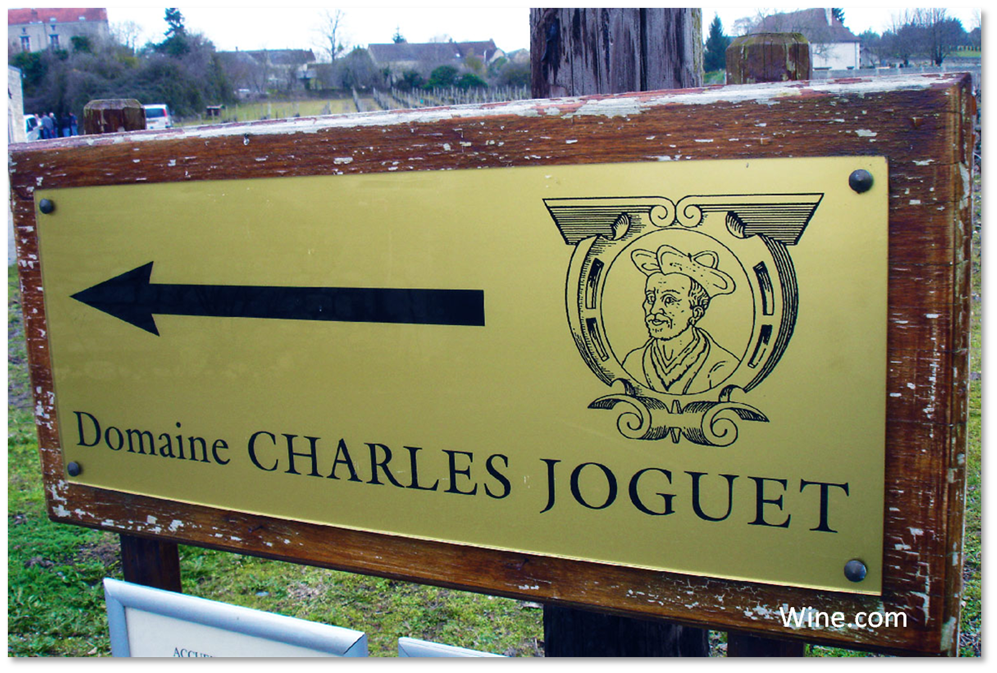
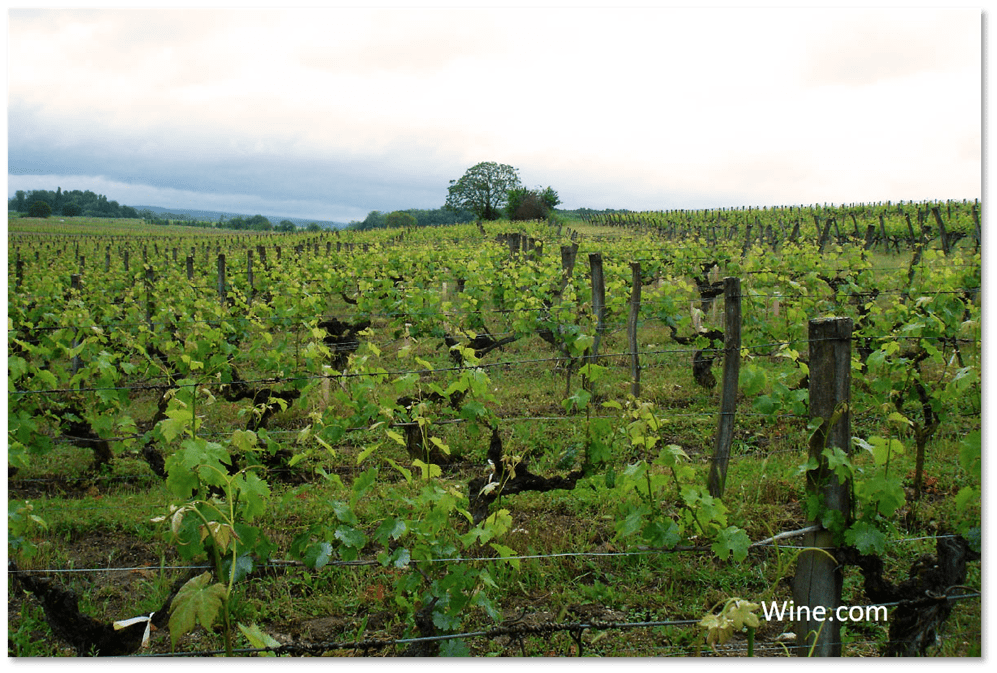
According to the Joguet website, the vineyard is “entirely planted with Cabernet Franc” and “dates back to 1830 and perhaps longer. As for the Clos de la Dioterie, it was under vine one or two centuries before 1789.”
Joguet took over the winery when his father died in 1957 after flirting with painting and architecture. After he took over, according to the Kermit Lynch website:
He began to question the common practice of selling grapes to negociants, as his family had done for years. The Joguets owned prime vineyard land between the Loire and Vienne Rivers with distinct variations in the soils. To sell the grapes off or vinify the individualized plots together would have been madness. Separate terroirs, Charles believed, necessitate separate vinifications. He took the risks necessary to master single-vineyard bottling with an artistry that Chinon had never before seen.

The daysontheclaise.com website says:
Joguet was not a winemaker, but had trained as an artist in Paris. When he returned to Chinon and picked up the reins he was viewed as an upstart, an outsider, and with his modern ideas about winemaking in a deeply traditional area was the object of considerable local scorn. By recognising the effect of terroir and his conviction that with a more nuanced approach he could make great wine he more or less single handedly created the reputation Chinon AOC enjoys today. He was the first Chinon winemaker to separately vinify different parcels of vines and to bottle and commercialise on the estate.
And winespecific.com says, “Joguet had the first stainless steel tanks in the Loire: today they are the standard.”
The Joguet website tells us, “In 1997, Charles Joguet took his leave of the wine industry to devote himself entirely to his other work, his other unquenched passion: painting.” The daysontheclaise.com blog continues the story: “The Domaine is now owned and run by the descendants of his business partner, the Genet family. The Genet family continue the innovative and somewhat rebellious tradition of their predecessor with passion and sensitive attention to detail. The aim is to make the highest quality wines they can whilst expressing the rich diversity of terroirs in the Chinon AOC.”
What did Lynch have to say about Joguet Chinon?
When Lynch drove to Joguet’s village and met the winemaker for the first time, they began tasting the 1976 vintage. “The nose was thick with black currants and violets. It was sizable on the palate too. Ripe, rich, and succulent, it felt as if it must be staining my teeth purple. A serious, extravagantly flavored wine, this was way beyond the little country wines of my first trip. Very simply, at that stage it was the finest 1976 red I had tasted from any of the French vineyards. A Chinon!”
What were we to expect from this vintage?
Wines of the World said, “In general they are fresh, fruity, and invigorating, produced from Cabernet Franc, or Breton as it is known locally. What makes these wines so appealing is that they are digestible, convivial, not tiringly heavy, and above all, food-friendly…. The wines have a soft, rounded texture and weight.” The Oxford Companion to Wine tells us, “Chinon is quintessentially a wine of refreshment, being light to medium bodied, often extravagantly scented (lead pencils is one common tasting note), and with an appetizing combination of fruit and acidity.” Lead pencils huh?
And Anthony Lynch from Kermit Lynch Wine Merchants wrote that this 2017 Chinon is “A wine of serious density from north-facing vines planted in the 1930s, only starting to express its full potential. It provides savory sensations highlighted by licorice, mint, and spice, culminating in a majestic tannin. Highly recommended for the cellar, as old vintages of La Dioterie are nothing short of epic.” Epic!
What were our observations?
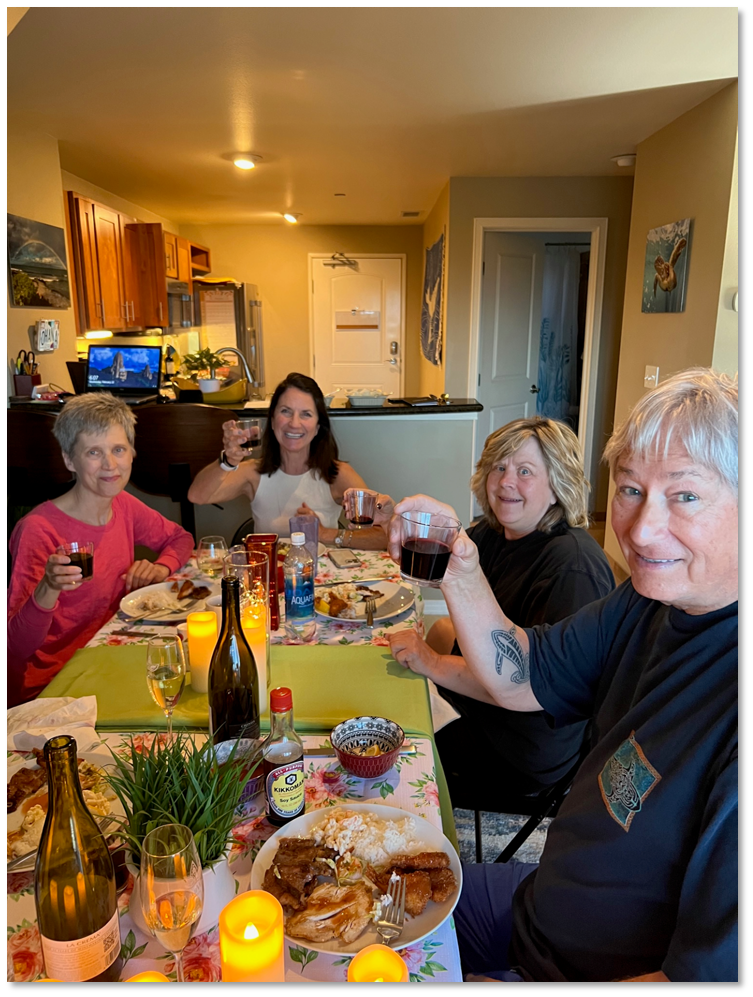
Our guest tasters (Lisa, Mary, Marcella, and Gabi) and I were – how shall I put this – absolutely blown away by this 2017 Chinon. Several of our tasters weren’t big fans of red wine, but became fans thanks to this vintage. It had aromas of stonefruit, specifically dark cherry and plum. It had a similar taste, with dark cherry and peppery notes. It was described as “forward,” “bright,”, and “extremely drinkable.” One taster – again, someone who was not a big fan of red wines – said, “I really love this wine.” No one mentioned pencil lead! I think it helped that – after our initial tastings – we were enjoying it with a famous Hawaiian “plate lunch” of barbecue mix, rice, and macaroni. This 2017 was 13.5% alcohol and sells for about $70.
So what was the verdict?
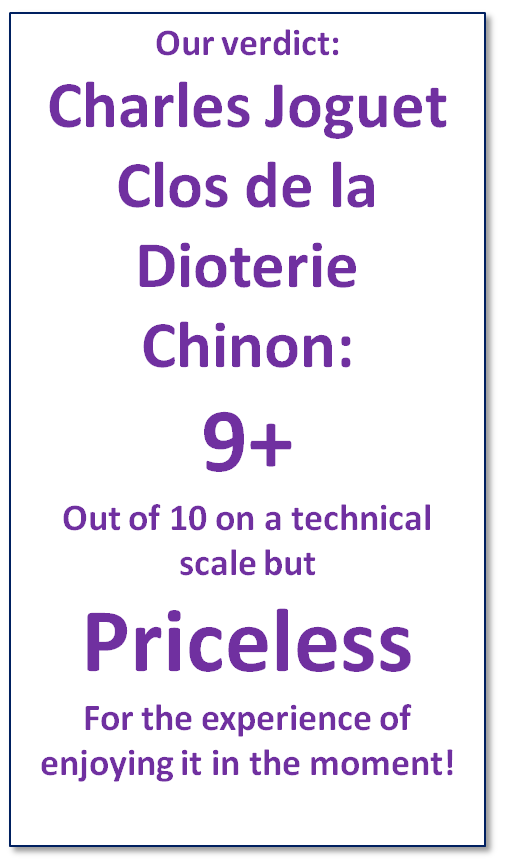
On a scale of 1 to 10, this one would have to be at least a nine and maybe higher on the numerical scale. But I have to say that, similar to other wines we’ve reviewed lately, the experience was as important – if not more so – than its purely numerical rating. My four guest tasters were four college friends who met each other 40 years ago and still try to see each other regularly. They were with us on Maui – just about my favorite place in the world, and where the idea for these reviews came to me two years ago – with the cool breeze and light mist outside. We were all celebrating friendship and a wonderful place. So without a doubt, its experience factor would have to be “priceless!”
Where do we go from here?
Now that we’ve completed reviewing all the wines from Kermit Lynch’s book that we could, we will keep going. I have a lot of other fun wines to try – wines from up and coming winemakers, celebrity wines, obscure but highly recommended wines from all parts of the world. As David Letterman would say, hold on to your wigs and keys – it’s going to be a lot of fun!
Book recommendation: Wine and War by Donald and Petie Klastrup, an extremely entertaining and illuminating history of the plight of French wine during World War II. French winemakers went to extraordinary lengths to hide and preserve their wines, often tricking the Nazis into thinking that their best wines were at their disposal. Very enjoyable, and a testament to the spirit of French winemaking even in the darkest of times.

Wine Playlist: As mentioned in earlier posts, I like to create fun and funky playlists based on some of my interests, so I’ve created a wine playlist – songs with titles or lyrics that include wine. You can find it on Spotify at https://open.spotify.com/playlist/5rAwgh9Thiary4zUplUsaN
Here’s this post’s entry: “Bottle of Wine” by The Fireballs, basically a one-hit wonder from my youth in the 1960s.
”Ramblin’ around this dirty old town
And singin’ for nickels and dimes
Times gettin’ rough
I ain’t got enough
To buy me a bottle of wine”
Enjoy! (And as we say in Maui, “hipa hipa!”)
 The Cellar Door