(Posted May 21, 2025)
“Wine is sunlight, held together by water.” – Galileo Galilei
This is the fourth in a series of wine blog posts highlighting some of my favorite wines from celebrities of note and whom I admire. Previous posts reviewed Gaslighter Wines by The Chicks, Pursued by Bear Wines from Kyle MacLachlan, and XOBC Cellars wines by Brandi Carlile and friends.
Faithful followers of this blog may have noticed a rather lengthy … um … pause in blog posts over the past year. In fact, the review of XOBC Cellars wines was published more than a year ago (on March 26, 2024, to be exact). I have had a few life changes since then that have interfered with my ability to review more wines. To be precise, I have sold and donated most of my belongings and all my furniture, sold my house in Denver, and bought a home and moved to Maui along with my partner, Lisa. It has been exciting and challenging but well worth it. I have long thought about living permanently in Hawaii and it seemed that the sun and moon and stars (and waves) aligned perfectly to allow us to do so. So you can imagine that reviewing interesting wines has taken a back seat to getting settled in Kapalua. But now that things have calmed down (somewhat), I thought I would take a crack at this again.
One note about wines in Hawaii: it is not always easy to procure interesting and often obscure wines here. There are numerous wine outlets (grocery stores, Costco, Target) but those traditional outlets usually have limited selections. Out-of-the-ordinary wines are decidedly pricey to ship here, if winemakers even ship here at all. Nevertheless, I am going to try to keep seeking out new and interesting wines and to keep writing about them. Maybe in this crazy world, this can be a little bit of a diversion for you. I know it has been for me!
So let’s get the party started! (See what I did there?)
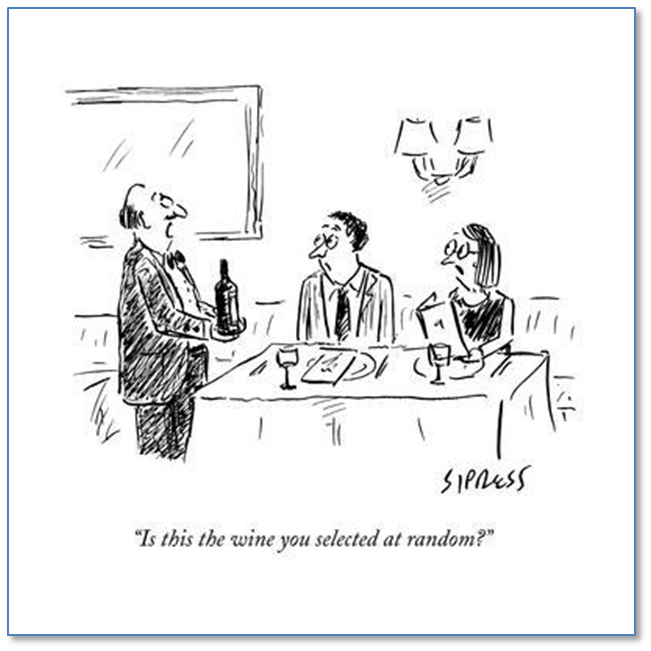
Alecia Moore is better known as Pink (sometimes stylized as P!nk), and as Wikipedia tells us in an understament, “is known for her acrobatic stage presence and activism.” Since the turn of this century, she has taken the pop music world by storm, beginning with her first solo album “Can’t Take Me Home” in 2000 (which went double platinum). She rocketed to further fame in 2001 with her with an electrifying collaboration with Christina Aguilera, Mya, and L’il Kim of “Lady Marmalade” from the movie Moulin Rouge.
After that came a string of hit albums and singles, including the infectious “Get the Party Started”…
… and one of my personal favorites, “Just Give Me as Reason,” a powerful collaboration with Nate Reuss of Fun.
After that came a mind-boggling series of hit singles, albums, and videos. She is known for her aerial acrobatic routines, with probably one of the most memorable at the 2009 MTV Music Video Awards show, where she performed a spectacular version of “Sober.”
Pink has won three Grammies and seven MTV Video Music Awards. She has sold more than 60 million albums and 75 million singles worldwide. Billboard included her at number two in its list of “Greatest of All Times Pop Songs Artists.” Her powerful voice has made her one of the most acclaimed pop stars of the past generation.
But it is her activism that sets her apart from most artists. The list of charities and activism campaigns with which she has been and is involved is mind-boggling: the Human Rights Campaign, the ONE Campaign, The Prince’s Trust, the Run for the Cure Foundation, Save the Children, UNICEF, LGBTQ+ causes, Black Lives Matter, and one that is close to my heart (because I know its founder), No Kid Hungry. And there are many, many more.
So how and why did she get into wine? According to an article in Food & Wine in 2018, “An encounter with a Châteauneuf-du-Pape in her twenties led to a continuing passion, culminating in her purchase of an 18-acre organic vineyard in Santa Barbara County in 2013.” She tells the story that when she was touring in Paris, she had some Château de Beaucastel and was determined to visit its home. “So I just took the train to Avignon with my bass player. I didn’t even realize Châteauneuf was a region, not a winery! We actually ran out of money, and I ended up singing for cheese sandwiches on the street in Avignon—I think I sang Édith Piaf. Finally, the record company sent a driver to pick us up and take us home.” She then took some winemaking classes (“surreptitiously,” she says) and became a winemaker herself.
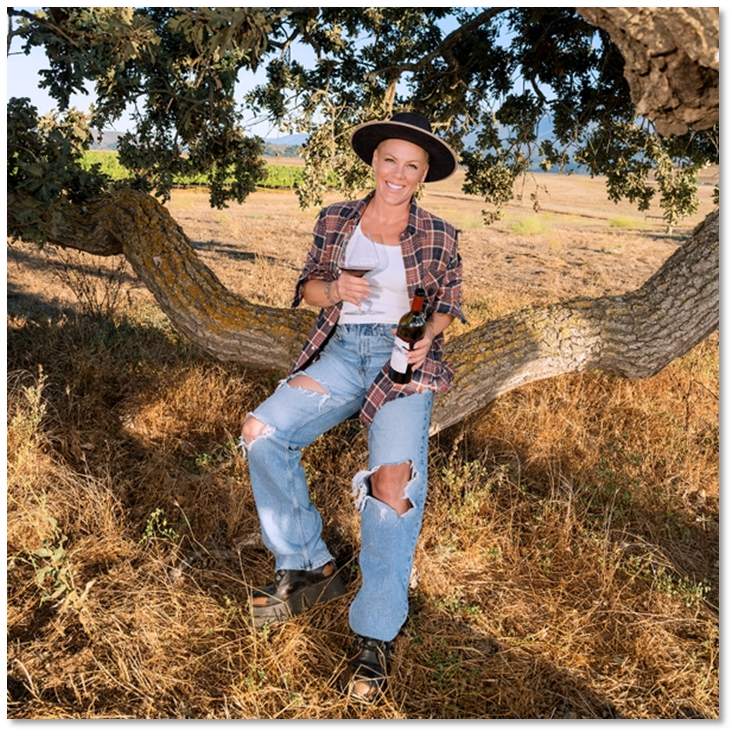
Photo credit: Outside Magazine
She tells the story on her website: “In my travels throughout my twenties and thirties I learned that a great bottle of wine can be found anywhere, at any price. That sharing it with a stranger can turn them quickly to a friend and that this can be the catalyst to some of the best memories you will ever have to look back on. That’s about when I stumbled down the rabbit hole. That’s when, even though I didn’t know it yet, I had found my second dream. That’s when Two Wolves was born.”
A profile in Outside Magazine tells us that “she is a serious organic winemaker who started from scratch in her early thirties, with a baby on her hip, dirt under her fingernails, and a few barrels in the garage…. While touring, she took online wine courses, starting with the WSET – the London-based Wine and Spirit Education Trust, a tiered program for professionals. Later, she studied oenology and viticulture through UCLA and UC Davis, the latter widely regarded as one of the best wine schools in the world.”
She goes on to tell the story on her website: “After years and years of making terrible carboys of wine in my closets, we took our baby girl and left the city, and plunked ourselves down on an organic vineyard in Santa Barbara County.”
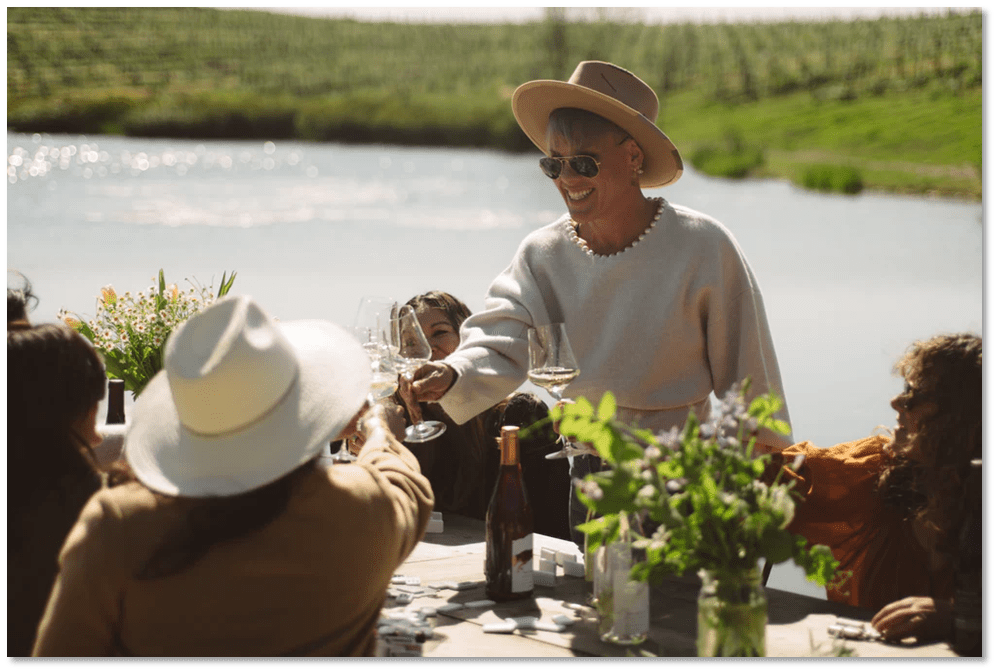
Outside again: “She’s kept most of the 17 acres of certified organic grapes – including cabernet saugivnon, grenache, graciano, syrah, petit verdot, grenache blanc, and cabernet franc – that were planted her before she arrived. She’s since added eight acres and introduced sémillon and merlot to the mix; in all, her crew will harvest over 55 tons of grapes, yielding about 2,500 cases of red wine and 500 cases of white.”
Her website tells us about the name: “An old Cherokee is teaching his grandson about life. ‘A fight is going on inside me,’ he said to the boy. ‘It is a terrible fight and it is between two wolves. One is evil – he is anger, envy, sorrow, regret, greed, arrogance, self-pity, guilt, resentment, inferiority, lies, false price, superiority, and ego.’ He continued, ‘The other is good – he is joy, peace, love, hope, serenity, humility, kindness, benevolence, empathy, generosity, truth, compassion, and faith. The same fight is going on inside you – and inside every other person, too.’ The grandson thought about it for a minute and then asked his grandfather, ‘Which wolf will win?’ The old Cherokee simply replied, ‘The one you feed.’”
More from Outside: “Two Wolves makes ‘estate’ wine, a legal distinction, monitored by the federal government, which tells you that the wine sold is made solely from grapes grown by the winery. Moore also employs low- or no-intervention practices, like not inoculating the grapes with commercial yeast and allowing only local, wild yeast to start fermentation. The result: wines that are not overly hot with alcohol, a characteristic that has become common among California wines as the climate warms and grapes yield higher sugar content. ‘We’ve developed a style of really balanced, elegant, reserved but complex, food-friendly, daytime, you-don’t-need-a-nap-after-you-drink-them wines,’ Moore says.”
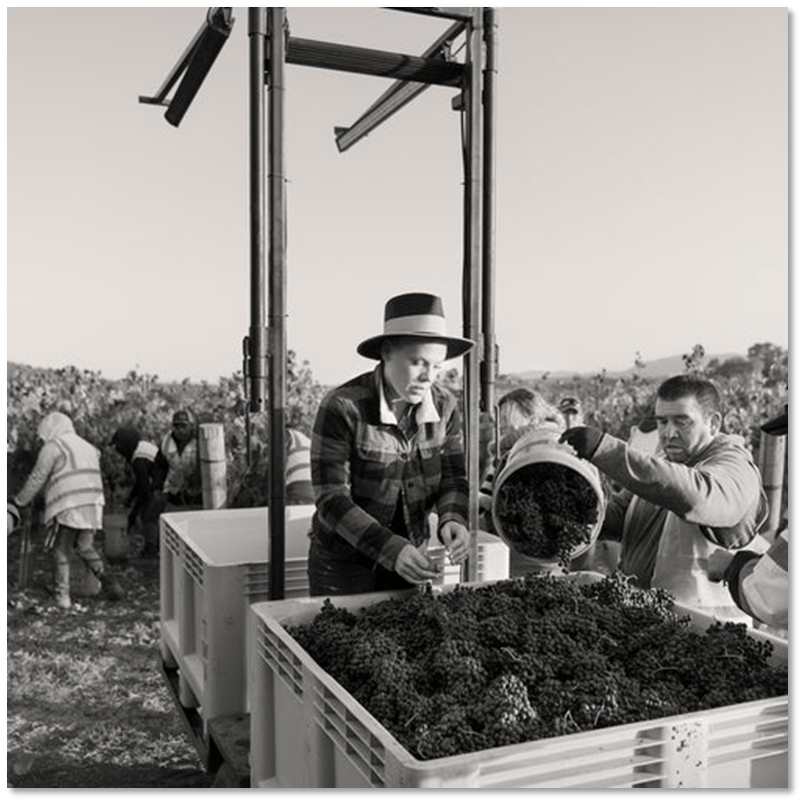
Photo credit: Outside Magazine
But what about the wine? We tried a 2021 Graciano which is … um… 100% Graciano grapes. Wine Searcher tells us: “Graciano is a black-skinned wine grape from northern Spain, grown principally in Navarra and Rioja. Although rarely seen outside Spain, the variety is found in small quantities in Australia and California. Under the name Morrastel, it is also grown in small quantities in the Languedoc.” The Oxford Companion to Wine calls Graciano a “richly perfumed black grape variety.”
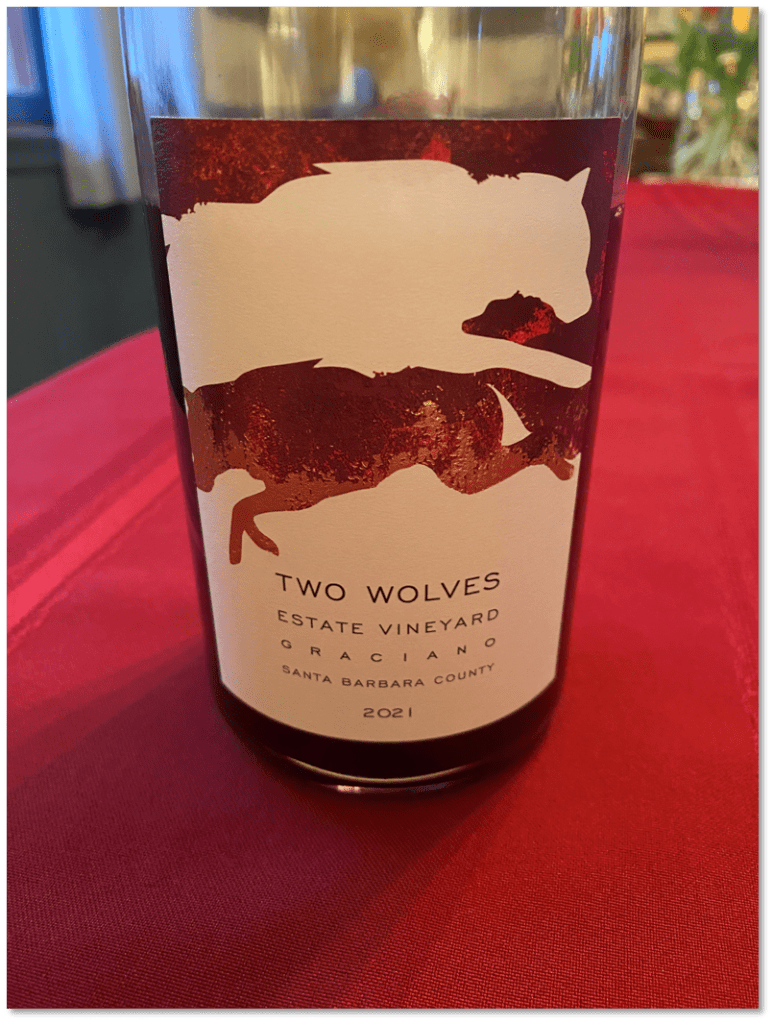
We found this Two Wolves vintage to have a deep fruity aroma, full of raspberry, chocolate, and cranberry, with a deep purple/cranberry color. Its taste was at first less intense than its aroma, but after breathing a while its fruitiness came through, with an additional hint of plums. I’d recommend it for a casual lunch wine. The Two Wolves website seconds some of this: “First off, you must drink this wine chilled. It’s the only way to experience the full crunchy-berry effect along with notes of Elderberry syrup, tart cherry, white pepper, hay, and clove. Lively and fresh with flavors of plum skin, bay leaf, and wild raspberry leading to a snappy finish. Start your evening by pairing this with a charcuterie board… total perfection. Maybe you won’t even need a main course. But, if you do, anything from the grill would be delish.” Love that!

Graciano grapes from Wine Searcher
Where can you find it? Two Wolves wine is sold almost entirely to its “Tribe,” with online releases in the spring, fall and winter. There is a waiting list to become a member, primarily because of the winery’s relatively small annual output. However, you can find it (rarely) at online distributors (secondary market, I guess, like concert tickets?). The Graciano we bought (on the secondary market!) was about $60.
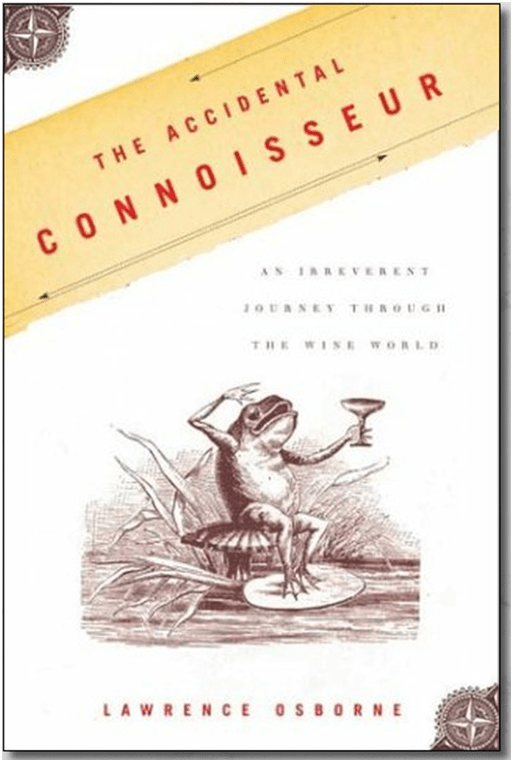
Book recommendation: I really enjoyed The Accidental Connoisseur: An Irreverent Journey Through the Wine World by Lawrence Osborn. He takes us through wine and wineries all over the world to explore what, exactly, we mean by “taste.” As he writes, “What, then, is taste? We secretly pride ourselves on our taste. Yet nothing is more terrifying to contemplate. And no taste is more awkward to contemplate than taste in wine. Wine is the ultimate exercise in this mysterious skill, this nuanced zone of pleasure. Nothing requires more taste than wine. For the greatest wines will provoke the most complex physiological reactions of any foodstuff.”
From its dustcover description:
In his search for wine that is a true expression of the place that produced it, Osborne takes the reader from a lavish lunch with wine czar Robert Mondavi to the cellars of Marchese Pioro Antinori in Florence, from the tasting rooms of Chateau Lafite to the humble vineyards of northern Lazio. Osborne winds his way through Renaissance palaces, multimillion dollar wineries, garages and tin shacks, opulent restaurants, renowned villages, and obscure landscapes, as well as the great cities that are the temples of wine consumption: New York, San Francisco, Paris, Florence, and Rome. On his way, we are shown the vast tapestry of this much-desired, little understood drink.
Wine-focused TV/movie recommendation: One of the first movies that got me really thinking about wine was Bottle Shock. This 2008 film dramatizes the 1976 “Judgment of Paris” when US wines beat French wines for the first time in that international competition. It features the late great Alan Rickman as Steve Spurrier, owner of a wine store in France who wants to introduce American wine to the French market. Bill Pullman stars as Jim Barrett of Chateau Montelena winery in Napa Valley (with Chris Pine as his very long-haired son), whose white wine won the competition. Highly recommended!
Wine Playlist: As mentioned in earlier posts, I like to create fun and funky playlists based on some of my interests, so I’ve created a wine playlist – songs with titles or lyrics that include wine. You can find it on Spotify at https://open.spotify.com/playlist/5rAwgh9Thiary4zUplUsaN
The entry this time is “Sweet Cherry Wine” by Tommy James and the Shondells. A blast from my high school days! Love the soft entry with the bells, the weird wa-wa voices, and the gradual fadeout with a flute. Sort of psychedelic like their other big hit, “Crimson and Clover” – cool, man!
Until next time!
 The Cellar Door