Wine #3: Châteauneuf-du-Pape from Domaine du Vieux Télégraphe

(Posted May 26, 2021)

“Accept what life offers you and try to drink from every cup. All wines should be tasted; some should only be sipped, but with others, drink the whole bottle.”
― Paulo Coelho

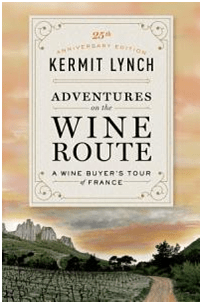
This is the third in a review of wines that were mentioned in the great book by Kermit Lynch, Adventures on the Wine Route: A Wine Lover’s Tour of France. Once again a reminder – Lynch’s book is by far one of the most enjoyable and informative books about wine you’ll read. Lynch writes, “The Southern Rhône is a vast, productive, almost circle-shaped area… The most important city of the southern Rhône is Avignon, but the most important for the wine lover is Châteauneuf-du-Pape. In terms of worldwide renown and prestige, Châteauneuf-du-Pape is the greatest appellation in southern France….”

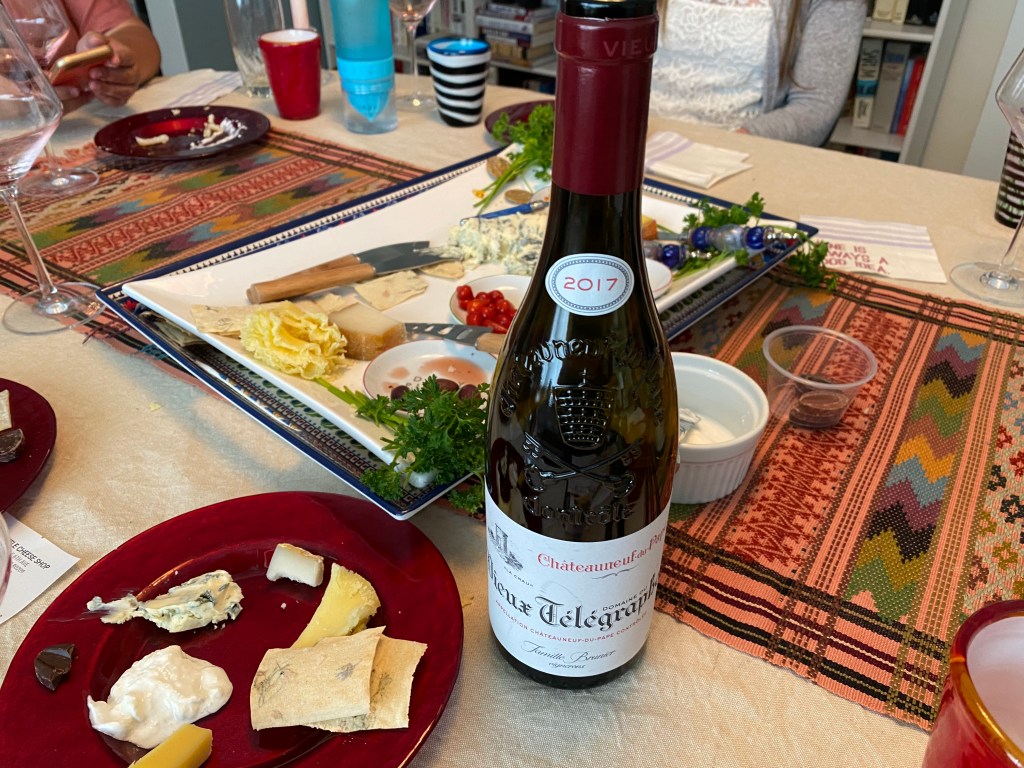
So the third wine in our adventure is a red wine: Châteauneuf-du-Pape from Domaine du Vieux Télégraphe in the southern Rhône valley of France. According to The Wine Cellar Insider: “Domaine du Vieux Telegraphe is one of the better known names in Chateauneuf du Pape. The Brunier family has been producing wines in the Southern Rhône Valley for over 100 years. Vieux Telegraphe was founded in 1898 by Hippolyte Brunier, the great, grandfather of the current owners.”
One of the most intriguing things about Châteauneuf-du-Pape is its name. According to my sources, it literally means “new house [or castle] of the Pope” (not to be confused with “find the Pope in the pizza” – look it up kids). It’s actually a town a few miles north of Avignon, but it’s named after a famous palace in Avignon that was built in the 1300s for Pope Clement V. He was also the Archbishop of Bordeaux, and due to some conflicts with the Knights Templar and other controversies, moved the papacy from Rome to Avignon in 1306. Though he died a few years later, the papacy remained in Avignon for 70 years. The castle (called the Palais des Papes) is magnificent and remains a tourist attraction to this day. From what I have read, viticulture in the region took off during Clement’s reign, especially in the area about five miles north of Avignon, now home to the small town of Châteauneuf-du-Pape, the location of the Pope’s summer quarters.
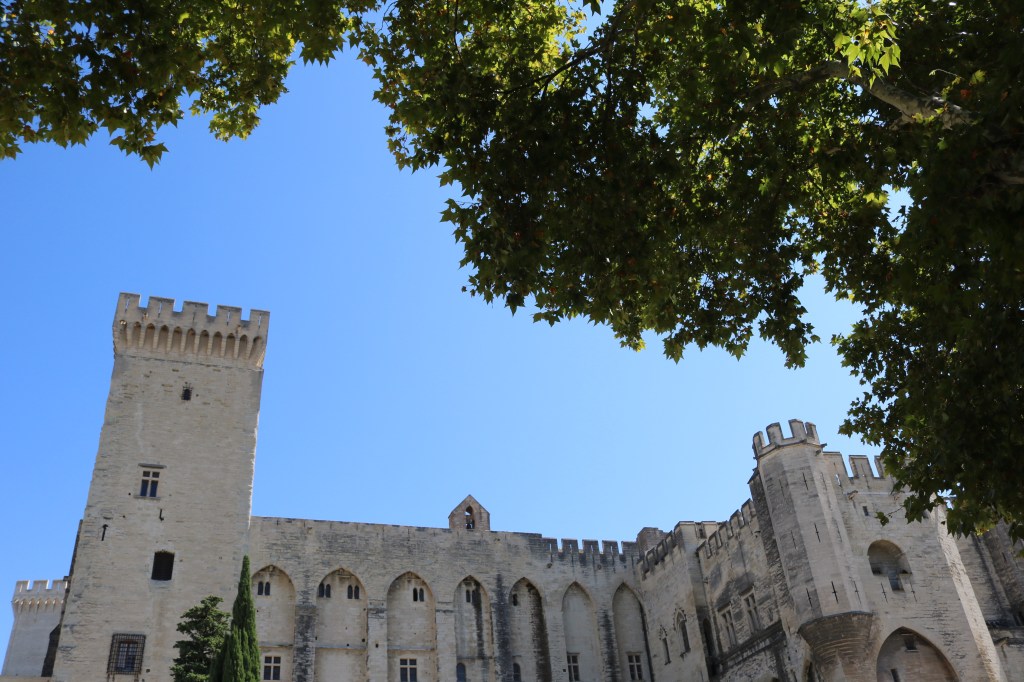
The “new house of the Pope” in Avigon

More about Châteauneuf-du-Pape: Most sources were effusive about Châteauneuf-du-Pape and the region where it’s grown. The Oxford Companion to Wine called it “the most important, and variable, appellation in the southern Rhône in terms of quality, producing mainly rich, spicy, full-bodied red wines which can be some of the most alluring expressions of warm-climate viticulture,” but noted that it “can also be either impossibly tannic or disappointingly jammy.” Now there’s an interesting word for wine – jammy!

It went on to say, “The Châteauneuf-du-Pape grape par excellence is Grenache and conversely Châteauneuf-du-Pape is its finest expression in France. Grenache dominates plantings in the Châteauneuf-du-Pape vineyards, and on their impoverished soils…” It also notes that Mourvedre is “an increasingly popular ingredient;” we learned about Mourvedre in our first outing with the lovely Bandol in nearby Provence.
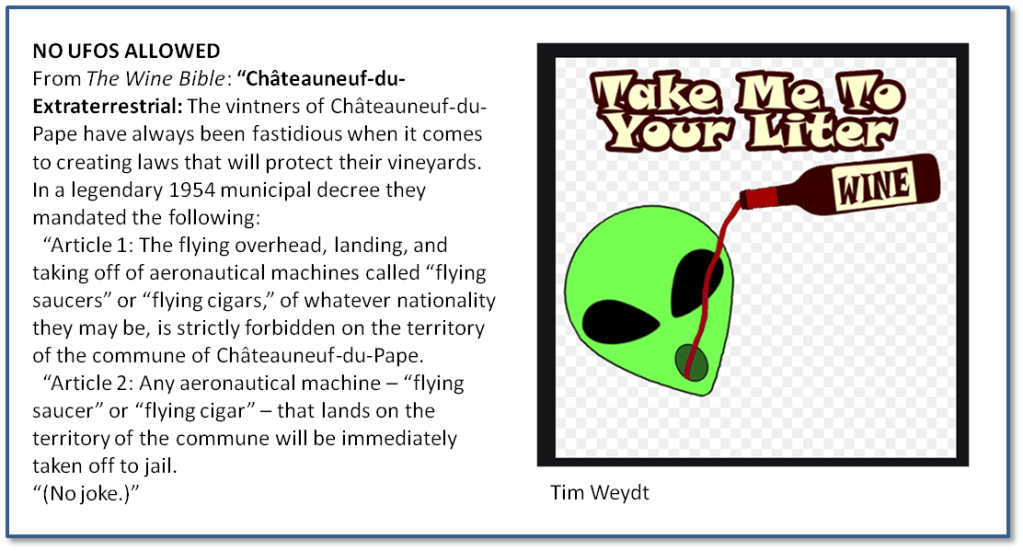
The World Atlas of Wine says: “Châteauneuf-du-Pape the place is no more than a stony village in [the] arid, aromatic Provençal countryside, dominated by a ruined papal summer palace. The wine that bears its imposing name, though, is the proud standard-bearer for the dynamic southern Rhône, making France’s most potent, and some of its most individualistic, wines… Châteauneuf-du-Pape is unusual in its cocktail of as many as 18 permitted varieties…”

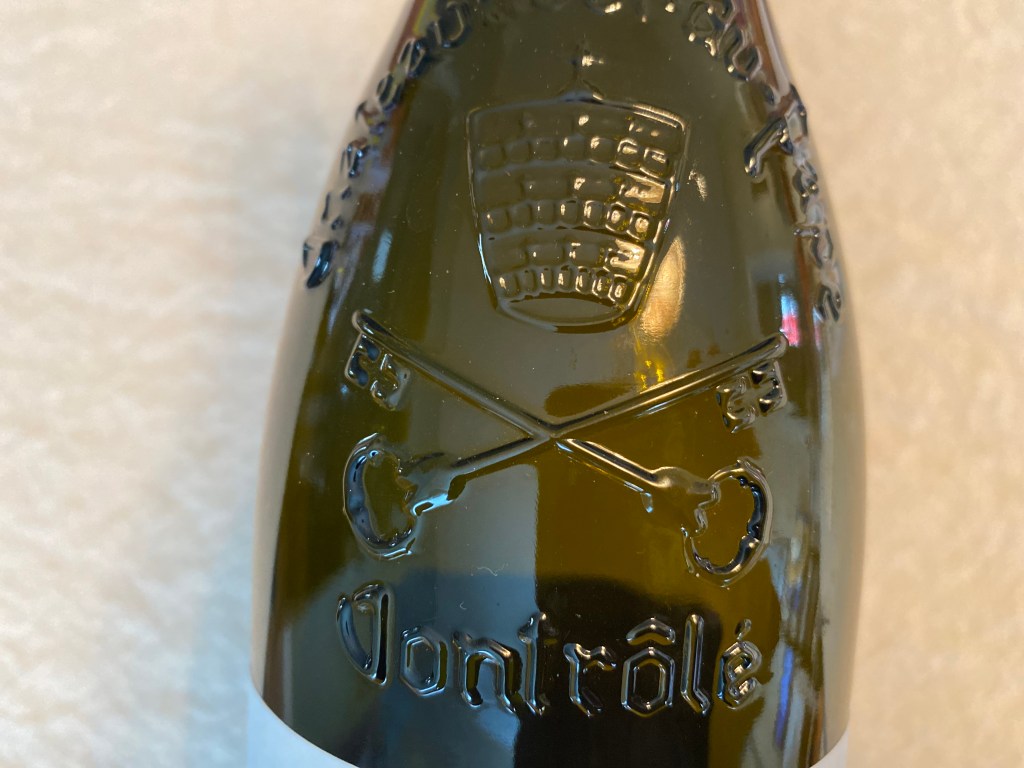
And of course you can’t go wrong with an embossed bottle – this time with a papal tiara placed above the keys of St. Peter with the inscription: “Châteauneuf-du-Pape contrôlé” written in Gothic letters. Every Châteauneuf-du-Pape apparently has this same bottle regardless of domaine.
What did Kermit Lynch have to say about Châteauneuf-du-Pape in general and Domaine du Vieux Télégraphe in particular?“Vieux Télégraphe’s vines are planted on a very privileged site. Thanks to this site, their vinification, and their consistency, it is one of the two or three finest domaines producing Châteauneuf-du-Pape today… Henri Brunier of Vieux Télégraphe agrees that the vineyard site is of supreme importance. The source of his wine’s quality, he says, is his stony terrain, situated on the highest ridge in the Châteauneuf-du-Pape appellation. Because of the superior elevation, it  was on this ridge that a telegraph tower was constructed in the eighteenth century, one of the relay points for communications between Paris and Marseilles. The crumbling stone ruin of this tower gave Vieux Télégraphe its name, and there is a rendering of it on the domaine’s label… Experienced tasters in the area recognize a Vieux Télégraphe by its expression of pierre à feu, or gunflint. A great Châteauneuf-du-Pape tastes almost as if it had been filtered through the stones, and indeed rainwater is filtered by this thick stone layer before it reaches the underlying soil which nourishes the plants….

“Châteauneuf-du-Pape reigns upon the throne of the wine aristocracy of the southern Rhône. Drinking a great one is an event.”
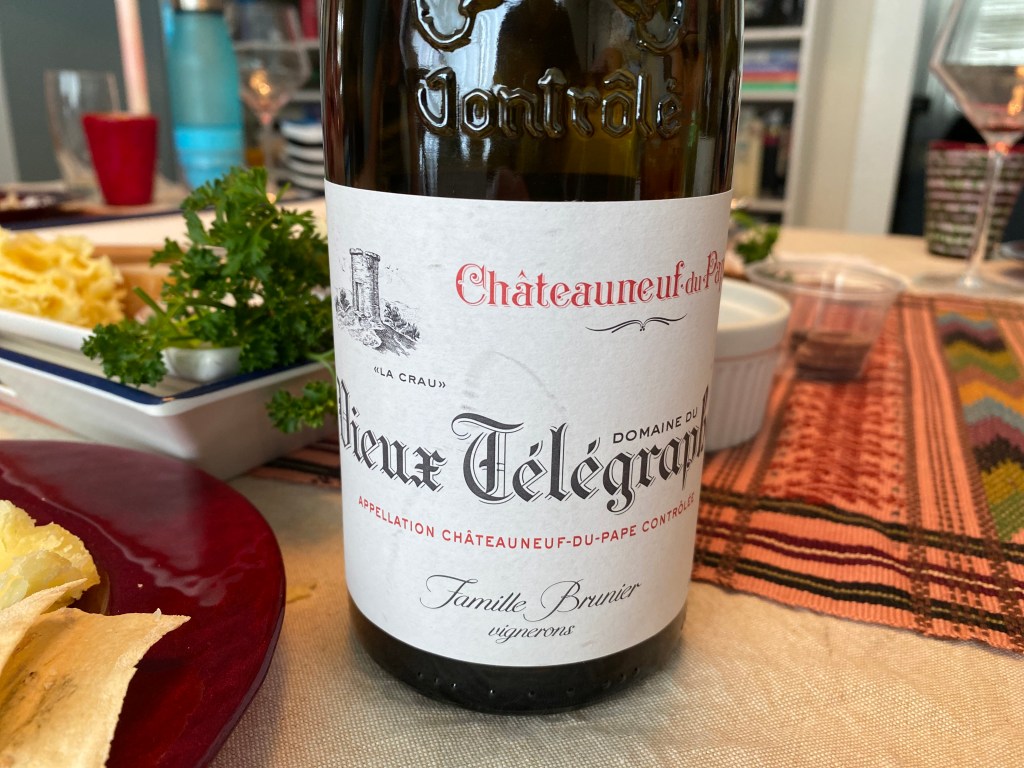
The famous label with its telegraph tower

So what was the verdict? The words used to describe Châteauneuf-du-Pape focus on strength and flavor. Wine Searcher talks about the Grenache characteristics of “juicy with jammy [there’s that word again!] red-fruit and black-cherry flavors.”  Adding syrah “brings structure and spiced black-fruit notes to the blend.” The Wine Bible says, “These are penetrating, dense, sassy wines that can come at you with a dagger of earthy, gamy flavors. They have a wildness to them, a fascinating edge of tar, leather, and rough stone.” Sassy!

Based on all this adulation, my tasting partners this time – Lisa, Jason, Chelsea, Bethany, and Taylor – were expecting to be blown away.

But … we weren’t. Maybe it was the vintage (2017). Wine Folly noted that the Châteauneuf-du-Pape from that year was “good” (compared with “exceptional” from some other years) because it was the “smallest vintage in 40 years… Extremely difficult harvest due to drought.”

Regardless, we liked it… but we didn’t love it. Again, maybe our California-familiar palates just haven’t gotten used to Old World reds just yet. But we did observe similar aromas and tastes that were written about – chocolate, dark cherry, raspberry, spices, and black pepper. It definitely got better as it decanted more – I should have decanted it for longer, I think. And it definitely paired well with chocolate – which seemed to get rid of tannins and bitterness – and cheese (The Wine Bible noted that Châteauneuf-du-Pape was “made for fromage”). It had relatively high alcohol content (14.5%), moderate legs (or “drippy things” as one of our tasters noted), was somewhat on the dry side, had medium-to-high-acidity and medium-to-full body, and a really nice dark red-purple color.

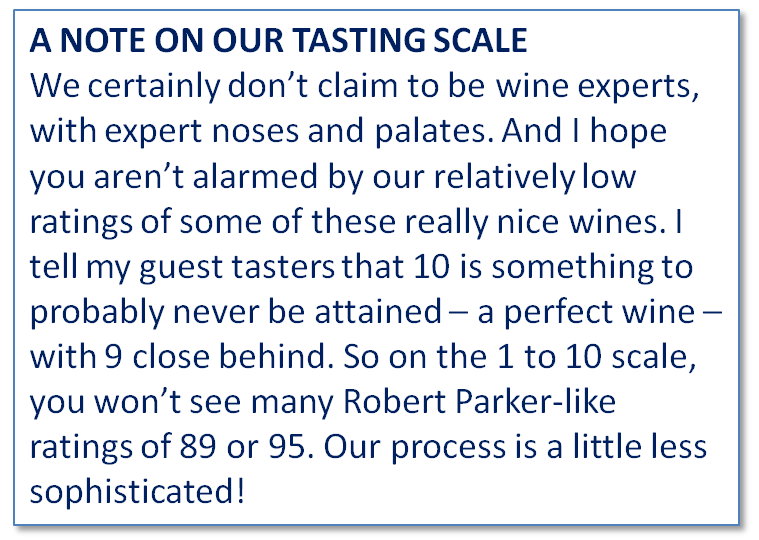
Overall, our ratings ranged from 6 to 8 (on a scale of 1 to 10), averaging right at 7. This was still very good, but a long way from the “perfect” wine that would rate a 10 (I’m not convinced it exists).

For comparison, we also opened a bottle of Clos Saint Michel Châteauneuf-du-Pape. This one was much lighter, less dense, and a little more fruity than the Vieux Télégraphe.

I just want to reiterate: we liked these wines. They were really good (especially the Vieux Télégraphe), so I would highly recommend them, especially after being decanted, and especially with cheese and chocolate!
Where can you get it? We tried the “La Crau” version of Vieux Télégraphe, available at Total for around $100. There is another lower-priced iteration (“Telegramme”) also available at Total for around $45. The Clos Saint Michel we tried is also available at Total for around $45.

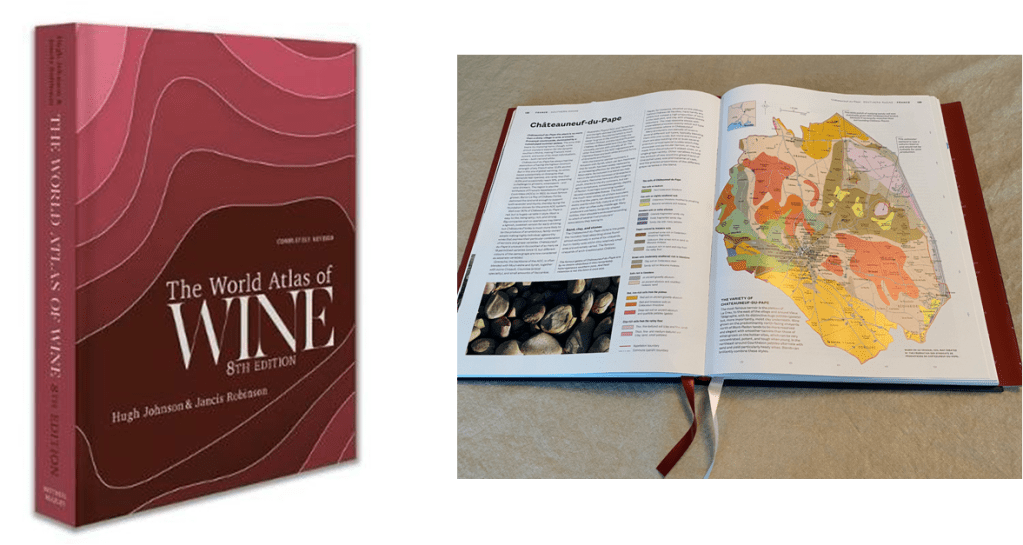
Wine book recommendation: To maintain the early trend of focusing on good all-around references, you can’t go wrong with The World Atlas of Wine, by Hugh Johnson and Jancis Robinson (the latter was also the primary editor of The Oxford Companion to Wine). This one is what it says it is – an atlas, full of great – and beautiful – maps, geographic and soil details, and lots of history.
Wine #2: Savenniéres from Château d’Épiré

(Posted May 2, 2021)

This is the second in a review of wines that were mentioned in the great book by Kermit Lynch, “Adventures on the Wine Route: A Wine Lover’s Tour of France.” Just a reminder – Lynch’s book is one of the most entertaining and informative books about wine you’ll ever read – highly recommended.

The second wine in our adventure is a white wine (I thought I’d mix it up since our first was red): Savenniéres from Château d’Épiré. Now if you’ll recall, wine number one in our series was from a domaine; this one is from a château. What is the difference, you may ask? I’ve discovered that the old Q&A column “Ask Dr. Vinny” from Wine Spectator is a great source of trivia about wine. According to Dr. Vinny,

Hundreds of wine brands out there have either “château” or “domaine” in their names (and a few even have both). Often they’re used interchangeably to refer to a place where wine is made. If you’re looking for a more nuanced answer, château is the French term for a country house or castle, and is most commonly used by the wineries of Bordeaux, while the term domaine, which refers to a territory or empire, is typically associated with the wineries of Burgundy. Remember, though, that in most countries there are no legal restrictions on the use of these terms, so there may not be an actual, physical “château” at all … much less a “domaine.”

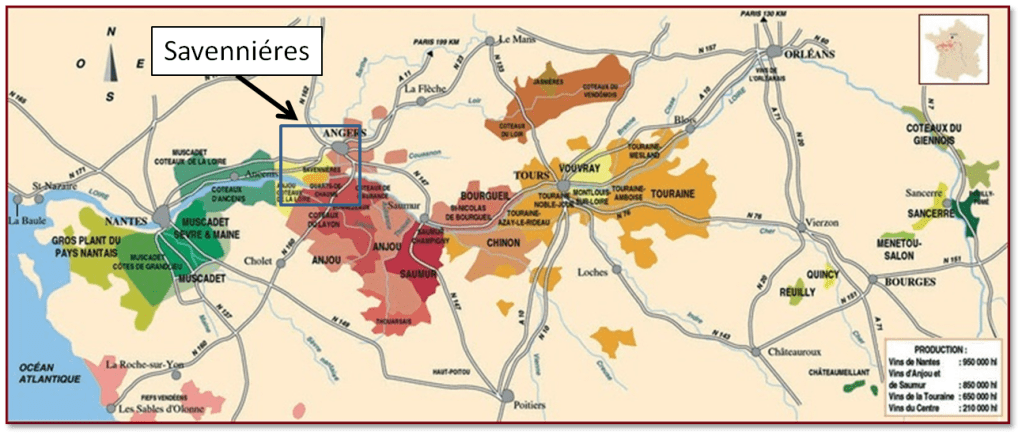
A good basic description of Savenniéres comes from wine-searcher.com (there are so many great resources out there; this is one of the best for finding quick info on wines). According to wine-searcher:

Savenniéres is a highly respected white wine appellation of the Loire valley wine region of France. Located immediately southwest of the city of Angers, the parish of the same name falls within the wider Anjou district. The wines are made from the Chenin Blanc grape variety, the mainstay of Anjou and the central Loire.

Wikipedia/Zwarck

The World Atlas of Wine notes that the Loire River “is France’s longest, 629 miles (1,012km) from source to mouth, with wide variations in climate, soil, and tradition, and four or five key grape varieties… Loire wines are refreshing and invigorating, never massive, and rarely expensive. Over half are white, most of them based on a single grape variety [Chenin Blanc].” The Oxford Companion to Wine tells us that wine has been grown in the Loire Valley for roughly 2,000 years, “and was certainly well established by the 5th century.”

Now let’s talk a little about chenin blanc. This prodigious grape is apparently the source material for a lot of varietals, including Savenniéres. According to The Oxford Companion to Wine, chenin blanc is “probably the world’s most versatile grape variety, capable of producing some of the finest, longest-living sweet whites and a wide range of fine dry whites…. DNA profiling suggests relationships with a wide range of varieties including … sauvignon blanc…  and even cabernet sauvignon.” So we owe a lot to this grape, including for our lovely Savenniéres.

What did Kermit Lynch have to say about Savenniéres? He really loved this area and its wines. His writing is lyrical:

Some tasters prefer the flintier dry white from Savenniéres, whose vineyards lie farther west toward the Atlantic, just past the city of Angers. The little highway between Tours and Angers runs along the banks of the Loire, which makes it difficult to concentrate on driving because rivers have personalities. While the Rhône is powerful and swift, the Loire glides along with a stately air and makes you feel as if you are in too much of a hurry… Had Cecil B. DeMille filmed the Second Coming, he would have selected the sky above the Loire as its setting… The area around Angers is called the Anjou…

Across the river, however, at Savenniéres, there is a small quantity of dry Pineau produced, and if it is vinified in the traditional manner, the results can be fantastically good. Having tasted a good one, one can develop a weakness for Savenniéres, and for the wine buyer who gives a damn about price, it presents one of those happy situations, a great wine, a noble wine, but little-known and consequently undervalued…

The stony soil here contains schist, which splits into layers quite conveniently for home builders. It also accounts for the nerve and firmness at the heart of Savenniéres wine, for its finesse and the attractive tinge of bitterness in its aftertaste. The aroma can be grandiosely expressive; there can be a vibrant steely freshness to it, and suggestions of honey, flowers, and unexpected fruit aromas like quince, pear, and red currant. If Savenniéres does not sound like the Chenin Blanc of California, neither does it taste anything like it…

A Château d’Épiré is two things. It is a wine, and it is a sixteenth-century château in the village of Épiré. The winery itself is lodged in the château’s twelfth-century chapel…  

Savenniéres is a white that ages well… Not many are looking for the wine of Savenniéres. It was true in 1976, when I first tasted at Château d’Épiré, and it is still true today. The result is a truly superb dry white at a ridiculously low price.

So what was the verdict? Wine writers have had very distinct impressions about Savenniéres. As noted above, Kermit Lynch said it has a “vibrant steely freshness to it, and suggestions of honey, flowers, and unexpected fruit aromas like quince, pear, and red currant.” Eric Asimov in The New York Times said the Savenniéres he tasted (not from the same producer) was “intense and austere,” with hints of beeswax, citrus, and spice, and with a “mineral, saline quality,” with a “floral, honeysuckle edge… and a texture that is “paradoxically rich, viscous and wonderfully light.”  (I love how descriptive wine writers can be.) The website wine-searcher.com says that its Savenniéres have hints of warm straw, beeswax, chamomile, minerality, and a honeyed tinge. These descriptors are so detailed and yet so varied that we weren’t sure what we were going to experience.

My guest wine tasters (Lisa, Bethany, and Sharon) and I spent a lot of time on this one. I didn’t reveal the wine experts’ impressions before we started so that our thoughts would be unbiased.

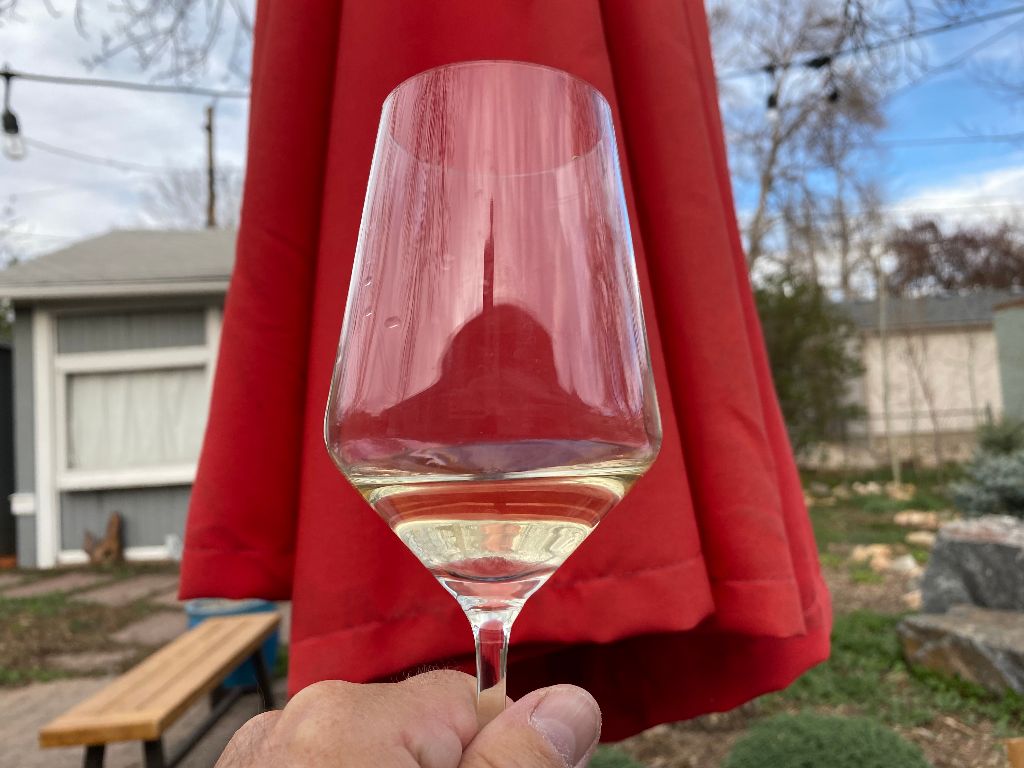
My take is that we are probably so used to the strong white wines of New Zealand and California that it took us a while to begin to appreciate the more delicate aromas and flavors of a nice dry French wine. A few of the aromas our group described included butter, pear and citrus. There was a hint of metal in the taste, a slightly bitter aftertaste, and hints or orange and pears. No one could identify currants.

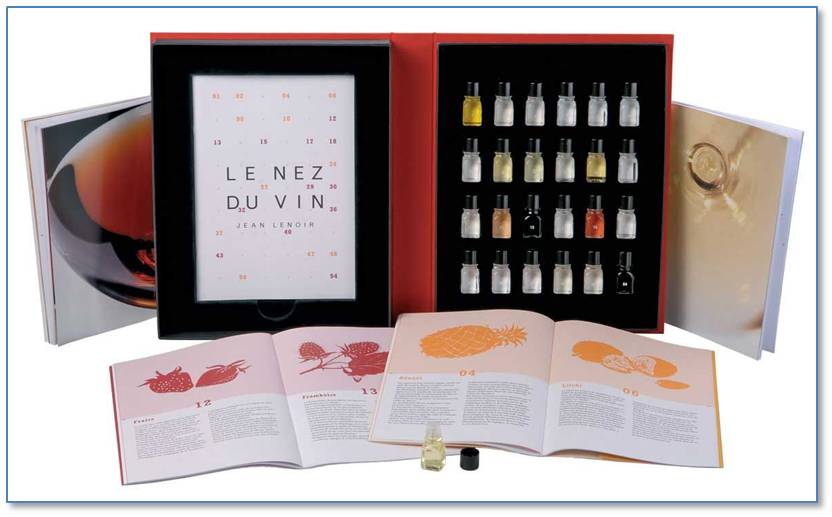
Then we decided to try something different to help us in our quest for aromas and flavors. I was gifted something I had seen in some fancy-dancy tasting room in Provence – a wine aroma kit. Ours was from Le Nez du Vin (which I have it on good authority means “the nose of wine”). There are many sizes and types out there, but in short they have small bottles with liquids that have specific aromas – mine has 24 (12 white and 12 red) – that potentially can either train your nose or allow you to double-check aromas and flavors that others mention.

After sampling honey and pear scents and re-tasting the wine, we could definitely detect them much more strongly than before. But try as we might, we could not break through with currants. That seems to be an elusive taste for me and the others – but maybe we’ll focus on one in the future that has a much stronger currant vibe.

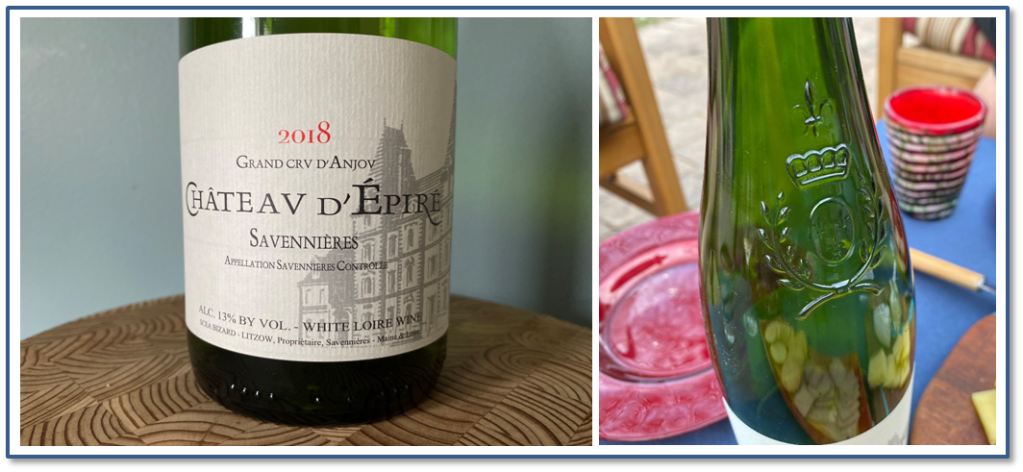
One other note – the bottle is really nice. I love the label (with a drawing of the Château) and its embossed glass. I’m a sucker for wine aesthetics!

So what was the verdict? We all really liked this wine, but it didn’t stand out as an absolutely knock-your-socks off wine. I think we’ll need to try many more delicate white wines to see if we can train our noses and palates better to distinguish the subtleties that others note. One other note: we tasted some cheese (including a nice brie) with the wine, and its flavors became a little more intense. So on a scale of 1 to 10, we gave it an 8. I know it should probably have been rated higher, but we’re holding out the 9s and 10s for those that really, really impress us. We’ll keep looking (and tasting!).

Where can you get it? I ordered mine from wine.com, but you can also get it at kermitlynch.com; the price is around $30 (as Lynch mentioned, “a truly superb dry white at a ridiculously low price”). There are other Savenniéres out there in addition to Château d’Épiré. I found one (Domaine Baumard for $32) at my local Total, and I even found one (a 2013 from Domaine Eric Morgat, priced at $76) at my local neighborhood wine store (Pearl Wine Co.). If you look hard enough, you can find one, despite its small geographic origins.

Wine book recommendation: As you might notice, I mention several wine reference books. One that is indispensable is Jancis Robinson’s The Oxford Companion to Wine, literally an encyclopedia with entries on every conceivable wine topic, from appellation to geography to history and more – the best reference on wine I have found.

Wine #1: Bandol Rouge from Domaine Tempier

(Posted April 13, 2021)

Earlier this year, I spent a couple of weeks on a beach and immersed myself in Kermit Lynch’s Adventures on the Wine Route: A Wine Buyer’s Tour of France . Lynch, an American wine importer based in Berkeley, California, wrote it in 1988, and it was absolutely one of the most informative and entertaining books on wine I’ve read. In 2013, Lynch published a 25th anniversary edition, with updated information on some of the wines and domaines he wrote about in 1988. It was as close to an epiphany about wines as I can recall. I have long been interested in wines, collected and read many books, and bought a fair share of relatively inexpensive wines over the years (he often calls such wines “plonk”). But his book pushed me in an altogether different direction, one where I yearned to broaden my horizons and start sampling some of the better wines of the world.

With those thoughts as inspiration, I decided I would buy and taste as many of the wines mentioned in Lynch’s book as possible. Some domaines and appellations he mentioned are no longer around, but many are, so after scouring wine importers and online stores, I started gradually stocking up on some of those beauties that Lynch described. Now admittedly some are pricey, so I am spacing out my purchases as my budget allows. But I was surprised to find that many were affordable, and quite a few were even available at my local wine shop.

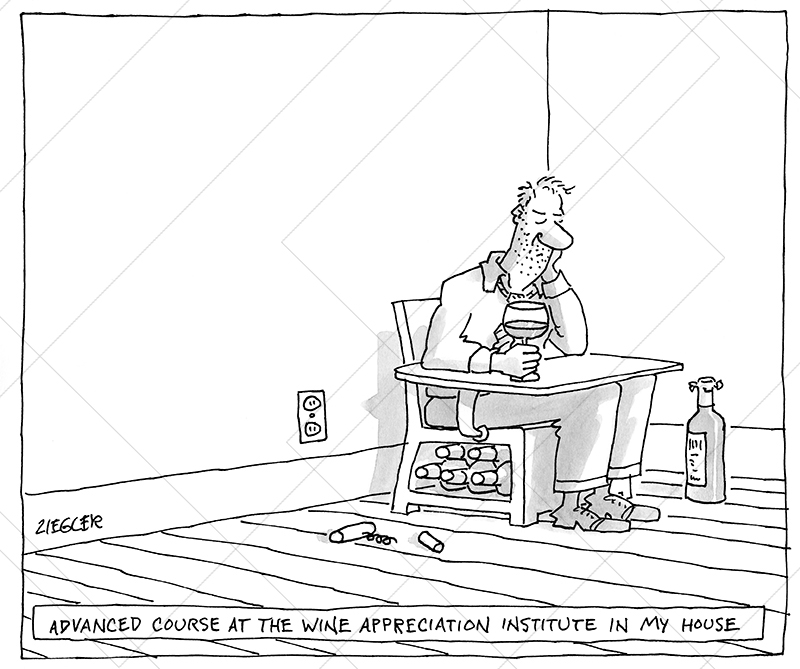
My goals in starting this adventure were two-fold. First, as mentioned, I really wanted to broaden my horizons and start sampling some of the better wines of the world. Second, I wanted to compare Lynch’s (and others’) descriptions of tastes and aromas with my own – and with those of friends and family who tasted with me. I don’t think I have a very discriminating wine palate, but I knew I was missing something by not focusing enough on a wine’s smells, textures, look, aftertaste, and other characteristics that are unique to every bottle’s distinct terroir and grape blend. (Side note: whenever I see or hear the word “terroir” the first thing I think of is the “mawwage” scene in “The Princess Bride.”) Finally, in a pandemic year, I wanted to satisfy some of my wine yearnings that I haven’t yet been able to accomplish, such as opening a wine shop or wine bar. I decided to do the next best thing – a wine bar in my house!

My long-range plan is to sample and describe as many wines mentioned in Lynch’s book as possible, coupled with random musings and other thoughts about wine in particular and the world in general. Once I have completed the French wines mentioned in Lynch’s book, I hope to move to wines from other countries such as Italy, the US, New Zealand, and others. I hope to share with you my thoughts and ideas on wine in all its complexities and simplicities. But overall, I just want to have fun – and I want you to have fun too.

So with that broad mission in mind, we can start with the first one on my list – and my first “extravagant” purchase: Bandol rouge 2018 from Domaine Tempier.

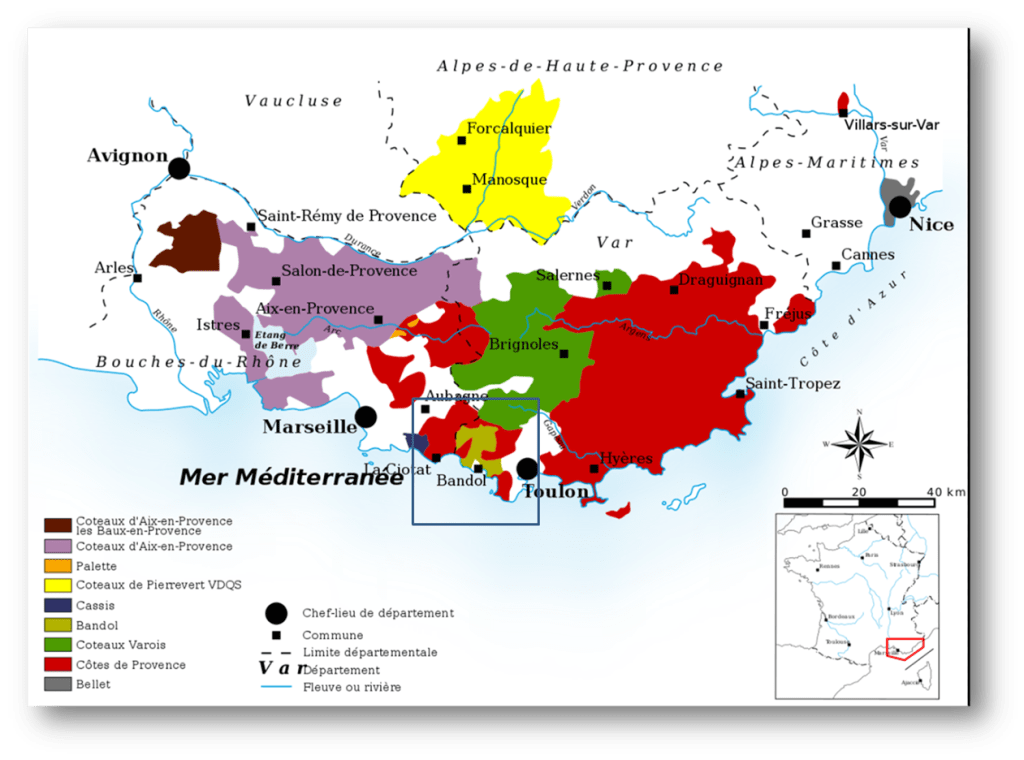
Where and what is Bandol? Bandol is in Provence and is located on the Mediterranean coast, east of Marseilles and south of Aix-en-Provence. According to the World Atlas of Wine,

In size it may be dwarfed by the oceans of Côtes de Provence that make up the bulk of wine produced in this sunny corner of France. But in stature it is the most admired appellation of France’s Mediterranean coast. While 70% of its wine is rosé nowadays, Bandol is best known for its supremely Mediterranean reds, based on the Mourvèdre grape (the only such French appellation) often blended with some Grenache and Cinsault. Thanks to a climate benign enough to ripen a vine variety with one of the longest growing cycles of all, most red Bandol is voluptuously ripe, with almost feral herbiness.

Wikipedia/DalGobboM

And according to Wine Folly,Mourvèdre (aka Monastrell) is a full-bodied and rustic wine that originated in Spain. Rumor has it that the seafaring Phoenicians brought it over as early as 500 B.C.”

A common description among many wine distributors (I can’t tell who originated this) is:

This powerful, Mourvèdre-dominant blend provides a savory surprise from southern France’s rosé-heavy Provence region. Bold flavors of juicy dark fruit, black currants, garrigue spice, crushed flowers, balsamic, and cedar are balanced by robust tannins and truckloads of natural acidity.

I was intrigued by the term “garrigue”, so I found this from Wine Spectator’s Dr. Vinny:

Garrigue refers to the low-growing vegetation on the limestone hills of the Mediterranean coast, not the limestone itself. There are a bunch of bushy, fragrant plants that grow wild there, such as juniper, thyme, rosemary and lavender, and garrigue refers to the sum of them. Think herbes de Provence, or a mix of fresh minty-herbal notes with more pungent, floral fragrance.

And of course, you gotta love the label (I’m a big fan of wine labels and am not ashamed to admit that I often purchase wine based on its cool label). I mean, show me a bottle of wine with a cool pirate ship or something along those lines, and I’m there!

What did Kermit Lynch have to say about the Bandol region? Lots. He muses about the potential for cross-pollination of fruit and grapes from bees, resulting in distinct aromas and flavors. He notes that in Bandol, “black-cherry trees are planted alongside the vines. Their flavor has a thick, ripe presence in the aroma of Bandol’s wines.”

What did Kermit Lynch have to say about Domaine Tempier Bandol? “Domaine Tempier is a place in Provence, a home with its winery and vineyards, its olive trees and cypresses… there is a certain vital spirit that one imbibes with each gorgeous swallow of Domaine Tempier’s wine… Domaine Tempier today makes the finest red wine of Provence….” His book has wonderful stories of the domaine’s origins and the winemakers he got to know – really enjoyable reading!

So what was the verdict? The words used to describe Bandol focus on ripeness and intensity: “voluptuously ripe…” “black-cherry…” “bold flavors…” “juicy dark fruit, black currants… balsamic, and cedar…”

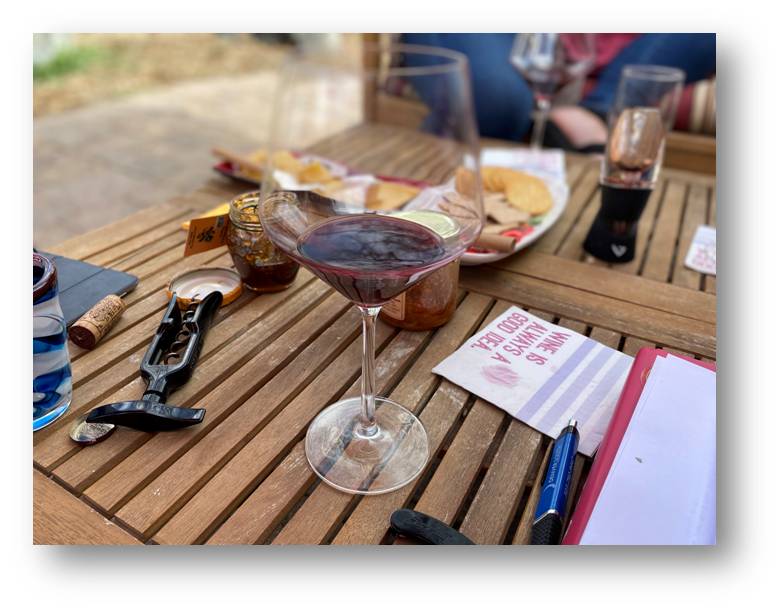
My tasting partners (Lisa and Bethany) were very meticulous to try to help isolate aromas and flavors. As mentioned above, I don’t have a terribly discriminating palate, and confess to being led down flavor paths based on the power of suggestion of others. But I think with higher-quality wines such as Bandol, the aromas and flavors really begin to shine compared with cheaper models (duh!). So instead of scarfing it down, we took our sweet time, small pours, nice swirls, lots of sniffing, and really talking among ourselves about what we smelled and tasted.

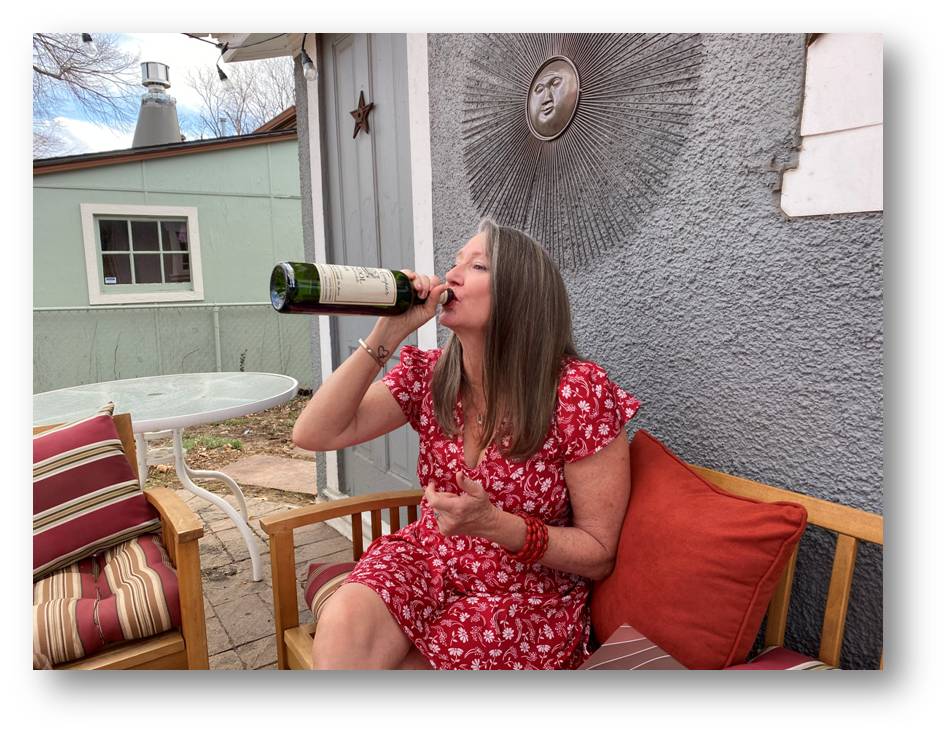
Full disclosure: Lisa was chugging an empty bottle just for show!

So yes, we definitely detected dark cherry aromas after a few swirls – in fact, it was very intense, more so in the aroma than the flavor for me. I detected raisins too, and Bethany and Lisa chimed in with currants and pomegranates. (Now I gotta be honest, I see currants listed ALL the time as aromas or flavors of red wine, but I’m not really sure what those smell or taste like. I decided I’m going to get one of those wine aroma kits to help with future tastings.) As far as garrigue spice and that cedar/balsamic description, we didn’t really pick that up, though perhaps we’ll be more sensitive to it next time.

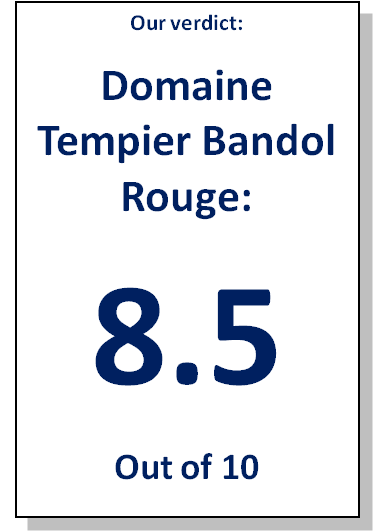
Our verdicts: nice purple color, medium clarity, high viscosity (it was 14% alcohol), medium tannins and acidity and body, and balanced texture. Overall, a very nice medium body red wine with a great flavor of dark cherry fruit. On a scale of 1 to 10, we gave it an 8.5, mainly because this was our first tasting and I can’t yet imagine wines that would reach perfection or near-perfection at 9 or 10. But we’re going to try to find them!

Where can you get it? Both wines.com and Kermit Lynch’s wine distributor site (appropriately named kermitlynch.com) have it for approximately $60-65 per bottle – well worth it!

Wine book recommendation: So many to choose from! But I’d be remiss if I didn’t start with the book that inspired this blog – Kermit Lynch’s Adventures on the Wine Route: A Wine Buyer’s Tour of France. It’s as informative and entertaining today as it was in 1988, when it was written, and 2013, when it was re-issued. You will learn so much about France and its countryside and people – those stories are as important as the wine tastings and discoveries. This one needs to be on every wine lover’s bookshelf!